
Keraton Solo and the Ethics of Power
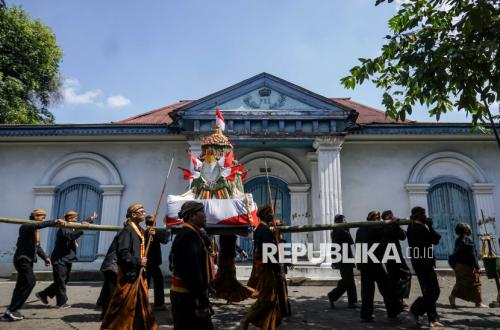
The Keraton Kasunanan Surakarta is once again facing a crisis. Following the death of Sri Susuhunan Pakubuwono XIII in November 2025, two princes have both declared themselves as Pakubuwono XIV. The internal family conflict then became a public matter when clashes broke out in January 2026, in the presence of the Minister of Culture who was about to hand over a Decree regarding the management of the cultural heritage area. This is deeply ironic. An institution known as a symbol of refined Javanese culture has instead displayed an open struggle for legitimacy.
This is arguably not a question of who is entitled to the crown, but rather who has the authority to determine the validity of the succession. Since the death of Pakubuwono XII in 2004, the dualism between Hangabehi and Tedjowulan has exposed the fragility of this mechanism. A political compromise in 2012 eased tensions, but did not resolve the fundamental question of who has the authority to interpret the rules and determine the legitimacy of succession.
We can learn from England. The kingdom underwent a long process to establish a parliament, which ensured the monarch was not absolute. Its roots can be traced back to the Witan in the Anglo-Saxon period, a forum called by the king to seek advice from nobles and important figures. After the Norman conquest, this tradition evolved into the Great Council, and later became more representative: in 1254, representatives of knights from the shires were summoned for consultation on royal finances.
An important milestone occurred in 1265, when Simon de Montfort summoned a parliament that included nobles and clergy, as well as two knights from each county and two citizens from each city. For the first time, representatives of the regions and cities sat together to discuss national affairs. This composition became the embryo of the House of Commons. Interestingly, seven years earlier, the Provisions of Oxford in 1258 had forced King Henry III to accept a mechanism that limited the monarchy’s power. A Council of Fifteen was formed to oversee the government and key officials, while parliament was planned to convene periodically.
The Keraton Solo does not, or does not yet, have an institution like that parliament. But the lesson is that when the legitimacy of a king is questioned, an institution needs a mechanism beyond the personal will of the monarch to manage differences, give counsel, and reach agreement. Indeed, the English parliament itself grew out of crisis. It was not born from democracy as we know it today, but through a tug-of-war between the king, nobles, the church, regions, and cities. The institution then evolved into one of the key instruments for limiting royal power. English history shows that institutions which endure are not those that eliminate conflict, but those that manage conflict through debate and then agree on procedures for resolution.
Islamic history provides another lesson. After the Prophet Muhammad passed away, the succession of leadership for the community became one of the most defining moments in Islamic history. Through tense deliberation between the Ansar and Muhajirin groups, Abu Bakr was chosen as the successor. He led the state for only two years before being succeeded by Umar, whom he had appointed on his deathbed. Subsequently, Uthman was elected by a committee of six companions appointed by Umar before his death. Interestingly, Umar forbade his own son from becoming caliph and instead asked him to oversee the committee’s work.
Uthman ruled for twelve years and was killed by those dissatisfied with his leadership. In the ensuing crisis, various groups urged Ali to become caliph, and he eventually agreed. However, after the community pledged allegiance to him, Muawiyah and his followers refused to accept the appointment until Uthman’s killers were found and tried. Thus, the four caliphs were appointed through different succession processes. Succession indeed contains complex political, genealogical, communitarian, and religious dimensions. Yet from these events, we can learn that leadership legitimacy requires a process of consultation, recognition, and acceptance by the community, alongside moral worthiness and capability.
Here, Islam provides an ethical standard. The Qur’an commands that trusts be given to those entitled to them, and that judgement among people be conducted with justice (QS An-Nisa: 58). The principle of shura is also mentioned as a characteristic of believers (QS Asy-Syura: 38), while QS Ali Imran: 159 commands consultation, gentleness, and forgiveness before making decisions. Power is not primarily a right to rule, but a trust that must be accounted for. From this perspective, the question of ‘who becomes king?’ should be followed by a more important question: Was the process of ascending the throne conducted justly, with dignity, and in a manner that safeguards the common good?
This perspective resonates with noble Javanese values. The Keraton has long been known as a paragon of etiquette, harmony, balance, and self-restraint. True victory is not when one succeeds in defeating an opponent, but when one achieves balance in communal life. Therefore, the problem in Surakarta is not that the Keraton lacks a ‘parliament’. It is impossible to suddenly implement the Westminster model in a traditional Javanese institution. What is important is the existence of a legitimate consultative mechanism, trusted by all parties, and capable of acting as a referee when succession disputes arise. This is where the role of the Customary Council (Lembaga Dewan Adat) becomes crucial. Unfortunately, this institution has instead been dragged into the contest for legitimacy. And when the body that should be safeguarding the value system sides with one faction, the problem is no longer just a personal conflict, but a crisis of trust.