
Kemkomdigi Assesses Need for Additional Frequency to Support 6G Development
Jakarta (ANTARA) - The Ministry of Communication and Digital Affairs (Komdigi) has stated that new spectrum allocations will be needed to support the development of 6G cellular network technology.
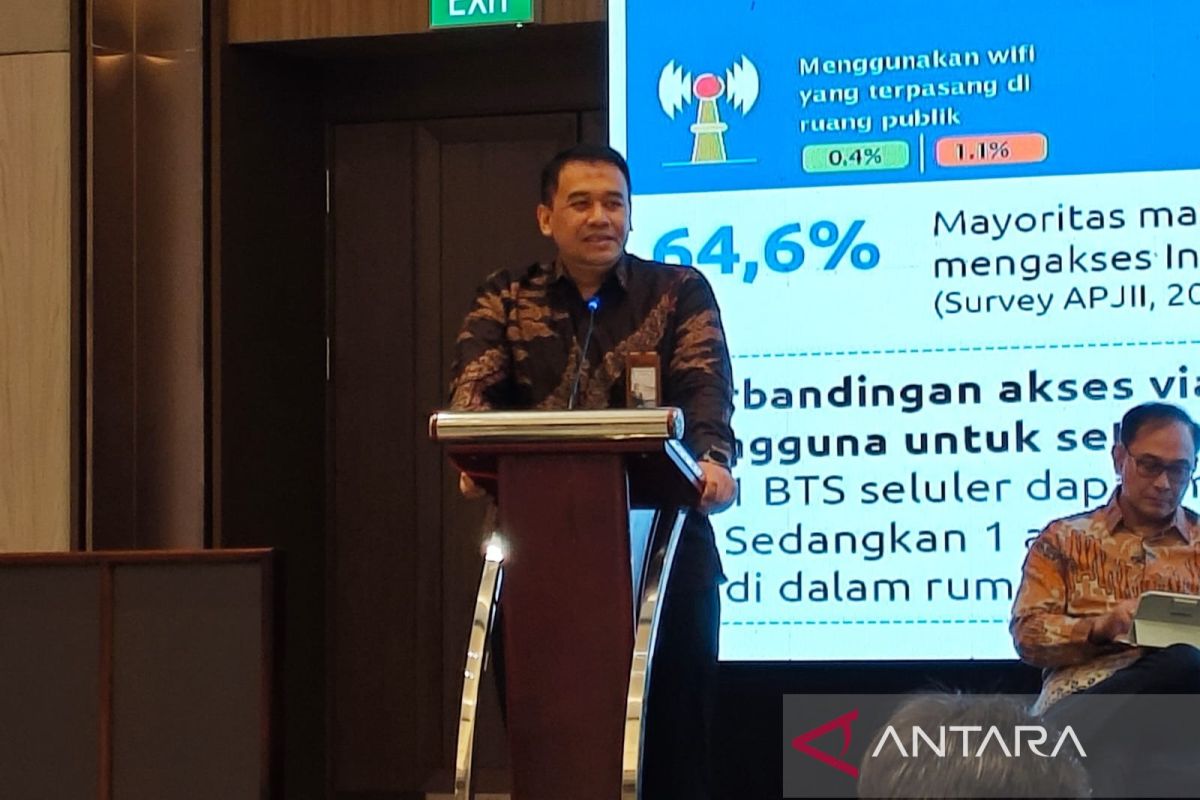
Adis Alifiawan, Director of Radio Frequency Spectrum Arrangement, Satellite Orbit, and Digital Infrastructure Standardisation at Komdigi, said during a discussion with the Indonesian Telematics Society (Mastel) in Jakarta on Thursday that the national cellular spectrum capacity, following the auction of the 700 MHz and 2.6 GHz frequency bands, is estimated to reach around 712 MHz.
The spectrum requirements for the future implementation of 6G networks are expected to be far greater, meaning that preparations for additional frequency bands are necessary. The frequency spectrum currently available is considered insufficient for developing 6G networks.
“This means we have to release new frequencies. If we rely on existing frequencies, they are not enough, not adequate,” said Adis.
Adis added that mid-band frequencies are viewed as one of the most promising options, as they offer a balance between network capacity and service coverage.
Nevertheless, Komdigi is still studying various alternatives for spectrum utilisation, including the upper 6 GHz band, which is one of the candidate spectrum ranges for 6G services in international discussions ahead of the World Radiocommunication Conference (WRC) 2027.
Adis said the government remains open to dialogue with industry players, academics, and other stakeholders in order to gather input on spectrum utilisation, so that it can deliver optimal economic and social benefits.
According to him, this process is important to ensure that spectrum policy aligns with industry needs, technological developments, and the interests of the wider public.
“We hope to receive views and considerations, particularly from the perspective of public value,” said Adis.