
Kemenko PMK hosts the culmination of the 20th anniversary commemorations of the Yogyakarta earthquake
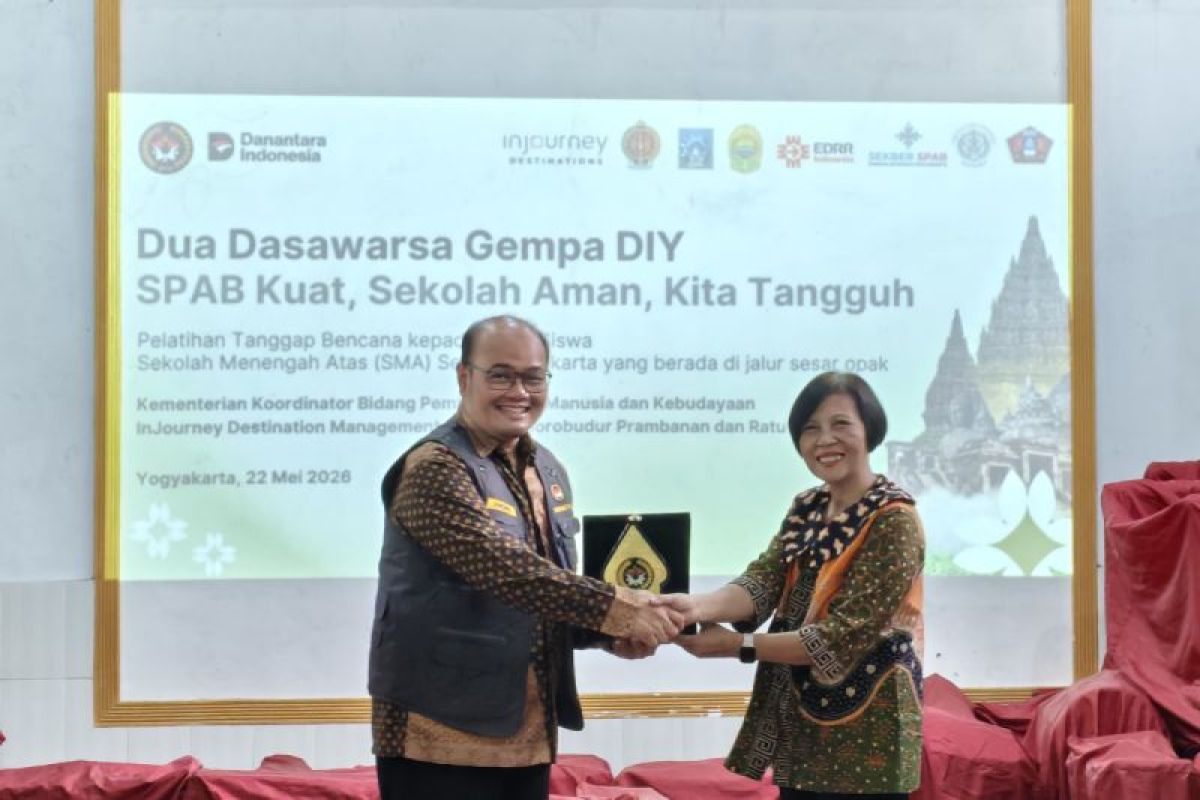
Sleman — The Coordinating Ministry for Human Development and Culture (Kemenko PMK) began a series of activities for the culmination of the 20th anniversary of the Yogyakarta earthquake with a visit by the Disaster Risk Reduction Education Unit (SPAB) at SMAN 1 Kalasan, Sleman Regency, Special Region of Yogyakarta (DIY). Assistant Deputy for Disaster Risk Reduction of Kemenko PMK, Andre Notohamijoyo, said in Sleman on Friday that the two-decade commemoration presents an important moment to rebuild the community’s collective memory while strengthening preparedness for future disaster risks. “This activity is also part of strengthening the flagship ‘Kita Tangguh’ programme, which adopts a pentas-helix (five-helix) collaborative approach involving government, academics, business, media, and society,” he said. The first-day activities began with a visit and SPAB education at SMAN 1 Kalasan, attended by students, educators, local government, and disaster-management stakeholders. In the activities, participants received materials on disaster-resilient culture, earthquake threats, rescue and evacuation procedures during earthquakes, and disaster reporting systems via the Jogja Digdaya platform. Andre Notohamijoyo said that schools have a strategic role in enhancing the preparedness of the school community, from students, teachers, to education staff, so that they know what steps to take when a crisis occurs. “Schools are urged to integrate disaster education into the curriculum and extracurricular activities to foster a culture of disaster resilience from an early age. Through SPAB, we not only protect the school ecosystem, but also shape and nurture a generation that is resilient, adaptive, and responsive to disaster risks,” he said. Indung Purwita Jati, Director of Operations at PT Taman Wisata Candi Prambanan dan Ratu Boko (TWC) or InJourney Destinations Management (IDM), stressed the commitment to strengthening disaster preparedness capacity in educational environments through training and disaster-education programmes. SPAB activities also included disaster-preparedness simulations, interactive discussions on evaluating SPAB implementation, and awards for parties with high commitment to implementing the programme in the Special Region of Yogyakarta. Meanwhile, Herdiana, head of the Bureau of General Affairs and Procurement of Goods and Services at the Ministry of Education, Basic and Secondary Education (Kemendikdasmen), representing the Secretary General of the Ministry as the head of the SPAB National Secretariat, emphasised the importance of bolstering disaster education in schools. “This activity is part of the effort to build a generation that is resilient to disasters,” she said.