
Kemendag Streamlines Import Bureaucracy with Five-Day Licensing Promise
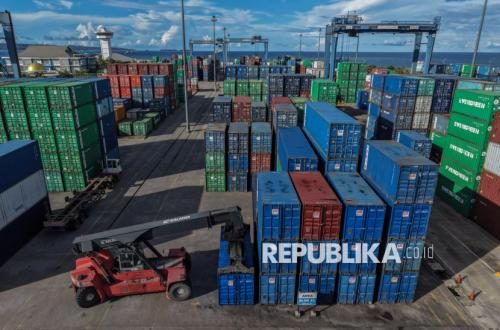
The Ministry of Trade (Kemendag) has accelerated foreign trade licensing services by setting a maximum processing time of five working days. The policy is part of government reforms to import governance aimed at strengthening the business climate and enhancing national trade competitiveness.
Trade Minister Budi Santoso said all foreign trade licensing services are now conducted online via the integrated Electronic Single Submission (SSm) system. He stated that digitalisation is a crucial step to reduce bureaucratic hurdles long complained about by businesses.
“The government is continuously making fundamental changes to foreign trade regulations to create simpler, faster, transparent, and integrated trade governance,” Budi said during a working meeting with Commission VI of the House of Representatives (DPR RI) in Jakarta on Saturday, 30 May 2026.
Budi explained that the reforms aim not only to speed up services but also to strengthen import control and consumer protection amid global trade dynamics. The government believes efficient licensing services can improve business certainty and support investment inflows.
“This step is part of bureaucratic reform to enhance national trade efficiency while strengthening the investment climate and Indonesia’s trade competitiveness,” Budi said.
In import governance, the government categorises goods into three types: prohibited imports, regulated imports, and those allowed under general provisions. This classification aims to strengthen oversight while providing legal certainty for businesses.
Importers must also have a Business Identity Number (NIB), which serves as an Importer Identification Number (API). Additionally, imported goods must generally be in new condition before entering the domestic market.
“For certain commodities, importers must also obtain business licenses for imports and undergo technical verification by independent surveyors. This ensures compliance with applicable regulations,” Budi said.
Despite the accelerated licensing process, the government stresses that import oversight is being tightened through integrated electronic licensing and monitoring systems. Kemendag believes bureaucratic simplification must go hand-in-hand with increased accountability and transparency.
Furthermore, Kemendag is strengthening national industry protection through trade safeguard measures. According to Budi, Indonesia is among the countries actively using these instruments to anticipate import surges that could threaten domestic industries.
“This demonstrates Indonesia’s active use of trade instruments to protect domestic industries from import surges that could disrupt national industry sustainability,” he said.
Meanwhile, Kemendag is enhancing oversight of circulating goods and processed food products in coordination with relevant ministries and agencies. This ensures food safety, accurate product information, and compliance with national standards.
Focus products include white crystalline sugar, wheat flour, cooking oil, bottled water, instant coffee, and canned fish, which are subject to mandatory Indonesian National Standards (SNI). Oversight also covers labelling, measurements, quantities, weights, and Packaged Goods (BDKT) regulations.
Kemendag is also strengthening oversight of fortified products such as wheat flour, palm cooking oil, and iodised salt. Alongside the Halal Product Assurance Agency (BPJPH), it is drafting a memorandum of understanding to enhance halal product oversight in the market.
DPR RI Commission VI member Rachmat Gobel supports Kemendag’s regulatory strengthening efforts. He believes import control and national industry protection policies are on the right track, though implementation and oversight need continued reinforcement.
DPR RI Commission VI also urged Kemendag to enhance oversight of processed food products, strengthen food trade governance, and tighten modern retail market monitoring through inter-ministerial coordination. These steps are deemed crucial for boosting consumer protection and maintaining a healthy domestic business climate.