
Kemdiktisaintek strengthens maritime vocational education to align with global dynamics
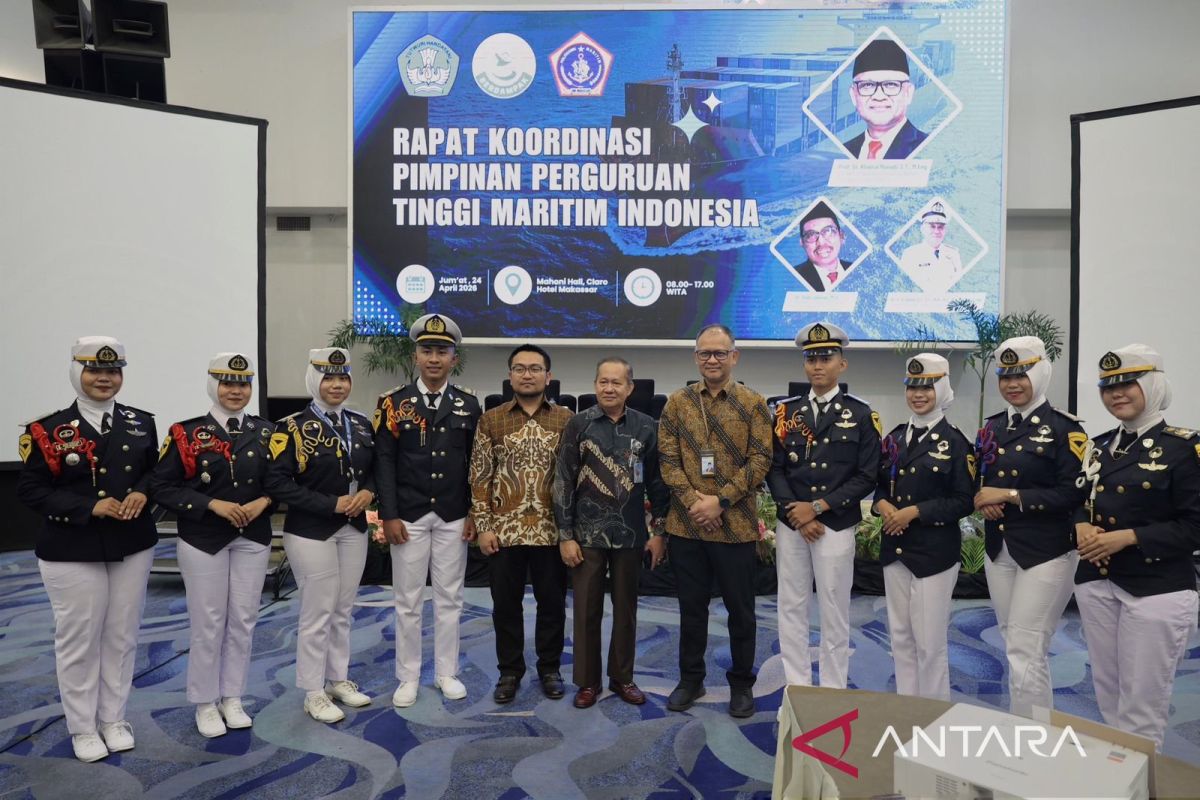
This momentum must be utilised to strengthen consolidation and collaboration among maritime education institutions, in order to drive vocational education transformation oriented towards graduates who are employable and competitive…
Jakarta (ANTARA) - The Director General of Higher Education (Dirjen Dikti) of the Ministry of Education, Higher Education, Science, and Technology (Kemdiktisaintek), Khairul Munadi, is encouraging the transformation of maritime education in Indonesia to adapt to global dynamics and industry requirements.
This was conveyed at the Coordination Meeting of the Maritime Higher Education Leaders Forum in Makassar on Friday (24/4).
Through a statement in Jakarta on Sunday, Dirjen Dikti Khairul Munadi emphasised that this transformation step is deemed crucial so that vocational education transformation can run optimally and produce graduates who are not only competent but also highly competitive in capturing job market opportunities.
“This momentum must be utilised to strengthen consolidation and collaboration among maritime education institutions, in order to drive vocational education transformation oriented towards graduates who are employable and competitive, in capturing various available opportunities,” he said.
The vision of strengthening the maritime sector aligns with the directive of President Prabowo Subianto, who positions maritime affairs as one of the main pillars of national development to realise Indonesia as the world’s maritime axis.
Khairul assesses that opportunities for maritime graduates on the international stage are wide open, given that the global shipping industry is projected to still face a shortage of tens of thousands of skilled workers, especially at the officer level.
Although Indonesia ranks among the major global suppliers of seafarers, Khairul notes that this great potential has not yet been fully consolidated because the contribution of international workers is still concentrated in certain institutions only.
“Maritime vocational education must become the main pathway for preparing Indonesia’s global talent. Therefore, strengthening collaboration among higher education institutions is key so that graduates are optimally absorbed, both in the national and international job markets,” he stated.
Furthermore, the Special Staff of Mendiktisaintek for Industry Networking and International Cooperation, Oki Earlivan Sampurno, reminded of the challenges in aligning the number of graduates (supply) with the real needs of the industry (demand).
His side is committed to continue formulating concrete steps to narrow this gap through improving curriculum relevance so that every vocational graduate is increasingly ready to address the dynamically evolving workforce market challenges.