
KELOPAK Urges Equality in Law Enforcement for All Citizens
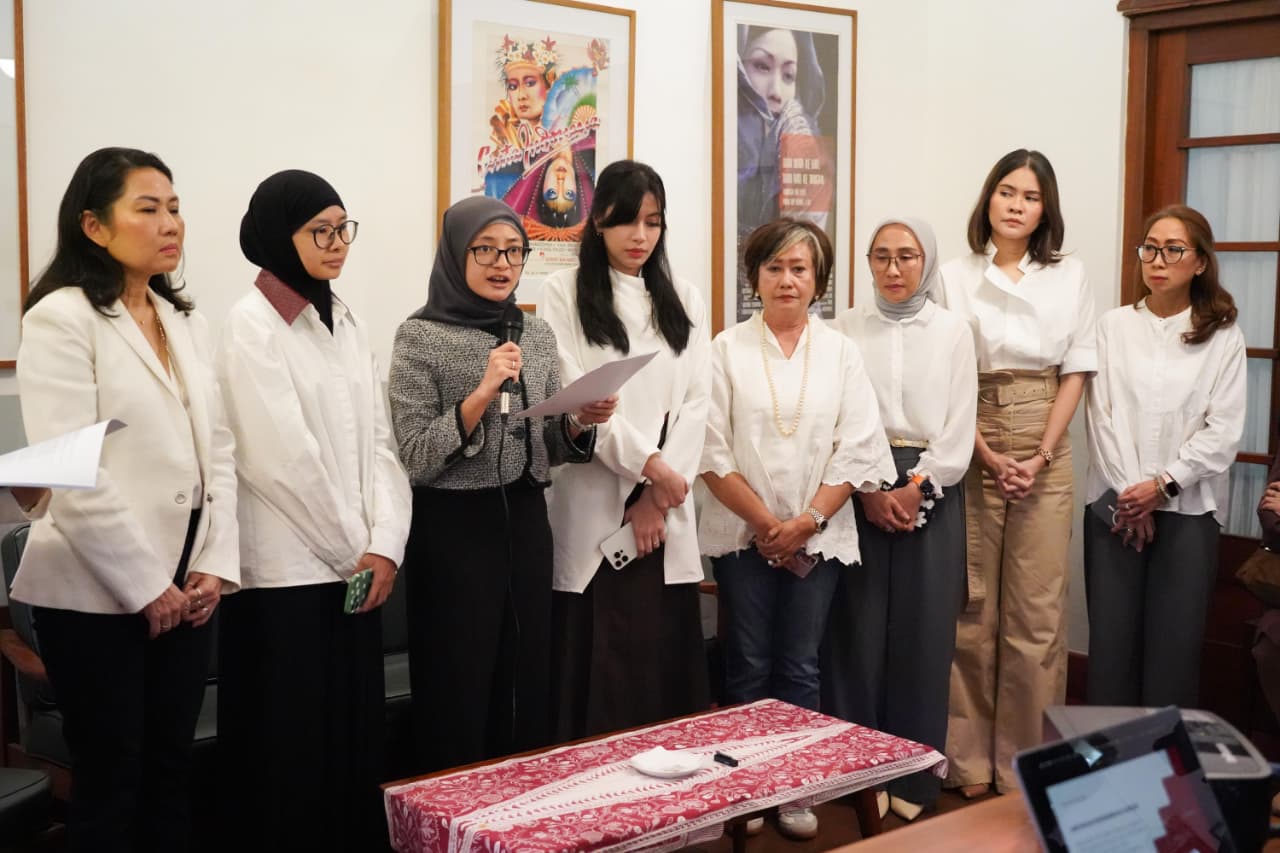
A number of wives of defendants and convicts in various criminal cases have voiced the need for law enforcement that upholds the principle of equality before the law. They believe every citizen should receive equal treatment throughout the legal process, from investigation to trial.
The aspiration was conveyed at a forum held by the Anti-Criminalisation Women’s Group (KELOPAK) in Jakarta on Wednesday (22/7). During the event, they compared their respective family experiences with the handling of several other cases that have recently drawn public attention, including the case involving former Junior Attorney General for Special Crimes (Jampidsus) Febrie Adriansyah.
According to them, differences in treatment during the legal process raise questions about the consistency of applying the principle of justice. They hope law enforcement officials can apply the same standards to all parties regardless of position or background.
Utari Wardhani, wife of former President Director of PT Pertamina International Shipping (PIS) Yoki Firnandi, said her family has felt the direct impact of a legal process she considers unbalanced. Yoki, along with several other former Pertamina officials, was implicated in an alleged corruption case concerning the management of crude oil and its derivative products within PT Pertamina (Persero), its sub-holdings, and Cooperation Contract Contractors (KKKS) for the 2018-2023 period. At the appeal level, Yoki was sentenced to seven years in prison, a fine of Rp500 million subsidiary to 140 days of confinement, and a restitution payment of Rp5 billion.
Utari assessed that from the outset, public opinion had been shaped by narratives about blended fuel and alleged massive state losses. However, she noted these issues did not emerge during the trial. She stated that the case her husband faces relates to business decisions made in the company’s operations, such as the procurement and sale of crude oil and fuel products, as well as ship chartering, which she claimed followed company procedures. “We deeply regret that the presumption of innocence is merely a slogan. Public opinion continues to be steered, and no one is willing or brave enough to cover the story from our perspective,” Utari said. She also highlighted the house search conducted at night, detention carried out before questioning, and a court ruling she felt merely repeated the indictment. “We increasingly feel criminalised in the name of the law,” she added.
A similar experience was shared by Dwi Afriani Nurfajri, known as Ririe, wife of Ibrahim Arief (Ibam). She questioned several procedures in the handling of her husband’s case. According to Ririe, their house was searched using a warrant that did not include Ibam’s name. During the search, officers only seized a mobile phone and found no valuables or cash. Ririe also revealed that Ibam was forcibly picked up on the first summons, even though the family had requested a postponement because he needed to undergo a cardiac catheterisation procedure. “The prosecutors ignored it, so Mas Ibam suffered a heart attack while in detention,” she said.
Meanwhile, Reisha, or Rei, wife of former BRI Ventures President Director Nicko Widjaja, said her family only learned of the change in her husband’s legal status after his second examination as a witness. According to her, Nicko had previously cooperated by attending the examination and handing over his mobile phone to investigators. However, after that examination, Nicko was named a suspect. “In reality, Nicko never came home again from that day, becoming a suspect without a sufficiently clear explanation for our family,” Rei said. She also questioned aspects of the trial process, including an audit conducted after the suspect designation and the use of the audit results from the Development Finance Comptroller (BPKP). According to Rei, during the trial, BPKP stated that the investment loss occurred when funds were transferred to a startup company. She argued that venture capital investments inherently require a certain period to determine whether they yield a profit or loss. Rei also claimed her family had received messages advising them not to be too vocal during the trial or in public spaces. “We never asked for special treatment; we are just Indonesian citizens. We hope for a fair legal process with the same standards for all citizens,” she said.
At the event, KELOPAK issued a statement emphasising the need to stop the practice of criminalisation through legal instruments and the importance of protecting business decisions made in good faith. They also urged law enforcement officials to handle cases independently, professionally, and free from intervention, while prioritising the principle of equality before the law.
Transparency International Indonesia (TII) Secretary-General Danang Widoyoko assessed that the testimonies from these families indicate a perception of inconsistency in law enforcement. He also referred to the handling of the case involving former Jampidsus Febrie Adriansyah as an example that has drawn public attention regarding the consistency of the legal process. “We have seen with our own eyes 74 kg of gold and large amounts of money in various foreign currencies. We are not stupid enough to not know that something is amiss in that case,” Danang said. Furthermore, Danang noted that Indonesia’s Corruption Perception Index (CPI) score fell to 34 in 2025 from 37 in 2024, with the country’s ranking dropping from 99th to 109th. According to him, this condition shows that corruption eradication efforts are not improving.