
Keliki Energy Self-Sufficient Village Achieves Food Security Through This Method
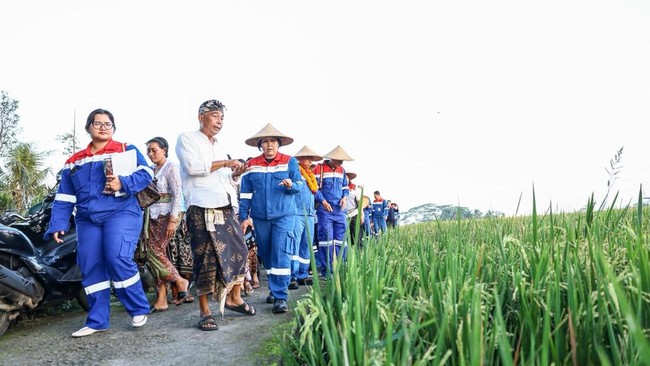
Jakarta, CNBC Indonesia - Pertamina has reinforced its commitment to environmental sustainability and community economic improvement through various empowerment programmes across Indonesia. One such initiative is the Desa Energi Berdikari (DEB), an innovative village that utilises clean energy to promote community self-sufficiency through Renewable Energy (EBT).
DEB Keliki in Tegalallang District, Gianyar Regency, Bali, is Pertamina’s initiative to provide renewable energy to rural communities. The programme aims to make renewable energy a solution to meet community needs. DEB Keliki’s main activities include waste processing into compost and food security through environmentally friendly farming systems.
The energy source for waste processing and irrigation pumps is supported by a Solar Power Plant (PLTS). Pertamina’s Board of Commissioners observed and listened directly to beneficiaries about the programme’s impact on DEB Keliki’s community autonomy.
I Wayan Sumada, a Local Hero and Chairman of the Village-Owned Enterprise (BUMDES) Yowana Bakti Keliki, described the impact of Pertamina’s mentorship, guidance, and facility provision in his village.
“At Keliki Village, we produce around 7 tons of waste daily. The presence of an Integrated Waste Management Facility (TPS3R) – Reduce, Reuse, Recycle – greatly assists the community in managing and processing waste,” he said.
To support waste processing, electricity from a 10.5 kWp (Kilowatt Peak) PLTS is required. This PLTS generates 14,256 kWh of solar energy annually. Besides saving Rp21 million annually on electricity costs, it also reduces greenhouse gas emissions by 13.7 tonnes of CO2eq per year.
He added that Pertamina’s support has indirectly encouraged community behaviour change, with households now sorting waste into organic, inorganic, and residual categories.
“Thanks to our collaboration with Pertamina, community awareness in waste segregation has significantly improved. We manage waste to return it to nature, making it even more beneficial,” he added.
For paddy field irrigation, DEB Keliki is also supported by a 17.5 kWp PLTS. This system powers solar-powered groundwater pumps, supporting irrigation for seven Subak (Tain Kambing, Sebali, Uma Desa Keliki, Jungut, Umelikode, Bangkiangsidem, and Lauh Batu) during the dry season. The irrigation-focused PLTS produces 84,000 kWh of solar energy annually, reducing GHG emissions by 23.1 tonnes of CO2eq and saving Rp35 million in electricity costs yearly.
From this agriculture, DEB Keliki produces organic rice, significantly increasing harvest productivity. Before the organic rice programme, yields were 5 to 5.5 tons per hectare; after Pertamina’s mentorship, this rose to 8.7 tons per hectare.
Pertamina’s Independent Commissioner, Raden Adjeng Sondaryani, expressed admiration for the programme’s positive environmental impact and economic benefits for the community.
“DEB Keliki demonstrates Pertamina’s commitment to supporting communities through its programmes. Seeing its success, I and the Board of Commissioners are delighted, and we hope the company’s TSJL initiatives can continue to deliver direct benefits to the public,” she said.
DEB Keliki has now become a model ecosystem for community economic growth through Eco Village and Agrikultur activities. It benefits 1,200 households, employs 9 workers, and collaborates with 15 local SMEs. Additionally, waste management has led to high-quality organic fertiliser, ecoenzyme production (a multi-purpose liquid from kitchen waste fermentation), and organic compost.
Due to this success, the village attracts visits from universities and international tourists. Around 6,000 visitors have come to admire the rice fields, learn about waste management and clean energy-based agriculture, and enjoy local snacks at community cafes, boosting Keliki’s economy.