
KELANA Programme Arrives in Yogyakarta, Gen Z Learns Energy Transition First-Hand
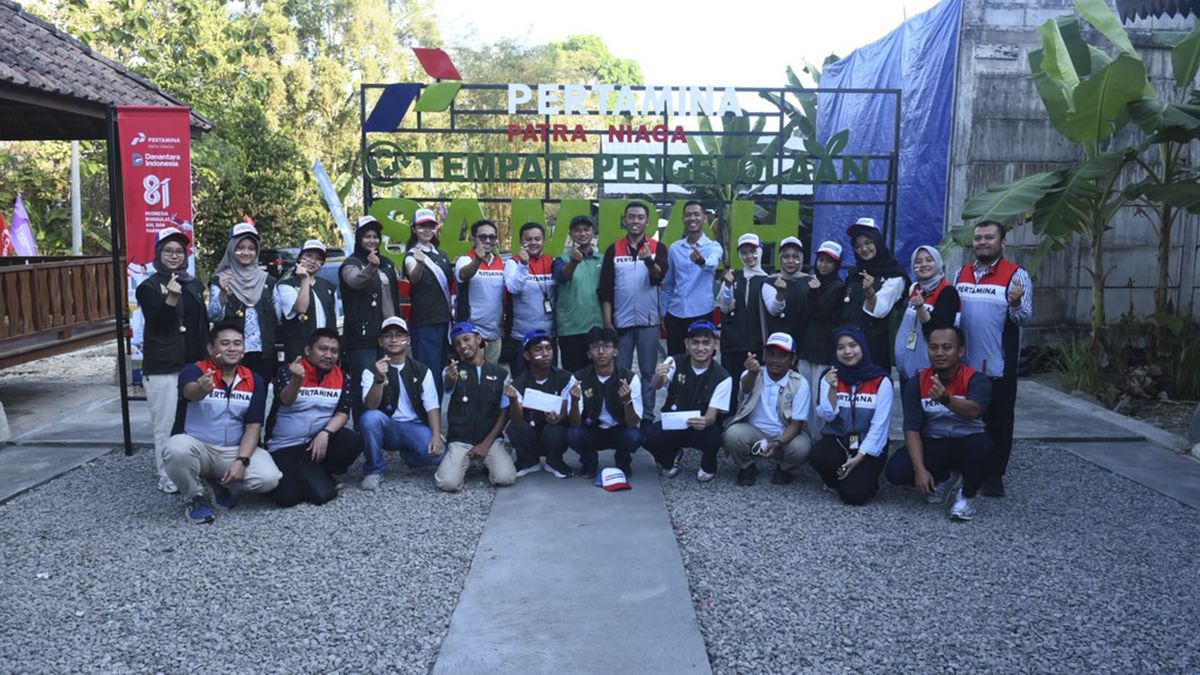
Thirteen high school students were invited to observe first-hand practices in environmental management, energy transition, circular economy, and biodiversity conservation as part of the third edition of the Kenali Lingkungan Bareng Anak Muda (KELANA) programme, themed ‘Java Overtrip’. The experiential learning programme, initiated by the Ministry of Environment, continued in Yogyakarta on Sunday, 9 August. Rather than merely attending seminars or receiving classroom materials, the participants were taken to visit several locations to see how environmental issues are addressed through collaboration between industry, government, correctional facilities, communities, and environmental organisations. Romi Setiawan, Head of the Communication, Information, and Education Working Group at the Ministry of Environment’s Public Relations Bureau, stated that KELANA is designed to provide participants with direct experience of the learning objects. He noted that, in line with the Environment Minister’s directives, the programme aims to move beyond seminar-style learning and bring participants closer to the subjects of their study. ‘These KELANA participants are expected to disseminate the knowledge they have gained to their surroundings,’ Romi said. During their visit, the 13 high school students explored cross-sector synergy between strategic industries, correctional institutions, village-level government, and non-governmental organisations in responding to urban and regional ecological crises. The journey began at PT Pertamina Patra Niaga Fuel Terminal Rewulu. At the fuel distribution facility, they learned how energy distribution reliability goes hand in hand with environmental management. Participants not only observed the facility’s operational processes but were also introduced to biodiversity conservation efforts within the industrial area. Fuel Terminal Rewulu has developed a conservation zone, including a Javan deer captive breeding programme and a chicken farm with integrated waste management. Taufik Kurniawan, Area Manager of Communication, Relations, and CSR for Pertamina Patra Niaga Central Java Region, said the presence of young people in the programme is important for spreading the message of environmental management. ‘These young people have an endorser spirit and can spread goodness to their surroundings. We hope they can share that Pertamina has maximised energy distribution, along with our innovative and dynamic environmental management efforts tailored to needs,’ Taufik said. Participants then visited the company’s internal TPS3R waste management facility, which applies circular economy concepts. There, they observed innovative independent waste management practices, including composting organic waste into quality fertiliser, mechanically shredding plastic waste to facilitate further recycling, utilising Besthing (Bio-Energy for Storage Tank Lighting) innovation to convert non-organic residual waste into alternative energy for lighting, cultivating Black Soldier Fly maggots to biologically decompose organic waste while producing high-nutrient animal feed, and operating biofloc ponds that integrate rainwater harvesting for catfish cultivation using locally produced maggot feed. Through this series of practices at Fuel Terminal Rewulu, participants gained a deep understanding that modern industrial facilities can significantly reduce environmental burdens while creating economic added value. The KELANA group then proceeded to the Bantul Class IIB Detention Centre. There, participants witnessed a collaboration between Fuel Terminal Rewulu and the detention centre through an eco-furniture programme, where plastic waste is processed into various functional and economically valuable furniture products. The programme also serves as a skills development initiative for inmates. Muhammad Syukron Ansori, Head of the Bantul Class IIB Detention Centre, said this waste processing initiative provides dual benefits. ‘This is a tangible manifestation of our shared concern in processing plastic waste into high-value goods, turning waste into rupiah while promoting self-reliance development at the Bantul Class IIB Detention Centre,’ Ansori said. The initiative demonstrates that social rehabilitation and environmental conservation can progress together, empowering inmates to work productively while becoming drivers of environmental cleanliness. The learning journey continued at TPS3R Gosari, a waste management facility resulting from collaboration between Fuel Terminal Rewulu and Guwosari Village. The facility serves as an example of community-based waste management at the village level. Beyond addressing local waste issues, the processing activities also create green job opportunities for the community. KELANA participant Amer Alif Algifahri from MAN 4 Jakarta said the experience provided him with insight into the importance of collaboration in waste management. ‘I learned a lot here, especially about turning waste into high-value products and creating green jobs. This is a great collaboration between Pertamina Patra Niaga Fuel Terminal Rewulu, TPS3R Gosari, and the Bantul Class IIB Detention Centre,’ Amer said.