
KEK Industropolis Batang Drives Indonesia-Japan Partnership to Accelerate High-Tech Investment
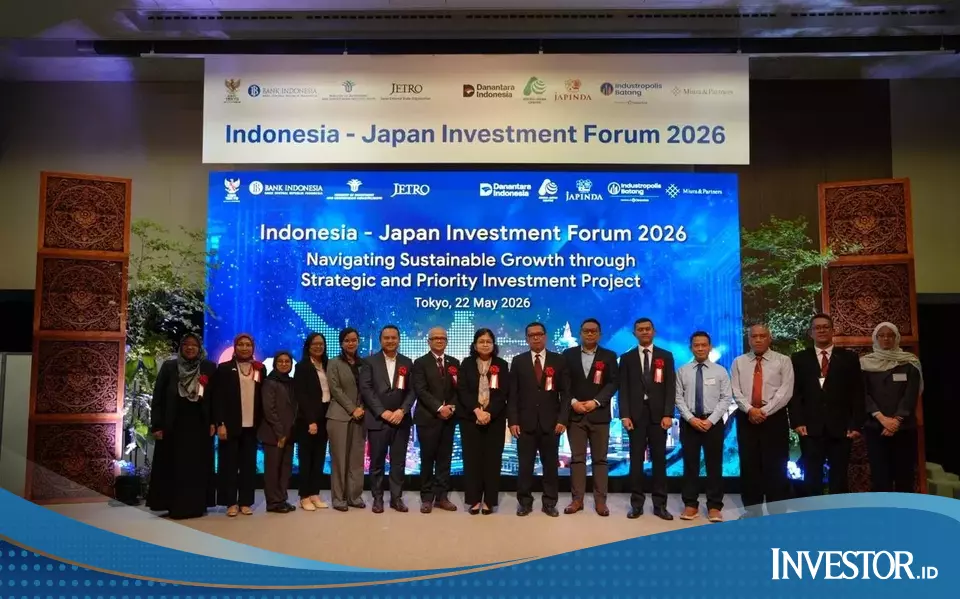
JAKARTA, investor.id – KEK Industropolis Batang has officially strengthened its international standing through a series of strategic agendas in Japan. The highlight was active participation in the Indonesia-Japan Investment Business Forum on 22 May 2026, organised collaboratively by the Indonesian Embassy in Tokyo, Bank Indonesia (BI) Tokyo, IIPC Tokyo (BKPM), and JETRO at Bellesalle Kanda in Tokyo. This series of activities aims to showcase investment potential and attract global industry players in the high-tech sector. As part of its long-term development strategy, KEK Industropolis Batang management also conducted a comparative visit to Tsukuba Science City to adopt international standards and create a sustainable future industrial zone in Indonesia. This strategic move aims to study the successful integration of industrial zones, research centres, and high-quality residential environments with sustainable urban planning. Thus, KEK Industropolis Batang is expected to develop comprehensively not only as an industrial and workplace hub but also as an ideal residential area, through the implementation of green spaces, efficient mobility systems, and integrated energy and environmental management. Irma Sefrinta, Head of Industrial Sales at KEK Industropolis Batang, emphasised that the vision of this National Strategic Project (PSN) goes beyond conventional industrial zones. KEK Industropolis Batang is committed to transforming Batang into a sustainable innovation hub. This aligns with the forum’s investment targets targeting future sectors, including electric vehicle (EV) ecosystems, medical devices, electronics, and renewable energy. Indri Septa Respati, Marketing and Development Director of KEK Industropolis Batang, stated that the zone’s key competitive advantage lies in its ready infrastructure and comprehensive integrated ecosystem prepared to meet global investors’ needs. They stressed that KEK Industropolis Batang does not merely provide ready-to-use industrial land but integrates three main sectors: industrial & processing, logistics & distribution, and tourism. With development flexibility and modern support facilities, the zone is specifically designed to ensure maximum operational efficiency for global supply chains and deliver optimal value for long-term investments in Southeast Asia. Cahyo Purnomo, Director of Promotions at the Indonesia Investment Promotion Centre (IIPC) Tokyo, said that Indonesia-Japan economic relations have been strong for over six decades, with Japan consistently being one of the largest trade partners and most trusted investors for Indonesia. “In 2025 alone, Japanese direct investment (FDI) reached $3.12 billion, with total investment over the past five years exceeding $18 billion at an average annual growth rate of 13.2%,” Cahyo said. Indonesia’s economic resilience has also shown strong performance amid global dynamics, with direct investment reaching $30.2 billion in the first quarter of 2026, a year-on-year growth of 18.9%. He added that under President Prabowo’s vision for Golden Indonesia 2045, the country aims for 7-8% national economic growth, requiring approximately $814.4 billion in new investments over the next five years. This momentum is seen as a strategic opportunity for Japanese high-tech industries to expand collaboration in Indonesia, not just through conventional business partnerships but towards genuine sustainable co-creation. “The Indonesian government continues to strengthen structural reforms through risk-based licensing via OSS, competitive fiscal and non-fiscal incentives, and enhanced industry standards aligned with global ESG frameworks,” he said. High-value-added downstream investment growth in Indonesia has increased by over 43% in 2025, particularly in strategic mineral sectors such as nickel and cobalt, opening significant opportunities for KEK Industropolis Batang to develop as a safe, diversified, and sustainable Indo-Pacific regional supply chain hub through advanced Japanese technology support. At the business forum attended by over 100 participants from international investors, government representatives, and business associations, strong support was also expressed by Bank Indonesia Deputy Governor Filianingsih Hendarta. She stressed that Indonesia-Japan economic synergy is a concrete step to strengthen sustainable investment and deepen global supply chain integration in the Asian region. Filianingsih stated that KEK Industropolis Batang has a strong value proposition for Japanese high-tech investors, particularly through Local Currency Transaction (LCT) policies, national financial system stability, and comprehensive fiscal incentives to create a more competitive and globally resilient investment climate. She added that the combination of infrastructure readiness, regulatory support, and future industry development direction makes KEK Industropolis Batang a strategic zone with potential to support Japanese industrial expansion in Indonesia. The Tokyo agenda series was