
Keeping the Whip Cracking: Kuda Lumping on Bekasi’s Streets
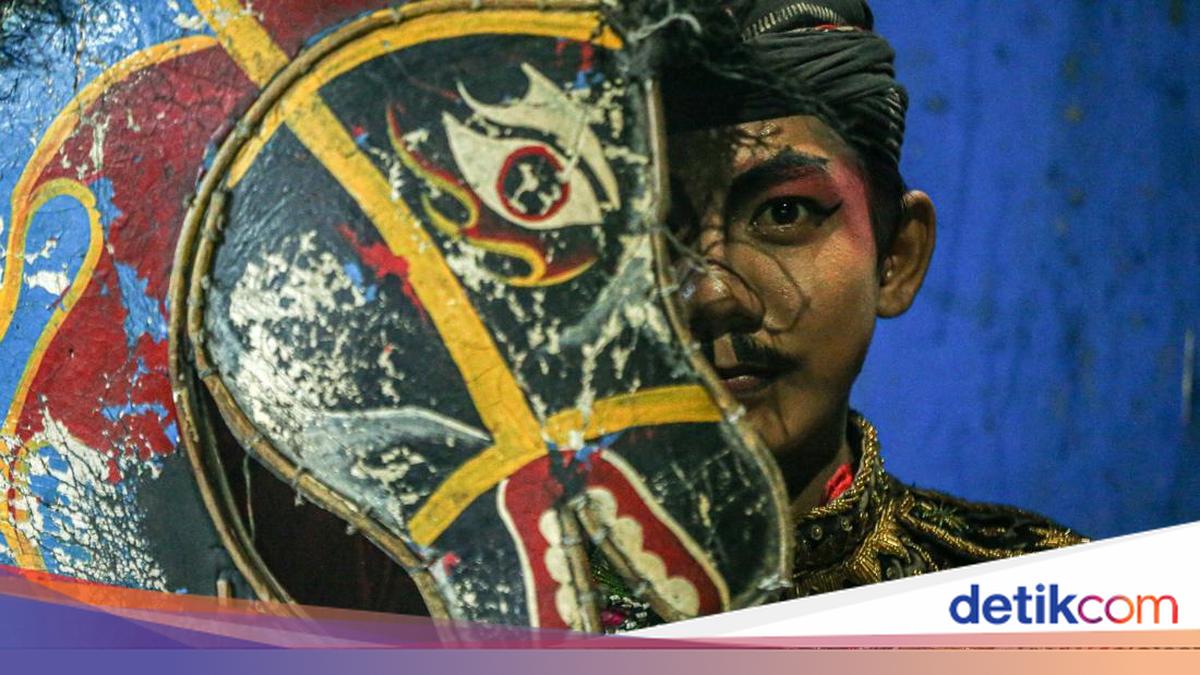
As evening approaches, activity picks up at a three-room rented house in Kranji, Bekasi, West Java. Iwan Kurniawan, 31, is busy applying make-up alongside his child, Rizki, 10, and his two brothers, Fikar, 22, and Tole, 23. Armed with kuda lumping props and small whips, the family prepares to make its way through the bustling city. Their make-up and traditional performance costumes are an initial effort to attract public attention and introduce a family heritage passed down from an early age.
Iwan’s family belongs to Turonggo Putra Mandiri, an arts group from Surabaya, East Java, which preserves kuda lumping, reog, angklung, gotong singa and a mild form of debus. In the past, the extended family performed under the names Turonggo Joyo and Turonggo Anom in Jakarta’s Kota Tua area. But changing circumstances and the area’s redevelopment forced them to leave. They are now trying to rebuild their performance activities, which came to a complete halt during the COVID-19 pandemic.
When they have no performance bookings, they do not sit idle. From late afternoon into the evening, Iwan’s family takes to the streets and visits local markets. They perform a range of physical acts safely, including breathing fire, dancing and fire-eating. These performances require specific rules and preparation, with knowledge passed on gradually and carefully within the family.
Some 20 to 23 family members are still working to preserve this traditional art. Iwan’s passion, which began with his wife, is being passed on to the next generation, as shown by the involvement of Rizki, who is only 10. With gadgets and social media increasingly drawing people’s attention elsewhere, Iwan chooses to appear in public in person, demonstrating that traditional arts such as kuda lumping still exist and deserve to be preserved.
Preserving this art is, for them, the responsibility of the next generation. The knowledge they have gained is like blood flowing from one generation to the next: shared continuously, as they tirelessly walk through Bekasi’s markets and streets. In this way, they ensure the flame of ancestral tradition continues to burn and remains known to those who come after them.
Iwan picks up a kuda lumping prop as he prepares to go out, entertaining people and introducing the art form in Bekasi.
Before setting off, Iwan and his family apply make-up at their rented home, using simple cosmetics to create their characters’ looks.
Rizki, 10, Iwan, 31, Tole, 23, and Fikar, 22, pose in the alley outside their rented home before leaving.
They travel through Bekasi’s traffic on one motorbike, usually heading to markets that are busy at night. They do this when the arts group they belong to has no performance bookings.
Although they do not present the full show, they also perform some of the acts usually seen on a large stage. Because the streets are shared with passing vehicles, they have to adapt their performances to the conditions.
Accompanied by music, their featured acts include breathing fire, cracking whips and eating fire. These performances attract the attention of local residents.
The kuda lumping, or jaranan, tradition was brought to Bekasi in 1990. Before performing on the streets, the family often presented its acts in Jakarta’s Kota Tua area.
Following the area’s revitalisation, they now have to pitch their performances to events related to the arts.
For Iwan and his family, preserving the art by taking it to the streets is a legacy that must be introduced to the public so it is not lost to changing times.
Source: jawawa.id (https://jawawa.id/newsitem/keeping-the-whip-cracking-kuda-lumping-on-bekasis-streets-1794106283)
Originally published by detikcom (https://news.detik.com/intermeso/d-8742632/menjaga-lecut-pecut-kuda-lumping-di-aspal-bekasi), translated from Indonesian