
Keeping the rupiah sovereign on home soil
The simple act of safeguarding the rupiah’s sovereignty is also visible in the everyday habits of the Victory shop at Simpang Take, Jagoi Babang subdistrict.
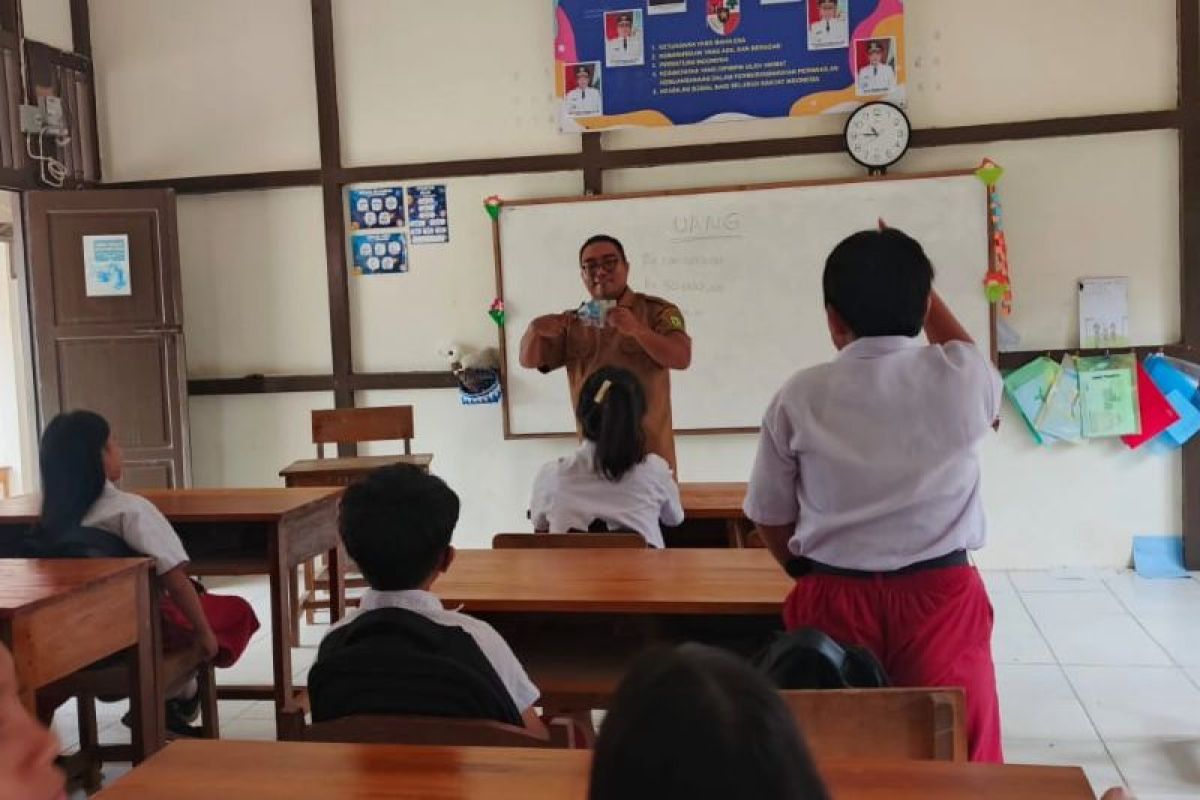
Bengkayang (ANTARA) — “Children, take out the money you have in your pockets,” said Carsan, a teacher affectionately known as Asep Dea, as he stood before a class at SDN 08 Risau primary school in Jagoi Babang subdistrict, Bengkayang Regency, West Kalimantan.
One by one, small hands reached into pockets. Several pupils pulled out crumpled rupiah banknotes. Others showed Malaysian ringgit notes.
The sight was nothing new for Asep. In the Indonesia-Malaysia border area where he teaches, the ringgit is also present in people’s daily lives. Malaysian phone signals are often picked up, whilst residents obtain certain necessities from Sarawak.
Asep then held up a Rp100,000 note.
“Look at the portraits of the heroes and the scenery on this note. This is the rupiah, the official currency of our country, Indonesia. Every note you hold carries a story of the struggle and the beauty of our own homeland,” said Asep Dea.
The children were invited to recognise the portraits of national heroes, learn the banknote’s security features, feel its texture, and take part in buying-and-selling simulations using rupiah.
This simple lesson carries deeper meaning in a border region. For Asep, introducing the rupiah to children is not merely about teaching the value of denominations, but about instilling identity and a sense of belonging to Indonesia.
For him, safeguarding the rupiah does not always have to begin with grand policy. It can start in the classroom, through simple conversations with children who will one day become the next generation in the border region.
In frontline areas such as Jagoi Babang, exposure to foreign currencies happens naturally from the moment children begin to explore their surroundings. If they are not introduced to and familiarised with the rupiah from an early age, dependence on foreign currency can erode their sense of ownership over their national identity.
“Teaching children about the rupiah is not just a matter of arithmetic or purchasing power, but about building the foundations of national consciousness,” said Asep.
As educators, teachers have a strategic role in weaving rupiah education into their daily teaching routines. This education does not have to be a separate, rigid subject, but can be integrated into everyday activities.
Through role-playing games, the historical stories behind the portraits of heroes, and the habit of saving in rupiah, teachers help shape a new perspective for their pupils.
At the border, the guardians of the nation’s sovereignty are not only the soldiers manning checkpoints, but also the teachers and schoolchildren who consistently uphold the rupiah as the only legal tender on their own soil.
The simple defence of the rupiah’s sovereignty is also evident in the habits of the Victory shop at Simpang Take, Jagoi Babang subdistrict.
The shop, managed by Fanny (31), daughter-in-law of the Manado-born owner, is one of the places where local people meet their daily needs as well as access financial transaction services. The shop has been a bank agent partner for decades.
The shop’s fading signboard remains easily recognised by residents. A simple phrase is often heard amid the community’s daily activities: “If you want to withdraw or transfer money, just go to Victory.”
Although the shop sits close to Malaysia and frequently serves customers from the neighbouring country, its goods remain priced in rupiah.
“If they shop here, they still use rupiah. The prices on the shelves are also in rupiah,” said Fanny.
Malaysian customers who come to shop simply adapt to the currency in use in Indonesian territory.
Fanny said Malaysian customers come fairly often, especially when people’s mobility increases due to customary ceremonies in the Bengkayang area.
For Fanny, using the rupiah in everyday transactions is a habit that needs no debate, despite the geographical proximity to Malaysia.
Two decades of change.