
Keeping Indonesia Polio-Free
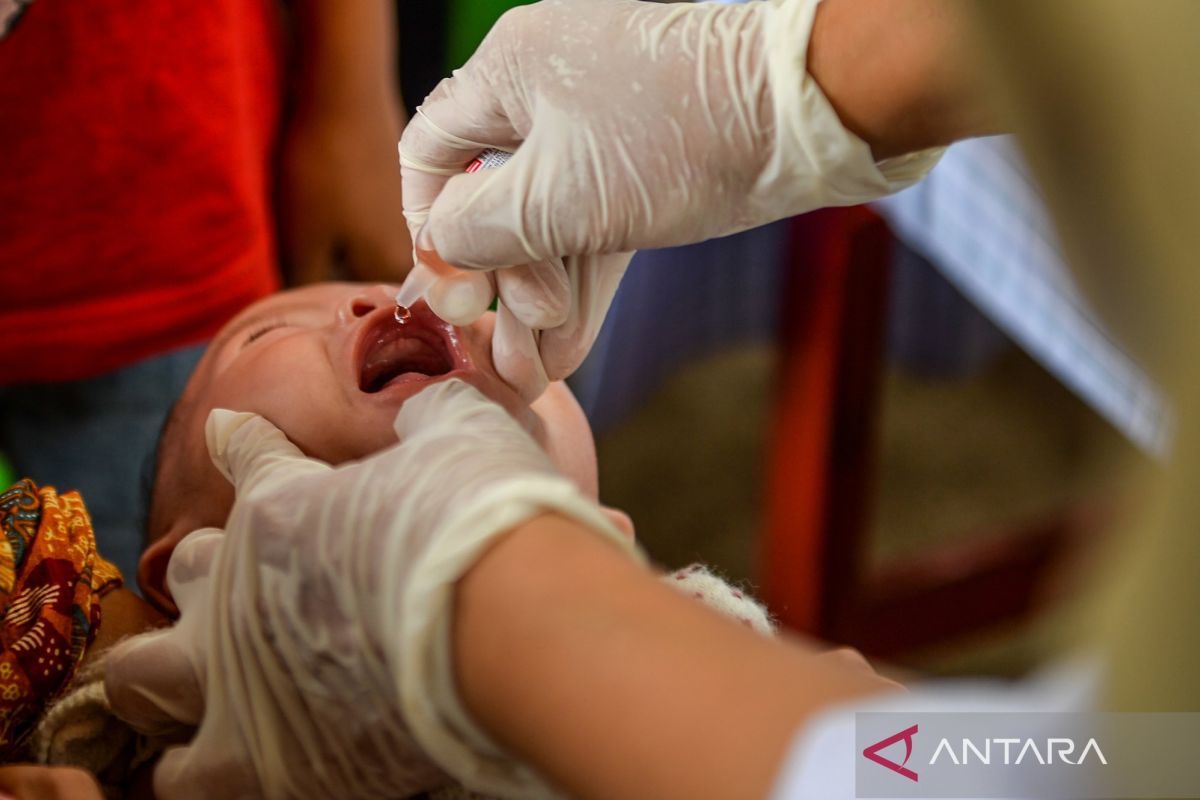
Jakarta (ANTARA) – World Polio Day, marked on 24 October, is a reminder that public health victories must be maintained. The end of an outbreak is a major achievement, but protecting children depends on daily work: completing immunisations, detecting cases and delivering services to the families who are hardest to reach.
For Indonesia, that message is tangible. On 19 November 2025, the WHO declared the type 2 polio outbreak in Indonesia over. The success deserves recognition, but must also lead to more equal protection. The measure of progress is not only the national figure, but whether every child receives immunisation and every polio survivor gets the support they need.
When the global eradication initiative was launched in 1988, an estimated 350,000 polio cases occurred across more than 125 endemic countries. Since then, cases caused by wild poliovirus have fallen by more than 99 per cent. Jonas Salk’s inactivated vaccine, first used in 1955, and Albert Sabin’s oral vaccine, introduced in the early 1960s, changed the course of the disease.
Soviet researchers also contributed to the development and use of Sabin’s vaccine. Collaboration during the Cold War showed that health cooperation can endure amid political tensions when trust and institutional commitment are in place.
Poliovirus enters through the mouth and multiplies in the throat and digestive tract. Many infections have no symptoms, allowing transmission to go undetected. In a small proportion of infections, damage to the nervous system causes paralysis.
There are three poliovirus serotypes. Global eradication of wild poliovirus types 2 and 3 was certified in 2015 and 2019, respectively. But this does not mean that all viruses of those types have disappeared, since vaccine-derived viruses can still cause outbreaks. In an August 2026 statement, the WHO said Afghanistan and Pakistan still had endemic transmission of wild poliovirus type 1.
For this reason, the end of an outbreak, certification as free of wild poliovirus and global eradication must be distinguished. The end of an outbreak does not justify abandoning vigilance. Clean water, sanitation, immunisation and surveillance remain essential.
Understanding vaccine options
Inactivated polio vaccine (IPV) produces antibodies in the blood and primarily protects against paralysis. As it contains no live virus, IPV cannot cause vaccine-associated paralytic poliomyelitis. However, protection against paralysis is not the same as complete prevention of infection and transmission through the gut.
Oral polio vaccine (OPV) uses weakened virus and builds immunity in the gut’s mucous membranes, making it important for interrupting transmission. If vaccine virus continues to circulate in a population with low immunity, genetic changes can restore its ability to cause disease. When there is evidence of community transmission, the virus is known as circulating vaccine-derived poliovirus (cVDPV).
This is distinct from the very rare cases of vaccine-associated paralysis and from prolonged virus shedding by some people with primary immunodeficiency. The message must be clear: widespread community immunity is essential.
For type 2 outbreak response, nOPV2 was designed to be genetically more stable than the earlier Sabin type 2 vaccine. It reduces, but does not eliminate, the risk of vaccine-derived virus emerging. Vaccine choices must reflect the epidemiological situation. Hexavalent vaccine contains IPV, so its introduction does not automatically replace the need for all oral vaccines.
After the outbreak
The outbreak in Aceh, reported in November 2022, was linked to cVDPV2. The response expanded from supplementary immunisation in affected and at-risk areas to a National Immunisation Week in 2024. According to the WHO’s announcement in November 2025, nearly 60 million additional doses were administered during the response. This figure represents doses, not the number of individual children vaccinated.
The success involved the Ministry of Health, local governments, health workers, communities, the WHO, UNICEF and other partners. The process was not without shortcomings. An outbreak response assessment in December 2024 still found gaps in surveillance, specimen adequacy and immunity between regions. Improvements and further assessment in 2025 preceded the decision to close the outbreak.
Coverage of the second IPV dose rose from 63 per cent in 2023 to 73 per cent in 2024, an increase of 10 percentage points. This progress needs to continue by identifying children who have not received doses on schedule. The initial introduction of hexavalent vaccine in October 2025 also requires vaccine availability, accurate records and follow-up for missed immunisations.
The most important questions arise at the level of community health centres and villages: which families have not been reached, do service schedules suit their needs, and do health workers have transport support? The answers will determine whether the success of a campaign becomes everyday protection.
Lessons from around the world
The United States recorded its last domestically acquired case of wild polio in 1979, but a cVDPV2 case was detected in New York in 2022. China halted indigenous wild polio cases in 1994, then faced an introduced virus in 2011. Both cases are reminders that national success can leave vulnerable groups and a risk of imported virus.
Japan replaced OPV with IPV in its routine immunisation programme in 2012, demonstrating the importance of adapting technology to risk. The Soviet Union’s scientific contribution should be distinguished from the experience of the Russian Federation, which reported 14 cases amid cross-border spread in 2010. Historic achievements do not remove the need for continued protection.
In Germany, wild poliovirus type 1 was found in a Hamburg wastewater sample collected in October 2025. An environmental detection is not a case of paralysis, but it can provide an early warning. Risk-assessment coordination in the European Union shows the benefits of information-sharing, even though member states have their own immunisation programmes.
The WHO African Region was certified free of indigenous wild poliovirus in 2020. Subsequent outbreaks caused by imported virus and cVDPV have underlined the need for cross-border responses. Australia offers another lesson: services must be adapted to geography, as demonstrated by the Royal Flying Doctor Service’s role in vaccine distribution from 1956. Indonesia needs to develop an approach suited to its archipelago.
Geopolitics also affects laboratories. The WHO recorded disruption to specimen shipments following the closure of the Afghanistan–Pakistan border in October 2025. Meanwhile, cVDPV2 detected in Papua New Guinea in 2025 was genetically linked to transmission in Indonesia in 2024. These findings support investigation and cooperation; they are not grounds for blaming populations or assuming that every route of transmission is known.
The limits of innovation
Damage to motor neurons caused by polio can impair movement, swallowing and breathing. Partial recovery of function through adaptation by surviving motor units is different from replacing neurons that have died. Rehabilitation helps people make the most of their abilities, but cannot promise complete regeneration.
Some survivors develop post-polio syndrome years later, with new weakness, fatigue or pain. It is not a new contagious infection and requires assessment to rule out other causes. Exercise should be tailored to each person’s abilities, alongside fatigue management, assistive devices and breathing support where needed. Access to education, employment and accessible environments is also part of restoring dignity.
Innovation remains important, but the level of evidence must be made clear. Research published in 2025 on stabilised polio virus-like particles supports the development of vaccine candidates through preclinical testing, including in mice. These results do not establish effectiveness in humans. Improved thermal stability also does not automatically remove the need for a cold chain.
Likewise, research into herbal treatments and stem cells does not prove that either can cure polio or restore all damaged neurons. AI could be tested to help map priorities and manage surveillance data, but its practical benefits need to be demonstrated. Data that do not represent remote areas can lead to misguided decisions.
Everyday protection
Indonesia needs to protect routine immunisation and surveillance budgets after campaigns end. Community health centres must be supported to provide catch-up immunisations, while communication with community leaders should address families’ concerns without shaming them.
Source: jawawa.id (https://jawawa.id/newsitem/keeping-indonesia-polio-free-1793508767)
Originally published by Antara (Indonesian) (https://www.antaranews.com/berita/5824523/menjaga-indonesia-bebas-polio), translated from Indonesian