
Keeping Indonesia Polio-Free
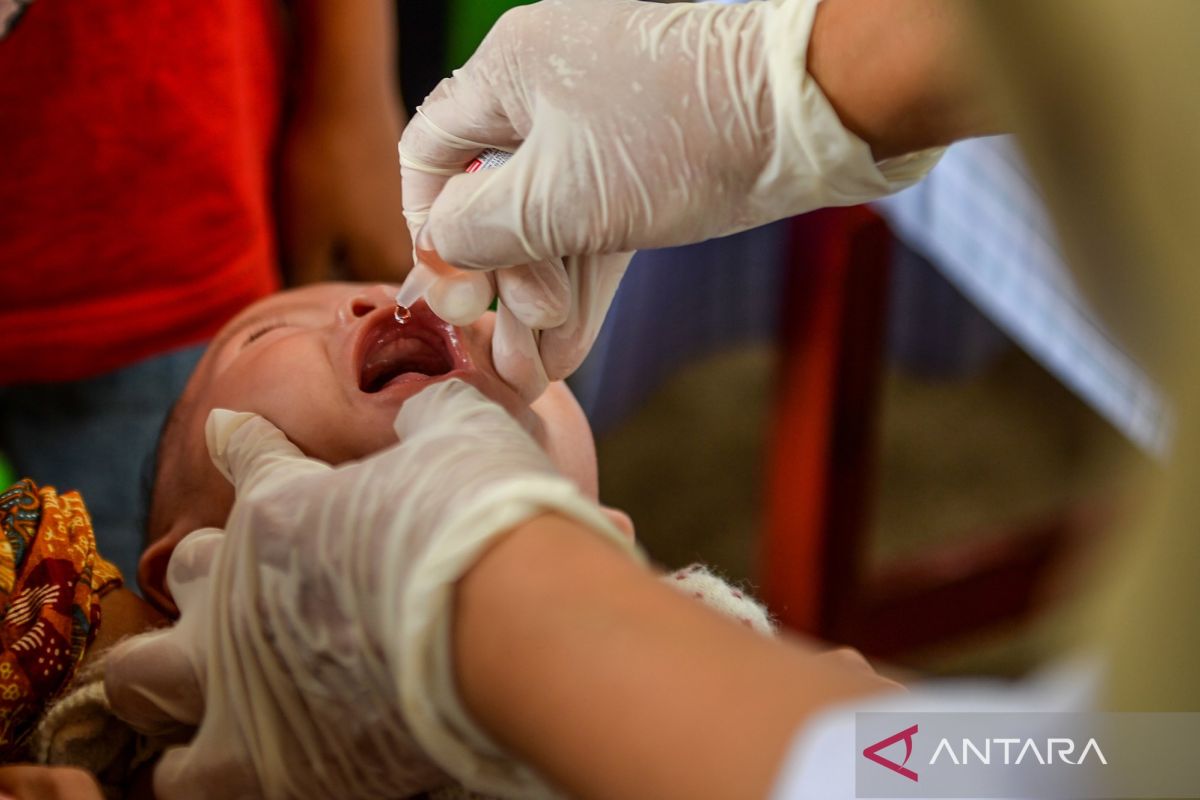
On World Polio Day, the best recognition of Indonesia’s progress is to ensure services remain available after public attention has faded.
Jakarta (ANTARA) – Every 24 October, World Polio Day is a reminder that victories in public health must be maintained.
The end of an outbreak is a major achievement, but protecting children depends on day-to-day work: completing immunisations, detecting cases and providing services to the families who are hardest to reach.
For Indonesia, that message is tangible. On 19 November 2025, the WHO declared Indonesia’s type 2 polio outbreak over. This success deserves recognition, while also being carried forward into more equitable protection. Success should be measured not only by national figures, but by ensuring every child receives immunisation and every survivor gets the support they need.
When the global eradication initiative was launched in 1988, an estimated 350,000 polio cases occurred across more than 125 endemic countries. Since then, cases caused by wild poliovirus have fallen by more than 99 per cent.
The inactivated vaccine developed by Jonas Salk, first used in 1955, and Albert Sabin’s oral vaccine in the early 1960s changed the course of the disease.
Researchers in the Soviet Union also contributed to the development of the use of Sabin’s vaccine. Collaboration during the Cold War showed that health cooperation can endure amid political tensions, provided there is trust and institutional commitment.
Poliovirus enters through the mouth and multiplies in the throat and digestive tract. Many infections cause no symptoms, allowing transmission to go undetected. In a small proportion of infections, damage to the nervous system causes paralysis.
There are three poliovirus serotypes. The global eradication of wild poliovirus type 2 was certified in 2015, and type 3 in 2019. However, this does not mean that all viruses of those types have disappeared, as vaccine-derived viruses can still cause outbreaks.
Afghanistan and Pakistan were still reported to have endemic transmission of wild poliovirus type 1 in a WHO statement in August 2026.
For this reason, the end of an outbreak, certification that wild poliovirus has been eliminated, and global eradication must be distinguished. The end of an outbreak is no reason to stop being vigilant. Clean water, sanitation, immunisation and surveillance remain necessary.
Understanding vaccine choices
The inactivated polio vaccine (IPV) produces antibodies in the blood and primarily protects against paralysis. As it contains no live virus, IPV does not cause vaccine-associated paralytic poliomyelitis. However, protection against paralysis is not the same as complete prevention of infection and transmission through the gut.
The oral polio vaccine (OPV) uses a weakened virus and generates intestinal mucosal immunity, making it important for interrupting transmission.
If vaccine viruses continue to circulate in a population with low immunity, genetic changes can restore their ability to cause disease. When there is evidence of community transmission, these viruses are called circulating vaccine-derived polioviruses, or cVDPVs.
This is different from the very rare cases of vaccine-associated paralysis, and from prolonged virus shedding by some people with primary immunodeficiency. The message must be clear: equitable population immunity is fundamental.
For type 2 outbreak responses, nOPV2 was designed to be genetically more stable than the earlier Sabin type 2 vaccine. It reduces, but does not eliminate, the risk of vaccine-derived viruses emerging.
Vaccine choices must reflect the epidemiological situation. Hexavalent vaccines contain IPV, so their introduction does not automatically replace the need for oral vaccines.
Indonesia’s work after the outbreak