
Keeping Distance from Elephants, Protecting Livelihoods in Way Kambas
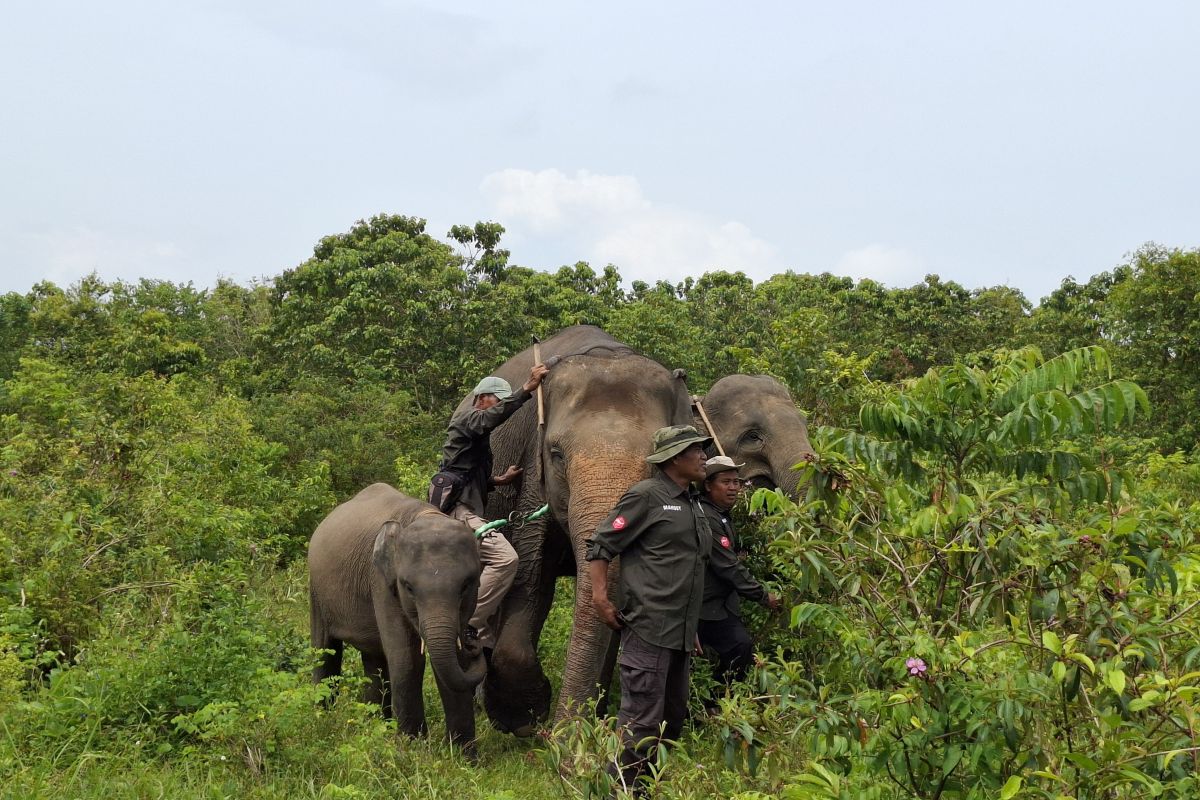
There is another equally important issue: how to ensure that communities living on the edges of conservation areas can continue to earn an income without coming into conflict with wildlife.
Bandarlampung (ANTARA) - Efforts to prevent human-elephant conflict in Way Kambas National Park (TNWK), East Lampung Regency, Lampung Province, are no longer solely reliant on boundary fences. An environment-based approach and community empowerment are being developed so that residents’ lands are no longer attractive to elephants.
Until now, iron fences and elephant dispersal were considered the only ways to curb the rampage of elephants exiting the forest. However, this method is being phased out in favour of a new approach. Residents’ lands are being managed in such a way that they are no longer appealing to elephants, while crops and animals that the wildlife dislikes are instead cultivated as sources of income for the community.
The idea is simple: if elephants dislike something, why not plant or raise it around settlements? Lemongrass and bees are two primary options. The sharp aroma of lemongrass and the sting of bees are believed to make elephants reluctant to approach. At the same time, both have economic value; bees produce honey, while lemongrass can be processed into essential oils.
Commander of the XXI/Radin Inten Military Regional Command, Major General TNI Kristomei Sianturi, stated that conflict mitigation does not stop at the construction of physical barriers. Environment-based approaches and community empowerment are also being developed. One method involves training the community to cultivate plants and animals that elephants dislike, such as lemongrass and bees.
According to Kristomei, these two commodities are expected to help ensure that elephants do not leave the forest area. Simultaneously, the yields from these activities can be utilised by the community as a source of income. Bees serve a function beyond just producing honey; their buzzing can trigger a cautious response in elephants, causing the animals to keep their distance. Therefore, beehives are placed as part of a mitigation strategy and as a new economic resource for the community.
The Chairman of the Joint Committee for the Mitigation and Handling of Negative Sumatra Elephant Interactions in TNWK, Brigadier General TNI Sriyanto, stated that approximately 900 beehives previously distributed to the community have already yielded harvests. These colonies are now being split to increase their numbers. From the approximately 900 boxes distributed, the number is expected to rise to 1,500 boxes.
“If we looked at all the boxes we handed over previously, by next week, they may have increased to 1,500 beehives,” said Sriyanto at TNWK on Tuesday (1/9).