
Kediri and the Roadmap for Nahdlatul Ulama
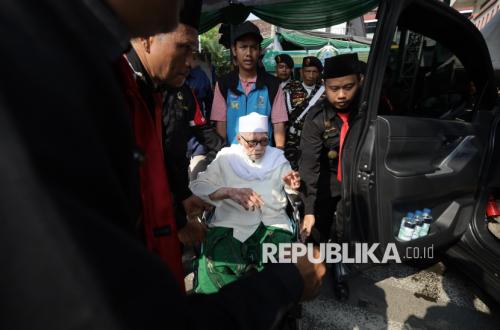
The National Conference of Alim Ulama and the Grand Conference of Nahdlatul Ulama (Munas-Konbes NU), held at the Al-Falah Ploso Islamic Boarding School in Kediri, East Java, from 20–22 June 2026, is organisationally the second-highest forum after the congress. However, its significance this time far exceeded routine organisational functions. The forum arrived at a crucial moment as NU enters its second century, facing increasingly complex challenges: maintaining organisational cohesion, strengthening governance, managing economic resources, and preserving its relevance amidst rapid social change. Kediri became a space for both reflection and projection—reflecting on the various dynamics that have coloured the organisation’s journey in recent years, and projecting the direction NU intends to take in the decades ahead. In this context, the Munas-Konbes did not merely produce a set of decisions; it demonstrated how the world’s largest Islamic organisation is striving to reorganise its institutional apparatus to be better prepared for the challenges of its second century.
Internal dynamics that surfaced at the end of 2025 certainly form an important part of the background. The open conflict between Rais Aam KH Miftachul Akhyar and PBNU Chairperson KH Yahya Cholil Staquf showed that even an organisation as large as NU is not immune to differences of opinion and tussles over authority. The reconciliation subsequently achieved through various organisational mechanisms provided a valuable lesson on the importance of institutional instruments capable of managing differences in an orderly and dignified manner. However, it would be inaccurate to read the entire Kediri agenda solely as a response to that conflict. Most of the ideas discussed were, in fact, needs that NU has long felt as a consequence of its growth into an organisation that is increasingly large, complex, and involved in various public affairs. The conflict merely accelerated awareness of the urgency for reforms that were already necessary.
One of the most important discussions concerned proposed changes to the Articles of Association and Bylaws (AD/ART). The various proposals that emerged can be read as an effort to strengthen NU’s institutional foundation so that it relies less on figures and more on a robust system. Most prominent among these was the strengthening of the Tahkim Council’s position as an internal dispute resolution body, now granted a stronger legal basis within the organisational structure. The existence of a clear arbitration mechanism is a natural necessity for an organisation with millions of members, thousands of educational institutions, tens of thousands of Islamic boarding schools, and a network of administrators spread across Indonesia and abroad. In an organisation of NU’s size, differences of opinion are not the main problem; the real challenge is providing a mutually trusted mechanism to resolve those differences. Attention also focused on a proposed change to the election mechanism for the PBNU Chairperson. If approved by the congress, the Rais Aam together with the Ahlul Halli wal ’Aqdi (AHWA) would have a greater role in determining the organisation’s leadership. Some may view this as reducing the space for political competition within the congress, while others see it as an effort to strengthen the balance between the religious authority of the Syuriyah and the executive leadership of the Tanfidziyah.