
Kebumen BUBK shrimp farm projected to yield 254.5 tonnes
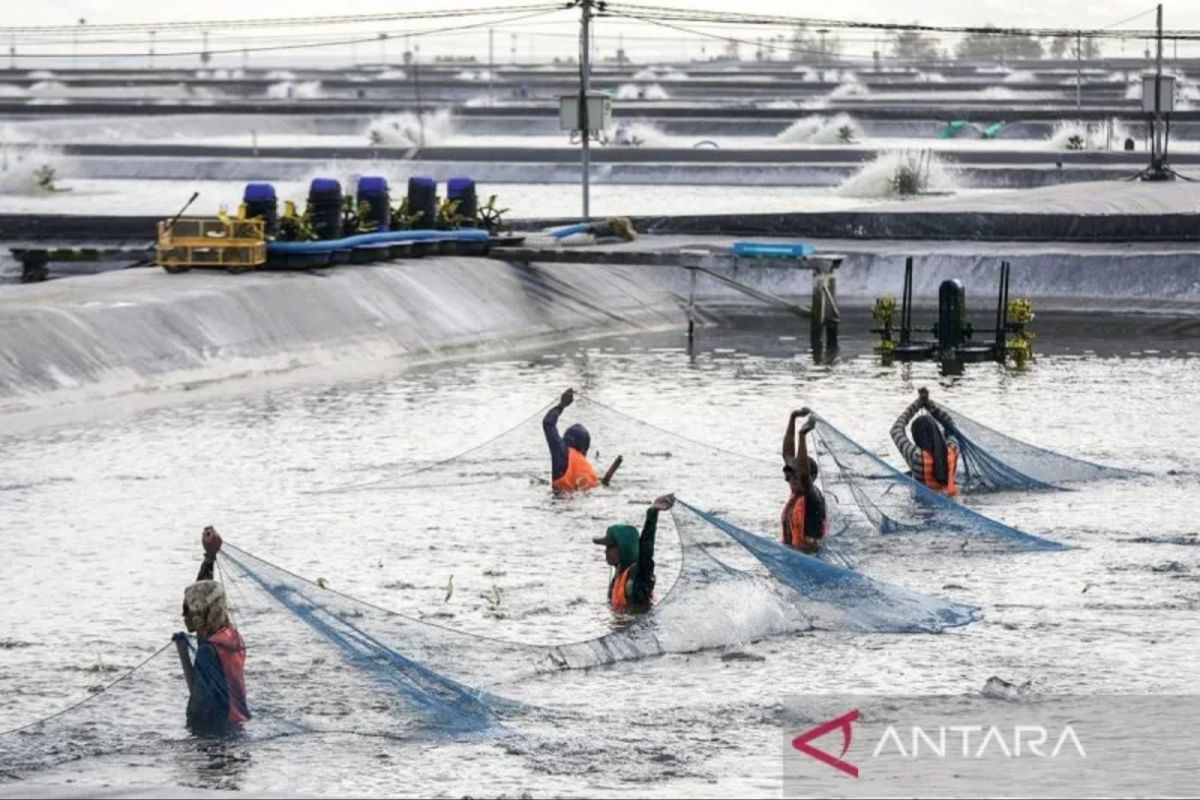
The Ministry of Marine Affairs and Fisheries (KKP) projects the Area-Based Shrimp Farming Estate (BUBK) in Kebumen Regency, Central Java, will produce approximately 254.5 tonnes of shrimp in the eighth cycle as part of efforts to boost national shrimp production. In a statement in Jakarta on Monday, the KKP said the farm’s operations are currently transitioning from the eighth to the ninth cycle. In the eighth cycle, the first harvest yielded 89.5 tonnes of shrimp from 32 plots. Meanwhile, the ongoing second phase of harvest is targeted to produce around 75 tonnes from 37 plots, while the final harvest phase at the end of July is estimated to reach around 90 tonnes from 70 plots. Thus, total shrimp production in the eighth cycle is projected to reach approximately 254.5 tonnes. Director General of Aquaculture at KKP, Tb Haeru Rahayu, said BUBK Kebumen was developed as a model for area-based shrimp farm management that applies Good Fish Farming Practices (CBIB), covering technical production aspects, environmental management, food safety, biosecurity, and community empowerment. According to Haeru, the production increase in the area goes hand in hand with the implementation of sustainable environmental management. “The separate intake, reservoir, inlet and outlet channels, and wastewater treatment plants are important parts of maintaining water quality and production sustainability,” he said. BUBK Kebumen is built on 100 hectares of land, with a built-up area of 65 hectares and an effective pond area of 24 hectares. The area is equipped with 139 production plots, 50 reservoir plots, and 17 wastewater treatment plant (IPAL) plots. While inspecting the farm area with Commission IV of the Indonesian House of Representatives on Saturday (11/7), the KKP also stocked 10.24 million fry in 32 plots to begin the ninth cycle of operations. In addition to contributing to the increase in national shrimp production, KKP noted that BUBK Kebumen has absorbed 645 local workers consisting of 145 permanent workers and 500 casual daily workers. The operation of the farm area is also considered to have an economic impact on the surrounding community through the growth of various supporting businesses, such as food stalls, daily necessities shops, providers of farm production facilities, transportation services, and lodging.