
Kebumen Becomes National Model for Data-Driven Rice Management
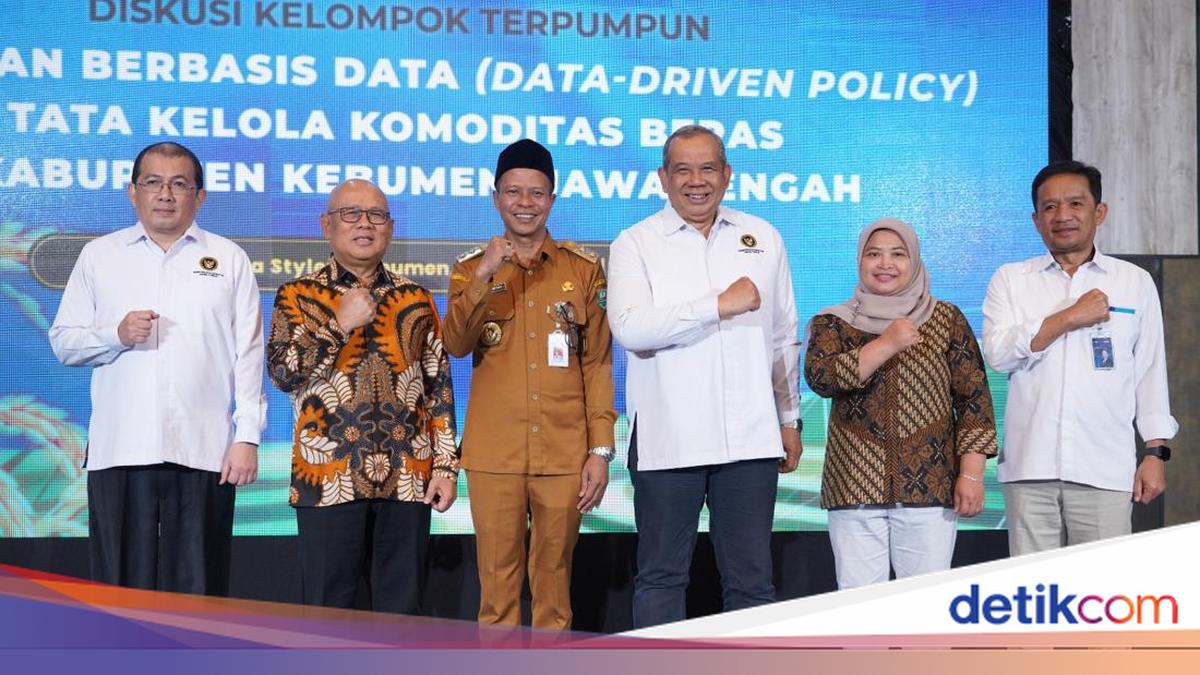
Kebumen Regency has been chosen as one of two locations in Indonesia for the purposive sampling of the Rice Journey Programme, an initiative by the Coordinating Ministry for Food and the National Research and Innovation Agency (BRIN). The programme aims to build a data-driven national rice management system to strengthen food security and support the achievement of food self-sufficiency. This emerged during a Focus Group Discussion (FGD) on Data-Driven Policy for Rice Commodity Management held by the ministry and BRIN at the Trio Azana Style Hotel in Kebumen, Central Java, on Monday (27/7). As part of the research, Grenggeng Village in Karanganyar District was selected as the study site. The village was considered ideal due to its productive rice fields, active farming community, adequate access, and its ability to represent both the potential and challenges of the agricultural sector in Kebumen. Special Staff to the Coordinating Minister for Food, Suhanto, stated that Indonesia currently records a rice surplus of 5.23 million tonnes, the highest in history. He noted that the Rice Journey Programme is a strategic government step to strengthen decision-making in the food sector. Through cooperation with BRIN, the government is developing an Executive Decision Dashboard for the Rice Journey, a Decision Support System (DSS) that integrates rice commodity data from upstream to downstream, including cultivation, harvest, milling, stock, distribution, market, and consumption. The dashboard will not only display current conditions but also generate risk analysis, simulate various scenarios, and provide data-based policy recommendations. The system is also projected to serve as an early warning system to monitor national rice production, enabling faster and more precise policy-making. Kebumen Vice Regent Zaeni Miftah welcomed the central government’s trust in making the region a pilot for the programme. As the eighth-largest rice producer in Central Java, Kebumen is considered to have significant potential as a food barn. The local government is therefore encouraging increased productivity through the provision of agricultural tools and machinery, expanding the planting area to a target of 170,000 hectares, and developing pumped irrigation systems to allow farmers to increase cropping intensity from twice to three times a year. Zaeni also expressed hope that the State Logistics Agency (Bulog) would increase its absorption of farmers’ grain. He noted that grain production in Kebumen has exceeded local consumption needs, so optimising absorption would improve farmer welfare and strengthen national food security. In implementing the Rice Journey Programme, every regional government organisation is expected to provide standardised, integrated, and interoperable data. The Communication and Informatics Office will act as the data guardian, preparing data integration, metadata, and data exchange architecture between regional bodies. The FGD was attended by the Vice Regent of Kebumen, the Special Staff to the Coordinating Minister for Food, an expert staff member for maritime economy, the Assistant Deputy for Food Price Stabilisation, the Head of the BRIN Public Policy Research Centre, BRIN researchers, representatives from Bulog, BPS Kebumen, the Assistant for Economy and Development of the Kebumen Regional Secretariat, related regional organisations, village governments, farmer groups, rice milling companies, and other stakeholders. The programme is expected to become a model for rice commodity data management that can be applied in other regions across Indonesia to strengthen national food security through more accurate, data-driven policies.