
Kebaya No Longer Just for Formal Events: Here Are the New Trends
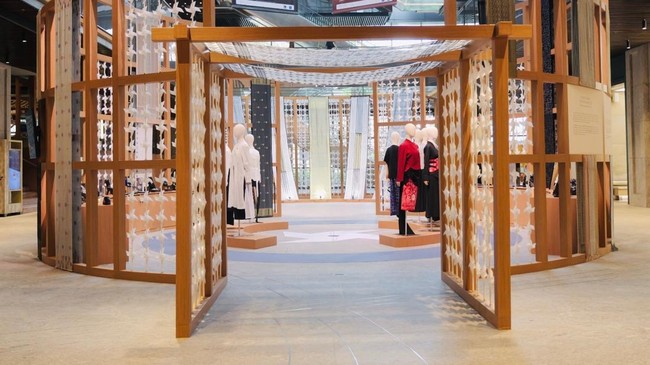
Traditional Indonesian clothing is receiving a new touch to adapt to the urban lifestyle. The kebaya, tenun, and batik are no longer positioned solely as attire for formal events but are also being developed into ready-to-wear fashion for daily use.
This trend is evident in a collaboration between designer Wilsen Willim and actress Dian Sastrowardoyo, presenting a new interpretation of several traditional Indonesian garments. The collaboration reworks silhouettes such as the Kebaya Kartini, Kebaya Kutubaru, Kebaya Janggan, Beskap, Surjan, and the Sikepan Hussar typical of the Surakarta Palace into clothing with more contemporary cuts.
Materials used include cotton, jacquard, suiting fabric, and hand-drawn Cirebon batik. A neutral colour palette was chosen to make the clothing easier to wear and mix with various types of Nusantara textiles.
‘We chose a neutral colour palette so that each design can be worn again on various occasions and is easily paired with Nusantara textiles rich in colour and motif,’ said Wilsen on Monday (10/8/2026).
‘I want the kebaya to become part of the daily life of Indonesian women, with a more casual style and comfortable materials, while still maintaining its cultural value and identity,’ said Dian.
Tenun is also part of the exploration to bring Indonesian cultural heritage into contemporary design. Through a work titled Algorithm: Universal Language, Wilsen explores the patterns and structures of Nusantara weaving and translates them into fashion, music, and visual works. In this approach, tenun is not only seen as a cultural product passed down from generation to generation; its patterns and structures are also used as a source of inspiration to create new works.
This exploration of the kebaya and tenun is part of the HERITAGE REIMAGINED programme at ASHTA District 8, Jakarta, running throughout August 2026. The programme carries the theme ‘Where Legacy Inspires Tomorrow’ and explores Indonesian cultural heritage through fashion, art, design, music, and craftsmanship.
Senior Manager of Centre Experience at ASHTA District 8, Leonardo Slatter, stated that cultural heritage needs to be continuously developed to remain relevant to the times. ‘Legacy only stays alive when it is given room to evolve,’ he said.