
Kebaya Movement Opens Economic Opportunities for SMEs and Creative Industries
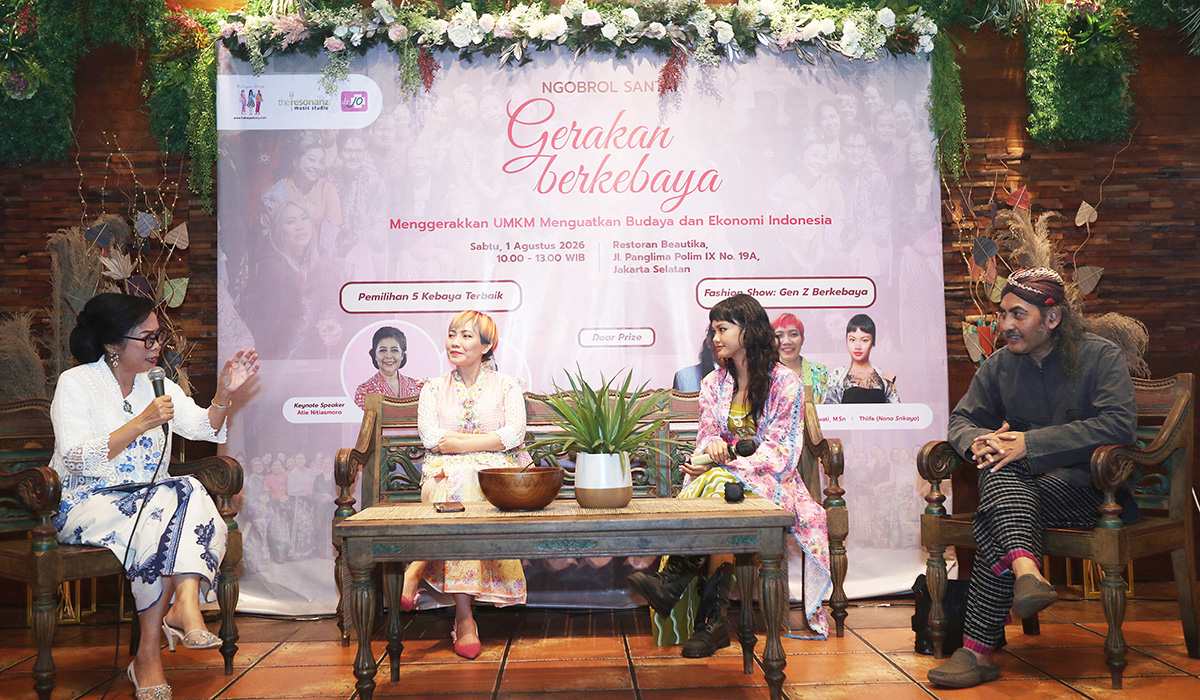
The movement to popularise the kebaya is no longer just about preserving traditional attire. Increasing public interest, particularly among the younger generation, is now opening up economic opportunities for micro, small, and medium enterprises (UMKM) operating in the kebaya sector and its derivative products.
One business owner experiencing this impact is Thiifa, founder of Nona Srikaya, who reported a 300 per cent increase in sales as the kebaya movement has grown. “We want to make the kebaya part of everyday life, not something that feels distant. Many women actually want to wear a kebaya, they just lack the confidence to start,” Thiifa said during a casual talk event for National Kebaya Day 2026 in Jakarta on Saturday.
According to Thiifa, the rising interest among young people in wearing kebaya creates opportunities for businesses to offer products that align with contemporary tastes. She encouraged women who have never worn a kebaya to give it a try. “If you have never worn a kebaya, just try it first. Start by choosing a kebaya in a colour you like. From there, your confidence in wearing a kebaya will grow naturally,” she said.
A pioneer of the ‘funky kebaya’ concept, which introduces design innovations, also noted a sales increase of up to 100 per cent amid growing public attention to the garment. Such innovation, however, does not have to erase the kebaya’s identity. Design modifications can instead provide a creative space to make the kebaya more relevant to the younger generation’s lifestyle.
Fashion designer and academic Dr. Lenny Agustin Ernawati stated that the rising interest in kebaya is inseparable from a growing public awareness of the need to preserve Indonesia’s cultural heritage. She believes designers play a crucial role in keeping the kebaya relevant without losing its fundamental character. “The kebaya has become a trend because people are increasingly aware that culture must be preserved. Many designers are now presenting modern kebayas that retain their basic form while staying relevant to the times. The kebaya is young, cool, modern, and very cute,” she said.
Meanwhile, cultural expert and Director of Culture at the University of Indonesia, Dr. Ngatawi Al-Zastrouw, sees the kebaya as having strong capital to be accepted by the younger generation because it offers authenticity and room for creative exploration. “Young people today are creative and like to try new things. They are looking for something authentic and unique, and the kebaya meets those criteria. The kebaya, which was once considered old-fashioned, has now become a space for creative exploration for the younger generation,” he said.
He added that the kebaya is not merely clothing but also carries values, norms, aesthetics, ethics, and the character of Nusantara culture. These values are now being re-actualised through the creativity of the younger generation in design and fashion.
The discussion on the relationship between the kebaya, culture, and the creative economy was part of the National Kebaya Day 2026 casual talk event, themed “The Kebaya Movement: Driving UMKM, Strengthening Indonesian Culture and Economy.” The event brought together cultural activists, academics, designers, industry players, communities, media, and UMKM to discuss how the kebaya movement can develop into a stronger creative economy ecosystem.
In addition to the discussion, the event featured a ‘Young Generation Berkebaya’ fashion show, which showcased various modern interpretations of the kebaya. The show demonstrated that the kebaya can be worn on various occasions while still carrying its inherent cultural values.