
Kearney: AI Literacy and Clean Energy Key to Indonesia's Competitiveness
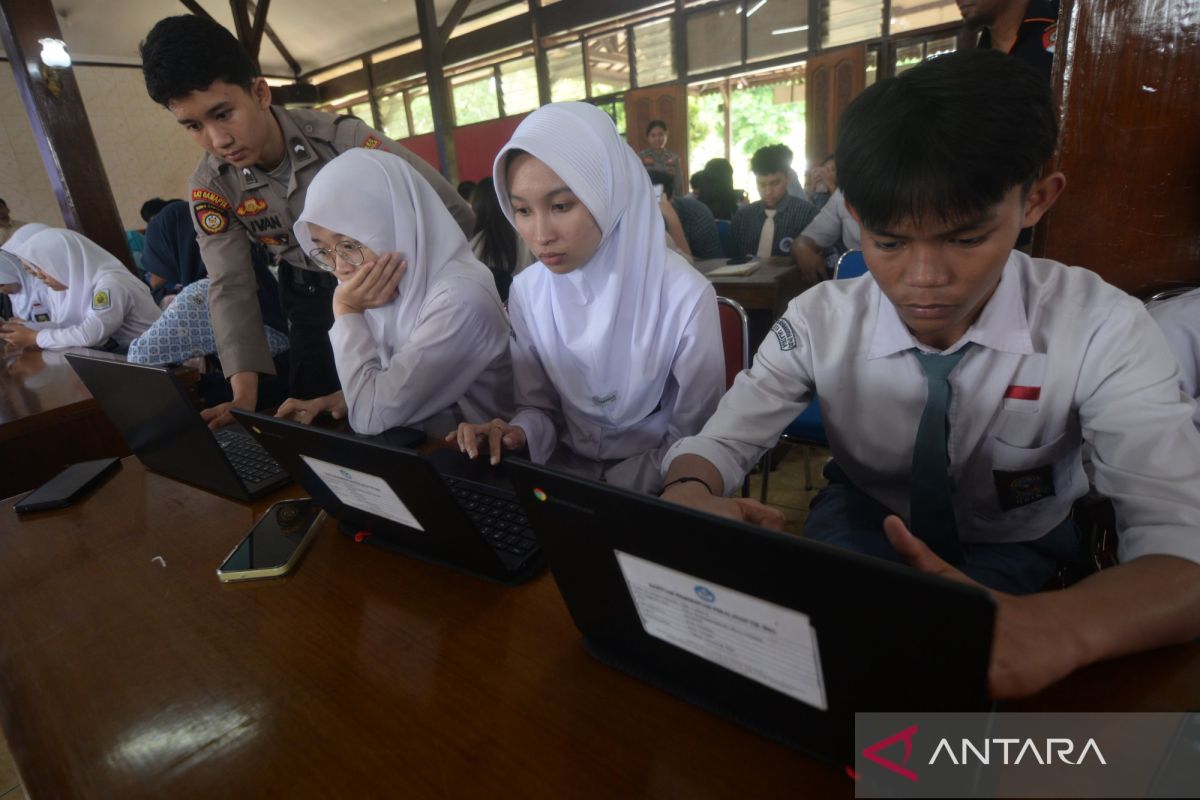
Global management consultancy Kearney has assessed that the equal distribution of artificial intelligence (AI) literacy and the provision of large-scale clean energy are two crucial factors that will determine Indonesia’s economic competitiveness in the coming AI era.
“Indonesia has a huge opportunity to participate in the AI economy, but long-term success will depend on more than just technology adoption,” said Kearney Indonesia President Director Shirley Santoso in a written statement received in Jakarta on Friday.
According to Shirley, countries will increasingly compete based on the quality of their human resources, the strength of their innovation ecosystems, the readiness of their digital infrastructure, and the ability to convert AI technology into tangible economic value. “It is very important for organisations facing digital transformation to bridge the gap between technology adoption and workforce readiness,” she said.
In its report titled “How the Economic Development Model Is Being Rewritten by AI”, Kearney mapped 67 economies representing approximately 99 per cent of the world’s gross domestic product (GDP) into five groups based on economic size and income level. Indonesia is placed in the developing country group, meaning its development strategy should focus on strengthening talent, digital infrastructure, and value-added creation within the AI value chain.
The report estimates that generative AI has the potential to create global economic value of 2.6 trillion US dollars to 4.4 trillion US dollars, or approximately Rp79 thousand trillion per year, through application across various sectors, from customer service and marketing to software engineering and research and development.
Kearney Partner and report author Tomoo Sato said AI does not merely present a wave of technological innovation but also alters various assumptions of economic development that have historically relied on labour cost advantages, capital, and physical infrastructure. “Countries that excel in the AI era are no longer those offering the cheapest labour costs, but those capable of building capabilities, infrastructure, and ecosystems to create economic value from AI on a large scale,” Sato stated.
Kearney also assessed that advantages based on cheap labour are diminishing because automation allows industries to produce output with fewer workers. On the other hand, the electricity demand of global data centres is expected to more than double, from 415 terawatt-hours (TWh) in 2024 to around 945 TWh in 2030, making energy availability a strategic factor in the AI economy.
The report also cited International Monetary Fund (IMF) estimates that around 40 per cent of workers in developing countries are potentially affected by AI, making upskilling key to maintaining economic competitiveness.
According to Kearney, Indonesia’s opportunities lie not only in AI adoption but also in the development of digital services, data infrastructure, high-tech manufacturing, and various supporting sectors within the AI value chain. Furthermore, collaboration between the government, universities, technology providers, investors, and businesses is considered a determining factor for Indonesia to transform AI development into a new source of economic growth while strengthening national competitiveness at the global level.
In line with this, the government is preparing an Indonesian AI Roadmap as a reference for national AI development and utilisation, which includes strengthening digital talent, computing infrastructure, governance, and the innovation ecosystem. Deputy Minister of Communication and Digital Affairs Nezar Patria stated in February 2026 that the AI adoption rate in Indonesia had reached 92 per cent. According to him, this high adoption rate must be followed by an increase in national capacity so that Indonesia is not just a user but also a player in AI technology development.
The government also believes Indonesia has the opportunity to strengthen its position in the global AI supply chain through the development of the semiconductor industry, supported by strategic mineral resources such as nickel, cobalt, tin, silica sand, and zinc. In the field of human resources, the government projects a need for 12 million digital talents by 2030. Currently, around 9.3 million talents are available, leaving a gap of approximately 3 million talents which will be addressed, among other measures, through the development of an AI Talent Factory. The government is developing the AI Talent Factory as a centre for research and industry-based digital talent development to support the needs of various priority sectors, including health, education, finance, and agriculture.