
KDMP Catalyses Rural Community Welfare
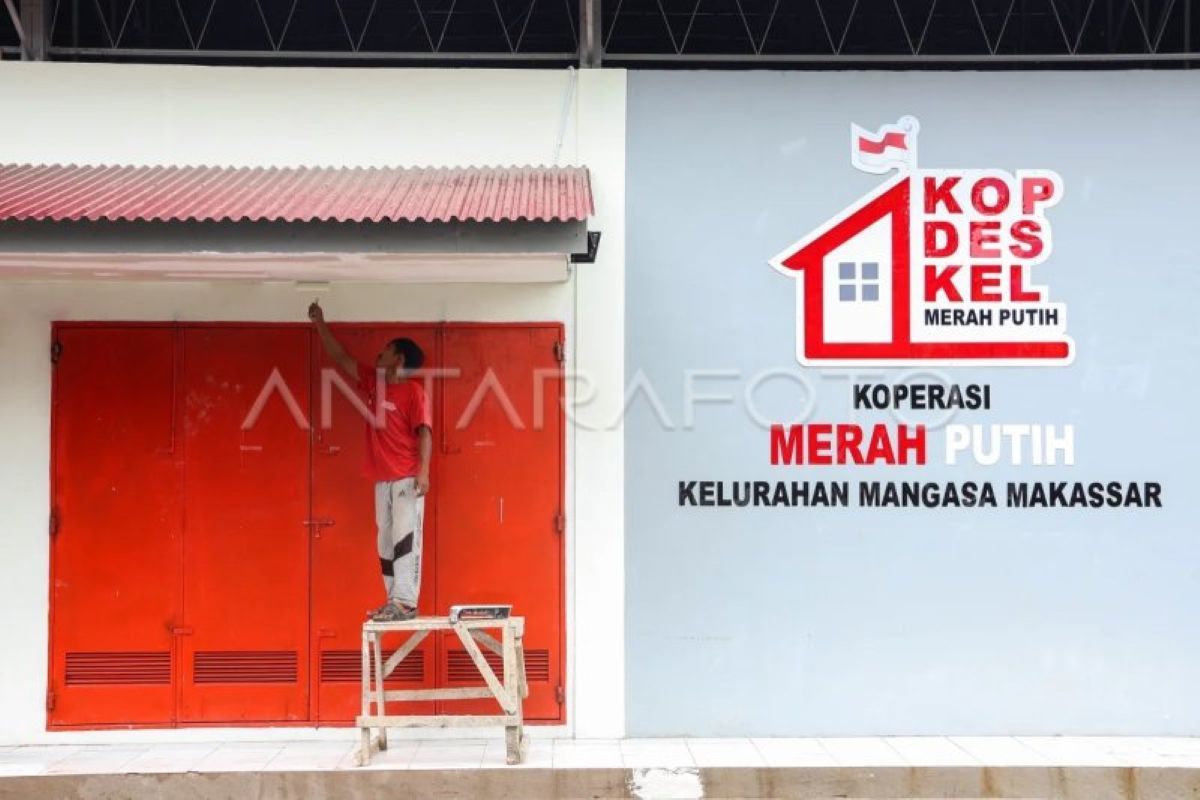
Jakarta (ANTARA) - The Merah Emput Village/Sub-district Cooperative (KDMP) programme is being promoted as a new strategy for strengthening village economies. Through Presidential Instruction Number 9 of 2025 and Presidential Instruction Number 17 of 2025, the government is positioning cooperatives as an instrument to accelerate village-based economic sovereignty.
This programme is further reinforced by financial support through Ministry of Finance Regulations Number 49 of 2025, Number 63 of 2025, and Number 81 of 2025. From a policy perspective, this move can be interpreted as an effort to revitalise the mandate of Article 33 of the 1945 Constitution through a cooperative model that is more integrated with village development.
Through Presidential Instruction Number 9 of 2025 regarding the Acceleration of the Formation of Merah Putih Village/Sub-district Cooperatives (KDMP), President Prabowo’s administration is ensuring the cooperative movement serves as a catalyst for community welfare, particularly in rural areas. The KDMP serves as an essential roadmap towards public prosperity.
Cooperatives were established as a manifestation of Article 33 of the 1945 Constitution, embodying economic democracy based on the principle of kinship. Cooperatives serve many functions, including playing an active role in improving the quality of life for citizens, strengthening the people’s economy as the foundation of national economic resilience, and developing the economic potential and capabilities of members to enhance economic and social welfare.
Consequently, the existence of KDMP plays a vital role in increasing community welfare, including reducing unemployment rates. Cooperatives play a role in encouraging the economic independence of the community. Through cooperatives, the Indonesian people can develop their businesses more easily.
The concept of cooperatives in the country cannot be separated from the figure of Bung Hatta. Bung Hatta studied cooperative science in Scandinavia during his time studying at an economics school in Rotterdam, the Netherlands. In 1925, one of the proclaimers of Indonesian Independence visited Denmark and Sweden to learn about cooperatives. According to Bung Hatta, cooperatives are suitable for implementation in countries that are pioneering their people’s economies.
Driving Welfare
Scandinavian countries are classic examples of nations that adopt the welfare state concept. This system emphasises the proactive role of the government in providing social protection and essential services to its citizens. By providing more equitable access to health, education, housing, and social protection, the welfare state aims to increase prosperity and reduce inequality within society.
A welfare state is a social welfare system that grants a larger role to the state (government) to ensure the fulfilment of the basic needs of its citizens. A welfare-based state is intended to provide social services to all citizens, striving to organise services that can maintain and improve the welfare of citizens fairly and sustainably.
A welfare state exists when the government is responsible for guaranteeing a minimum standard of living for its citizens, particularly in rural areas. The welfare state is closely linked to social policy, which in many countries encompasses government strategies and efforts to improve the well-being of citizens, primarily through social protection, including social security in the form of both social assistance and social insurance.