
KDM Halts AI Data Centre Project in Jatiluhur, Risking Investor Flight?
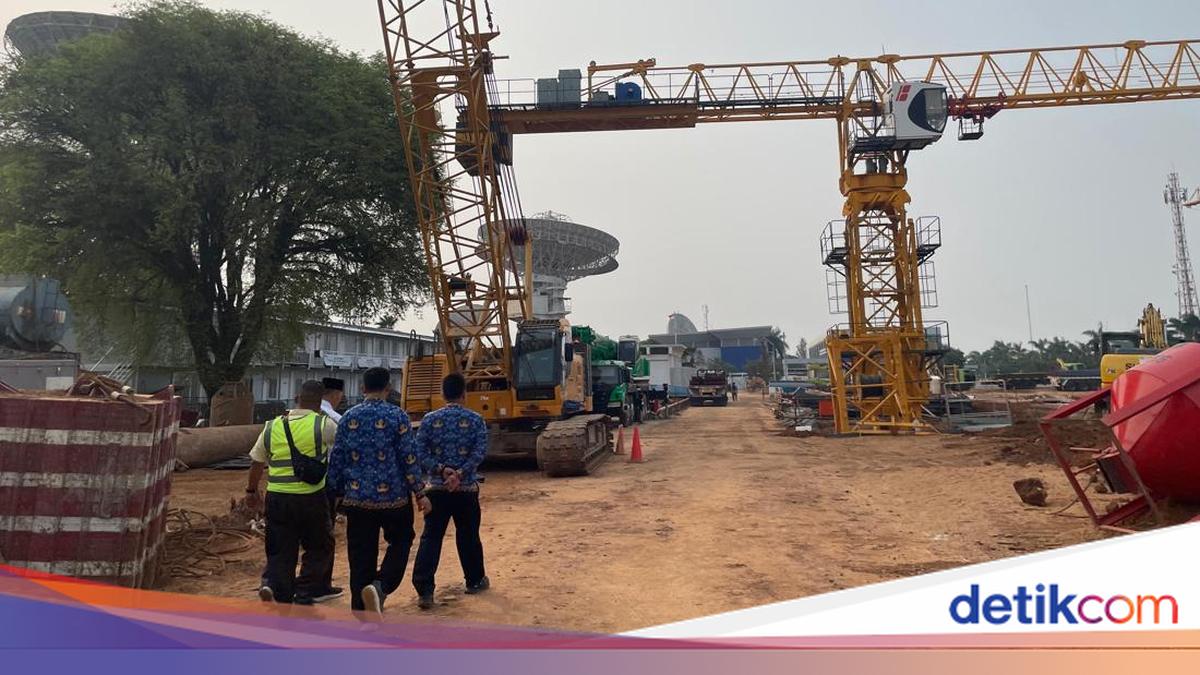
The Governor of West Java, Dedi Mulyadi, has halted BDx’s artificial intelligence (AI) based data centre project in the Jatiluhur area, Purwakarta Regency. The project was being constructed on approximately 8,000 square metres of land as part of an 11-hectare development zone with an investment value of around Rp 3.5 trillion.
This move is viewed as having the potential to damage the domestic investment climate. The central government is known to be targeting AI data centre investments worth Rp 360 trillion to enter Indonesia. This target is considered achievable as Indonesia currently possesses 182 data centres, the majority of which operate in Jakarta and Batam. The government has also designated specific data centre zones, namely Batam, West Java, Madura, and Bali.
“However, in West Java, there is turmoil where data centre construction has been unilaterally halted by the governor citing environmental concerns, water supply, and various other reasons. Policy practices that damage the investment climate like this are a major obstacle to the future of the economy, which is currently seeing growth stall at a moderate 5%,” said Didik R. Jachbin, an economist from the Institute for Development of Economics and Finance (INDEF), in a written statement on Sunday.
Didik emphasised that Indonesia requires massive investment to develop the data centre ecosystem. However, he noted that such investment opportunities are threatened in West Java and could impact the broader investment climate. He reminded that Indonesia once lost semiconductor investment opportunities in the 1980s. At that time, several global technology companies such as Fairchild Semiconductor, National Semiconductor, and Monsanto had built chip assembly facilities in Jakarta and Bandung, but these investments eventually ceased due to government policies.
“In 1985, there was a policy conflict regarding production automation, which was won by the old-fashioned orthodox faction that limited automation and forced the use of manual labour to satisfy investors. Naturally, such archaic policies were unsuitable for their advanced investments, and they eventually moved to Penang, Malaysia,” he explained.
Indonesia was once a major player in the semiconductor industry in Southeast Asia from the 1970s to the early 1980s. However, that position shifted to Malaysia due to policies deemed inappropriate and competition for investment from neighbouring countries. The opportunities previously held by Indonesia eventually shifted to Malaysia, which now controls approximately 13% of the global market share for chip testing, assembly, and packaging activities.
He believes the current situation in West Java is similar, where investments have been implemented but unilaterally halted. He assessed that this decision is a heavy blow to investors due to the lack of certainty in the investment climate.
“The government must immediately anticipate obstacles from regional governments that damage the investment climate. On the ground, programmes must start with investment-friendly regional governments,” he clarified.
Didik explained that Batam has the potential to become one of the primary data centre hubs in the region, especially as Singapore begins to limit new data centre developments due to land and energy constraints. In Batam, planned data centre investments are estimated to reach US$ 15 billion to US$ 20 billion, with a target capacity of approximately 1.3 gigawatts.
With regional economic growth at around 7%, Batam is seen as having the potential to become a new growth centre supported by data centre investment. Several investors have also announced investment plans, including US$ 1.7 billion for the development of cloud and AI infrastructure in Indonesia. Meanwhile, AWS has committed to an investment of US$ 5 billion. Firmus is even building a data centre campus in Batam with a target capacity of up to 170,000 AI accelerators.
Nationally, data centre capacity is projected to exceed 2,000 MW by 2030, with demand growing at an average of 16.8% per year based on World Bank projections. “Batam can seize this opportunity, supported by three main factors, where Indonesia is the largest digital economy hub in ASEAN with over 200 million internet users,” he concluded.