
KCIC reports decline in kite interference on Whoosh line
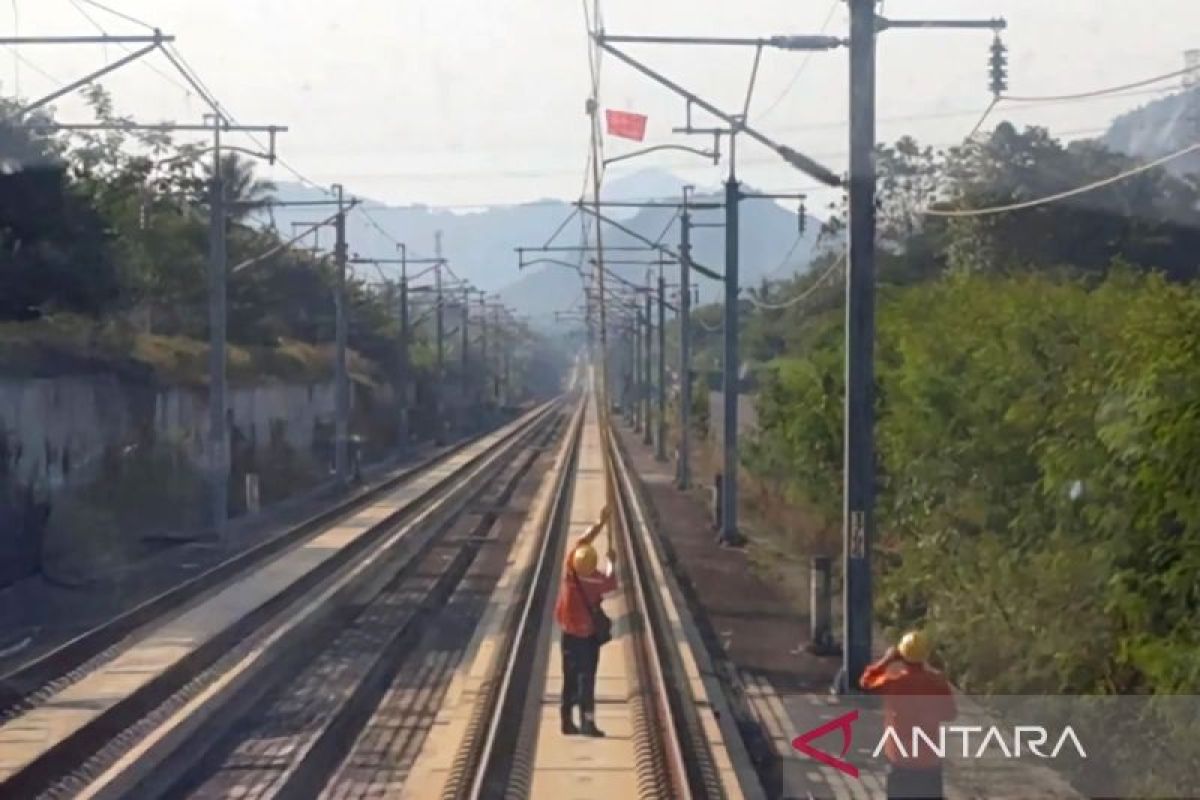
Jakarta (ANTARA) - General Manager Corporate Secretary of KCIC, Eva Chairunisa, has welcomed public support in maintaining safety around the Whoosh line, citing a significant decline in the number of incidents involving kites becoming entangled near the high-speed rail route.
“KCIC extends its thanks and appreciation to the public for helping to keep the Whoosh line safe. This reduction in incidents is a positive development,” Eva said in a statement in Jakarta on Thursday.
According to her, data for September 2026 recorded 26 incidents, a decrease of around 65 per cent compared with the average for June to August 2026.
This decline represents a positive development in efforts to safeguard the safety and smooth operation of Whoosh.
KCIC recorded 78 kite-related incidents in June, 90 in July and 58 in August 2026, averaging around 75 incidents per month over that period. In September 2026, the number fell to 26.
“Cooperation and public awareness are an important part of keeping Whoosh journeys safe, smooth and reliable,” Eva said.
KCIC is continuing to strengthen its preventive measures by deploying more than 530 security personnel at stations and along the Whoosh line. Officers carry out 24-hour patrols, with supervision divided into 500-metre sections, including monitoring and direct action whenever kite flying is found near the track. These efforts are also reinforced through coordination and collaboration with the Indonesian National Armed Forces (TNI), the National Police (Polri) and regional authorities.
In addition to surveillance, officers visit locations where kites are flown to educate people about the potential dangers to Whoosh services. The approach is persuasive, encouraging residents to fly kites in safer locations far from the high-speed rail line.
KCIC’s mapping shows that kite-related incidents are most frequently found along the Padalarang, Cimahi, Bandung City and Bandung Regency corridor, particularly in areas close to residential settlements and open spaces.
Such activity also tends to increase during school holidays, with incidents most often recorded between 3.00 p.m. and 6.00 p.m. local time, when community activity in open spaces peaks.
Field monitoring indicates that kite flying is not only practised by children but also by adults.
For this reason, awareness and education efforts are aimed at all community groups, including through schools, residential areas and community leaders.
Kites and kite strings that enter the track area can pose risks to the high-speed train’s electrical system, particularly if they become caught in the Overhead Catenary System (OCS) or on train pantographs.
Foreign objects that become entangled must be dealt with promptly by officers to ensure that the infrastructure remains safe. In certain conditions, train services may be temporarily halted or operational adjustments made as part of safety procedures.
KCIC urges all members of the public to continue playing an active role in protecting the safety and security of the Whoosh line by refraining from flying kites within a minimum radius of 3 kilometres on either side of the high-speed rail track.
Residents are also advised to avoid other risky activities near the line and to report any foreign objects that could disrupt operations to officers without delay.
“We hope this positive trend can be sustained. Supervision and educational efforts will continue, but success depends on shared support and concern so that kite-related disruptions do not rise again,” Eva added.