
KB Bank Targets Local Supply Chains via South Korean Corporations
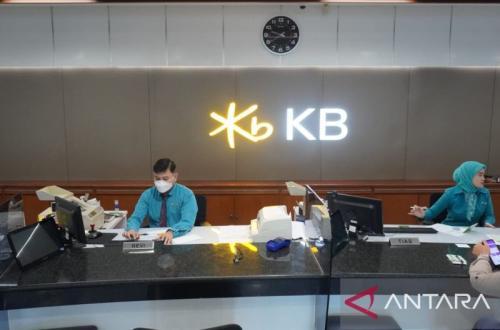
PT Bank KB Indonesia Tbk (KB Bank) is expanding its financing into local supply chains through the ecosystem of South Korean corporations operating in Indonesia. This strategy targets a broader business chain, including anchor companies, suppliers, distributors, and employees, amidst the growing business relationship between Indonesia and South Korea in the manufacturing, trade, automotive, and building materials sectors.
KB Bank’s Director of Wholesale Banking, Widodo Suryadi, stated that business relationships with South Korean corporations serve as an entry point to develop financing for the surrounding business ecosystem.
“The relationships established through the wholesale segment serve as a gateway to providing various retail solutions, ranging from payroll, mortgages, and wealth management to consumer lending,” Widodo said in Jakarta on Thursday (23/09/2026).
This strategy is part of the ecosystem-based approach implemented by KB Bank. Through this approach, the bank targets a wider value chain, starting from anchor companies, suppliers, and distributors to employees.
South Korea remains a significant source of foreign investment for Indonesia. Data from the Ministry of Investment and Downstreaming presented during the event showed that South Korean Foreign Direct Investment (FDI) realisation in Indonesia in 2025 reached US$1.98 billion.
Widodo noted that KB Bank’s position as part of the KB Financial Group provides proximity to South Korean corporations operating in Indonesia. This connection is utilised to bridge the needs of Korean companies with the domestic business ecosystem.
“We specifically serve South Korean corporations in Indonesia, such as manufacturers and trading houses, and connect them with the local supply chain ecosystem,” he added.
The strategy is also being developed through the Korea-Indonesia Link. In addition to targeting Korean corporations and utilising the global network of KB Financial Group, KB Bank is strengthening transactions using Local Currency Transactions (LCT).
Under this scheme, bilateral trade transactions can be conducted directly using Rupiah and Won. KB Bank stated that this facility is intended to increase transaction efficiency while reducing exchange rate risks.
Amidst this ecosystem development strategy, KB Bank recorded credit distribution of Rp44.97 trillion in the first semester of 2026, growing by 4.38 per cent year-on-year. Total assets reached Rp86.11 trillion, representing a 12.71 per cent annual growth.
Credit growth was carried out selectively, considering portfolio quality and risk profiles. Simultaneously, Third-Party Funds (DPK) grew by 12.44 per cent to Rp45.57 trillion, while low-cost funds or CASA increased by 15.25 per cent to Rp14.71 trillion.
In terms of profitability, KB Bank’s net interest income (NII) surged by 54.44 per cent year-on-year to Rp695 billion. The net interest margin (NIM) also improved from 1.33 per cent in the first semester of 2025 to 1.96 per cent in the first semester of 2026.
Widodo stated that KB Bank will continue to expand its wholesale business in a measured manner. By the end of 2026, the company targets credit growth of approximately 8-10 per cent.
Source: jawawa.id (https://jawawa.id/newsitem/kb-bank-targets-local-supply-chains-via-south-korean-corporations-1790254540)
Originally published by Republika (https://ekonomi.republika.co.id/berita/tlvah4416/kb-bank-garap-rantai-pasok-lokal-lewat-korporasi-korea), translated from Indonesian