
Karma for Trump! China Praised Globally, US Shunned for Meddling
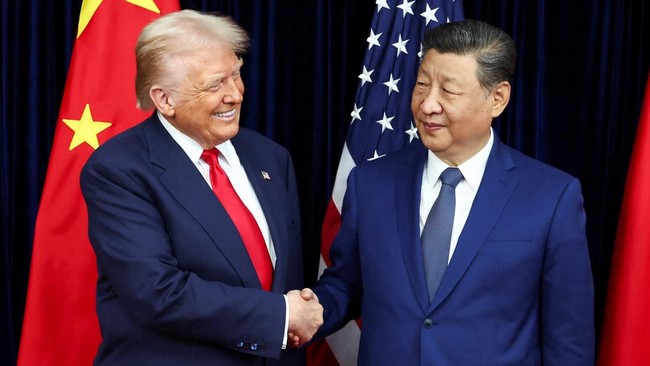
The United States’ global image continues to decline. A Pew Research Center survey of 42,151 respondents across 36 countries shows that for the first time since 2023, China is now viewed more positively than the US. The decline in America’s image began with the start of President Donald Trump’s second term. Conversely, views of China and President Xi Jinping have steadily improved. The US now trails China in public assessments across various nations. The Pew Research Center report indicates that 46% of people held a positive view of China in 2026, compared to just 36% for the US. This is a reversal from 2023, when the median positive view of the US was 58%, far above China’s 32%. Over three years, the positive assessment of the US has dropped by 22 percentage points, while China’s image has improved by 14 points. The change has been gradual. In 2024, positive views of the US fell to 54%, while China’s rose slightly to 33%. The gap narrowed further in 2025, with the US at 48% and China at 38%. The shift culminated in 2026, with China overtaking the US by a 10-point margin, a stark contrast to the 26-point deficit in 2023. This trend data uses a median from 20 countries surveyed annually since 2023, including Indonesia, Argentina, Australia, Brazil, Canada, France, Germany, Greece, Israel, Italy, Japan, Kenya, Mexico, the Netherlands, Nigeria, South Africa, South Korea, Spain, Sweden, and the United Kingdom. The full 2026 survey involved 42,151 adult respondents across 36 countries. The reversal in the median data is also evident in country-by-country comparisons. Pew notes that in most of the 36 countries surveyed, more people hold a positive view of China than of the US. The widest gaps were found in several Asia-Pacific and Middle Eastern nations. Even in Canada and Mexico, the US’s closest neighbours, China is now viewed more positively. The US is viewed more favourably than China in only six countries, four of which are in the Asia-Pacific region: India, Japan, the Philippines, and South Korea. Canada exemplifies the striking change. In 2023, 57% of Canadians viewed the US positively, compared to only 14% for China. By 2026, the situation had reversed, with positive views of China rising to 44% and those of the US falling to 33%. A sharp change is also visible in Indonesia, where 72% of respondents now hold a positive view of China, compared to only 29% for the US, giving China a 43-point lead. This is a reversal from 2023, when 55% viewed the US positively and 49% viewed China positively. In roughly three years, US favourability in Indonesia dropped by 26 points, while China’s rose by 23 points. The shift in national images aligns with assessments of the two countries’ leaders. In Indonesia, 62% of respondents expressed confidence in President Xi Jinping to do the right thing regarding world affairs, while only 20% said the same of President Donald Trump. Xi’s trust level in Indonesia is thus 42 points higher than Trump’s. A similar pattern is found globally, with more people trusting Xi than Trump, although trust in both remains relatively low in some countries. The Chinese leader holds a double-digit lead over Trump in Germany, Greece, Italy, the Netherlands, Spain, Sweden, and the United Kingdom. However, Trump is still viewed more favourably in a few countries bordering China or with geopolitical disputes with it, such as India, the Philippines, and Japan. The survey provides insight into the factors behind this shift, starting with Trump’s return to the White House. During the first two years of his second term, international trust in Trump fell sharply, paralleling the deterioration of the US image. Additionally, the US is widely perceived as interfering too much in other countries’ affairs. In 17 middle-income countries, a median of 75% of respondents believe the US interferes a great deal or a fair amount in the affairs of other nations, compared to only 45% who say the same about China. China is also increasingly seen as a reliable partner. People in many middle-income countries are more likely to view China as a trustworthy partner. Beijing is also seen as more considerate of other countries’ interests when making international decisions and is more often perceived as contributing to global peace and stability. This perception provides Beijing with greater room to present itself as an alternative partner amid its rivalry with Washington.