
Karawang Regent Distributes 220 Electric Rickshaws as Aid from President Prabowo
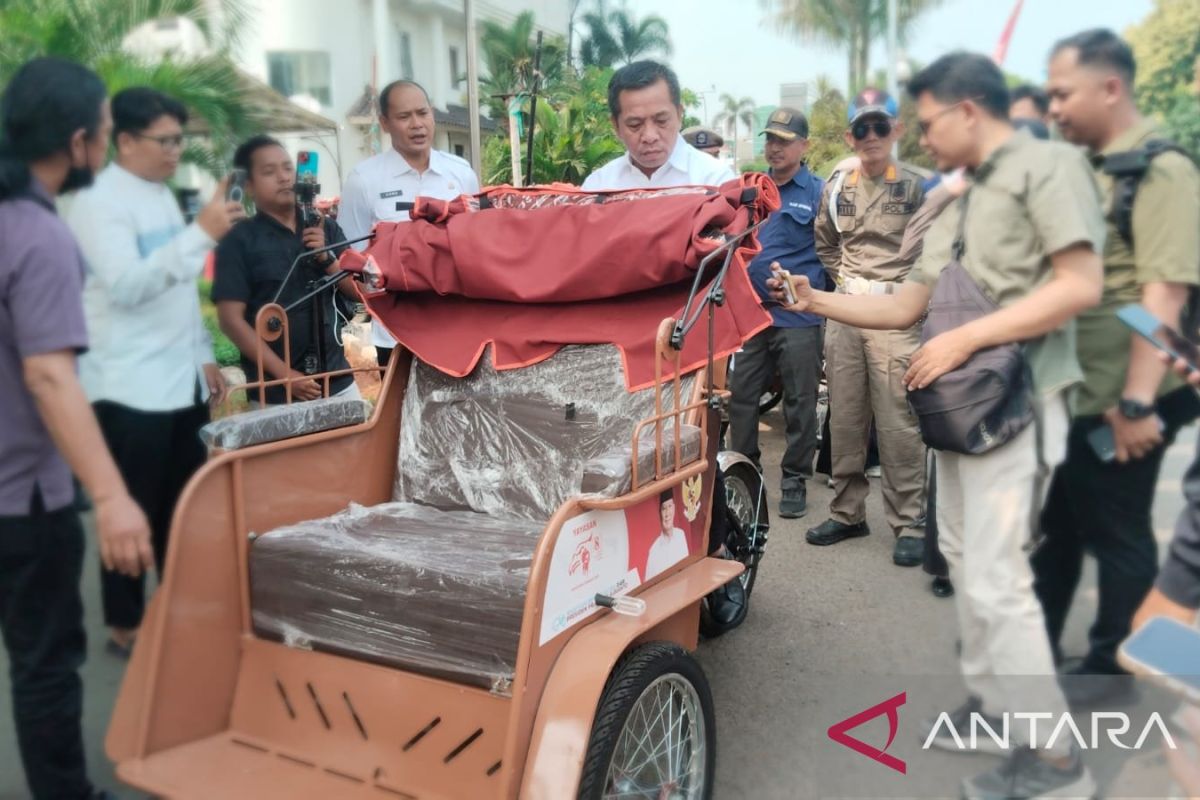
Karawang, West Java – A total of 220 rickshaw drivers in Karawang Regency, West Java, have received electric rickshaw assistance from President Prabowo Subianto as an effort to alleviate physical burdens and encourage the use of environmentally friendly transport.
“This electric rickshaw assistance is prioritised for elderly rickshaw drivers,” said the Regent of Karawang, Aep Syaepuloh, in Karawang on Saturday.
The handover of hundreds of electric rickshaws to conventional rickshaw drivers was conducted directly by the Regent alongside the National Solidarity Movement Foundation (Yayasan Gerakan Solidaritas Nasional).
Before the distribution, the Regent personally test-drove the electric rickshaws intended for distribution.
“A test drive was conducted to ensure the electric rickshaws can be controlled well, including their manoeuvrability and balance. I have tried these electric rickshaws, travelling around the Karawang Regency Government complex at various speeds, including over uneven road surfaces. These electric rickshaws remained stable and easy to control,” he stated.
The electric rickshaws are also equipped with several supporting features, such as lights, indicators, and a horn.
On a single charge, these electric rickshaws can travel a distance of up to approximately 30 kilometres.
The Regent expressed his gratitude and appreciation to President Prabowo Subianto for the care shown towards the rickshaw drivers in Karawang.
The Chairman of the National Solidarity Movement Foundation, Lieutenant General Teguh Arief Indratmoko (Ret.), stated that all electric rickshaw assistance is distributed free of charge.
The procurement of these electric rickshaws does not utilise the state budget, but instead comes from the personal funds of President Prabowo Subianto, with a target distribution of 25,000 units by 2026.
The initiative to develop electric rickshaws was born from President Prabowo’s deep empathy after visiting the field and witnessing firsthand the struggles of pedal-powered rickshaw drivers, eventually leading to a gradual implementation across Indonesia.