
Karawang Implements WFH for Civil Servants with Strict Supervision and Periodic Attendance
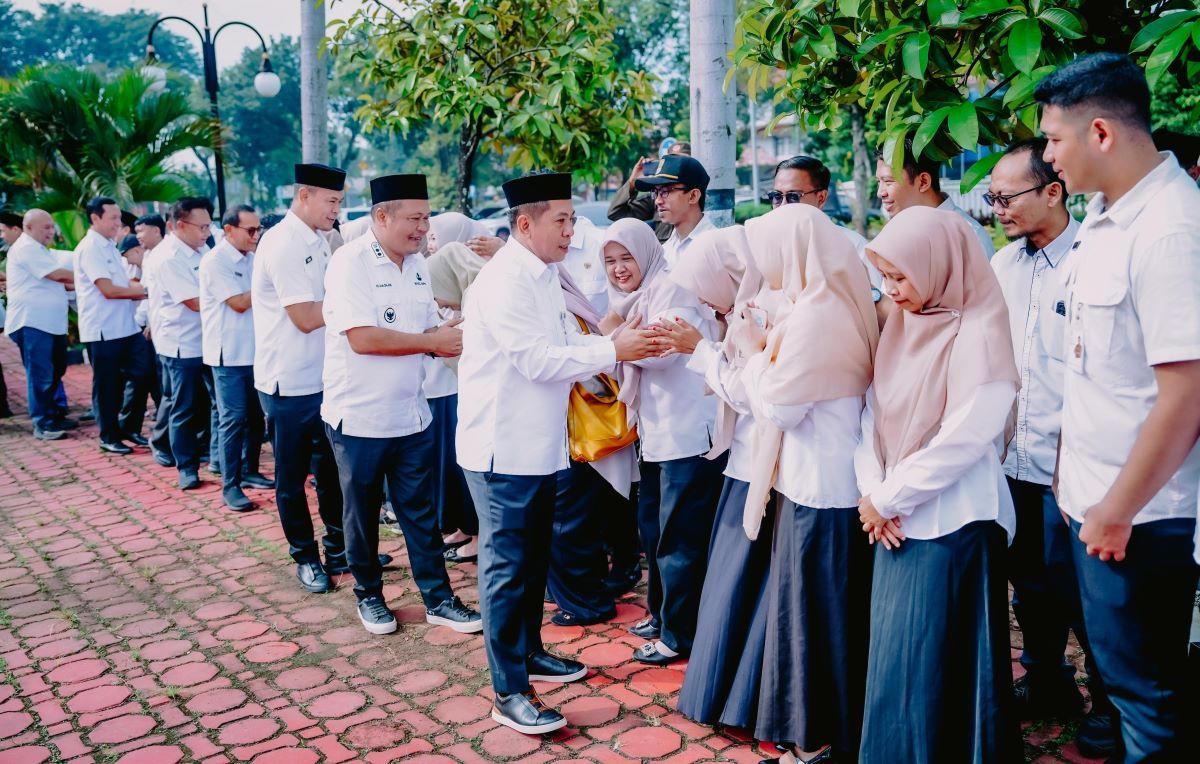
The Karawang Regency Government (Pemkab) in West Java has assured that the implementation of the work-from-home (WFH) policy for civil servants (ASN) will proceed under strict supervision. This policy follows up on the central government’s initiative through the Ministry of Home Affairs, which schedules WFH for one day per week starting April 2026.
The Secretary of the Regional Government (Sekda) of Karawang, Asep Aang Rahmatullah, emphasised that in accordance with the instructions of Regent Aep Syaepuloh, all ASN undertaking WFH are required to perform periodic attendance and report work results in real-time.
“WFH does not mean taking it easy. ASN must still work and be supervised. There is attendance, there are performance reports, everything is measured through digital systems,” Asep Aang stressed in Karawang on Wednesday (1/4).
Digitalisation of Supervision
Asep explained that supervision is conducted through the SIM ASN and SIAP applications, integrated with GPS technology. This system requires ASN to perform attendance using location coordinates and selfies. Additionally, every employee must prepare a daily work plan before starting WFH.
This policy is part of the national energy efficiency strategy to respond to global conditions, particularly the conservation of fuel oil (BBM). As a supporting measure, Pemkab Karawang is also promoting an environmentally friendly mobility scheme.
ASN living within a maximum radius of 5 kilometres from the office are encouraged to use bicycles for commuting on effective workdays. “If it’s close, they can use bicycles. There are many benefits, besides being healthy, it also saves BBM,” Asep clarified.
Budget Efficiency and Vehicle Pool
For motor vehicle users, Asep highlighted the significant difference in energy consumption. He gave an example that using a motorcycle only requires about 1 litre of BBM per day, while a car reaches 5 litres. “If a motorcycle is sufficient with 1 litre per day, whereas a car can be 5 litres. This can support the BBM savings target of around 20 percent,” he added.
As a concrete step, Regent Aep has instructed that official vehicles be withdrawn and centralised at the Galeri Nyi Pager Asih as a storage pool during periods without out-of-town duties or urgent activities.
Pemkab Karawang projects that this efficiency policy can reduce BBM consumption by up to 20%, with an estimated budget saving of Rp1 billion throughout April 2026.
Although implementing remote work patterns through the Electronic-Based Government System (SPBE), Pemkab guarantees that public services will not be disrupted. Vital sectors such as health, disaster management, transportation, and security will continue to operate normally.
“Public services remain the priority. There are on-duty officers, including at the front office, so that the public is still served,” he concluded.