
KARAT Affirms Support for Prabowo's Populist Economy, Urges Vigilance on Agrarian Conflicts and Subsidies
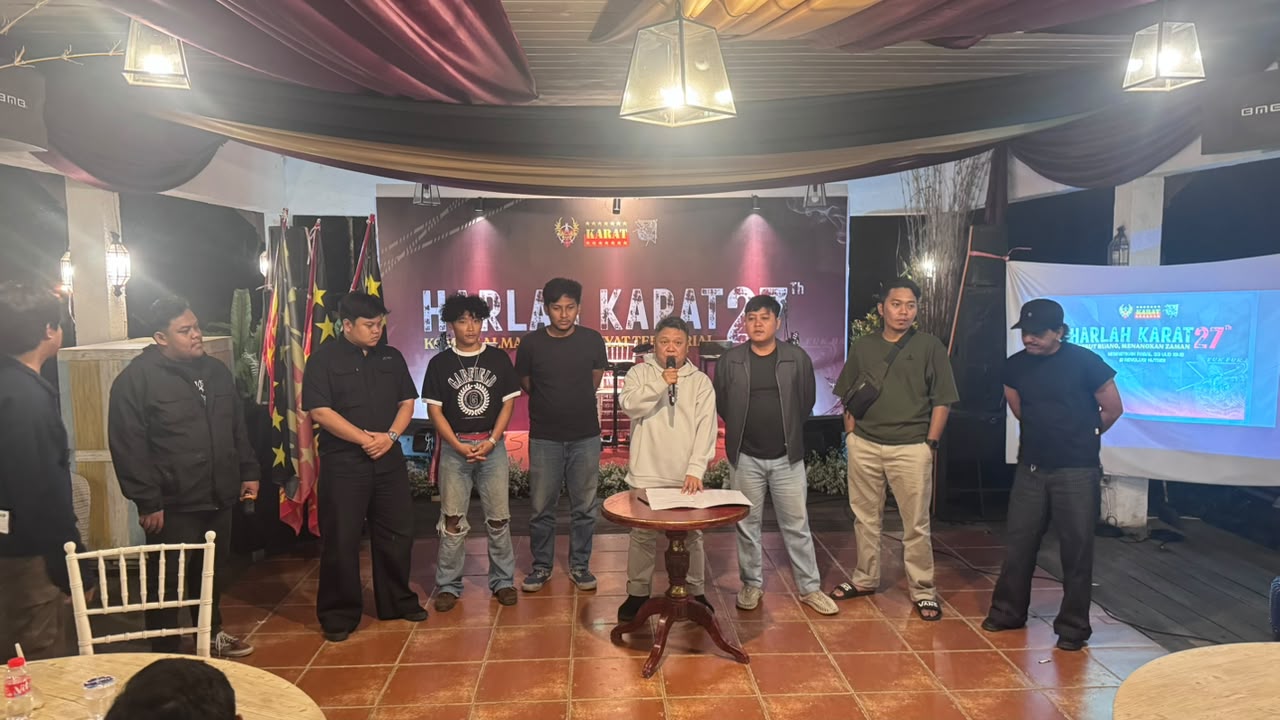
The Committee of the People’s Alma Mater (KARAT) has reaffirmed its commitment to overseeing the implementation of a populist economy under President Prabowo Subianto’s administration. Marking its 27th anniversary, the organisation declared its support for strategic national programmes, including the Free Nutritious Meals (MBG) and the Village Cooperative (KDMP), as a manifestation of Article 33 of the 1945 Constitution. KARAT leader Bungas T. Fernando Duling stated that the organisation has undergone three phases of transformation since 1999 to adapt to the changing times.
Duling drew a historical parallel to the Ikada Field mass meeting in 1945, urging members to channel that spirit into safeguarding the constitution. He specifically highlighted the need to monitor the MBG programme and the Village Cooperative, viewing them as tools to stop economic leakage. Regarding the legal issues at the National Nutrition Agency (BGN), KARAT views the investigation of former officials as proof of the President’s commitment to clean governance.
To ensure the success of the MBG programme, KARAT is demanding accountability through three key indicators: accurate nutritional growth statistics, real-time data on local economic absorption involving MSMEs and farmers, and the absorption of local labour. The organisation believes this data integration will accelerate the Village Cooperative programme. KARAT has also outlined three main strategies: conducting research and live-in programmes in villages, organising extra-parliamentary actions to support pro-people policies, and implementing the ‘Asta Cita’ vision at the grassroots level.
Beyond food security, KARAT is committed to advocating for agrarian reform and natural resource sovereignty. Collaborating with ARUN and LBH TI, the group firmly stated that the state must not succumb to foreign intervention or domestic cartels in the energy, mining, commodity, and food sectors.