
Karang Mumus, a Wounded Artery That Beats Again
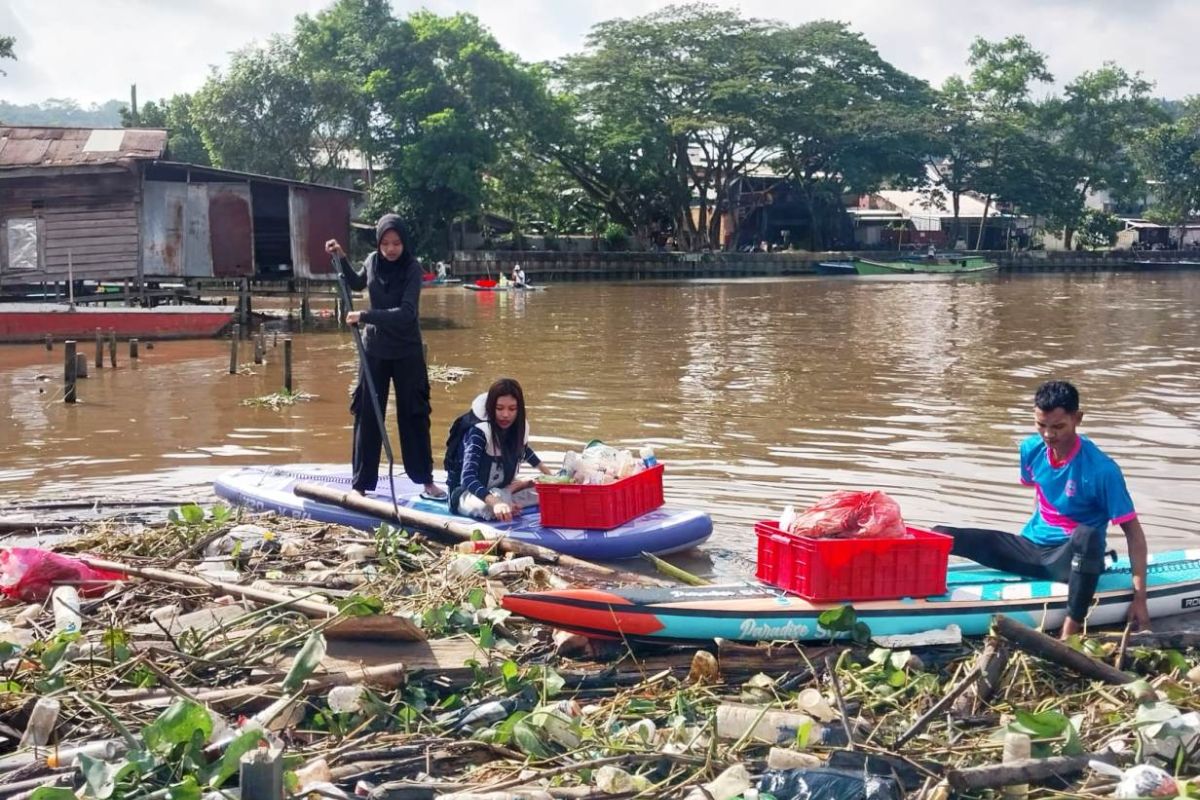
The Karang Mumus was once a beating artery in the heart of Samarinda, East Kalimantan. Its clear waters reflected the sky, serving as a passage for fishermen’s boats bringing in a living. It was a source of life for everyone who depended on its flow. However, time passed, and hands unaware slowly changed its face. Rubbish was tossed from bridges, thrown from vehicles, and piled up from houses built tightly along the water’s edge. The river, which should have been a source of prosperity, became burdened with waste that did not belong there. Boats could no longer pass freely, the once-clear water turned murky and emitted a foul odour. The river’s existence was slowly reduced to that of a mere drainage ditch. Ironically, when floods struck, many blamed the river itself. Yet what had changed was not the river’s nature, nor its flowing water, but the attitude of the inhabitants who had seized its living space. They straightened its course, narrowed its banks, and built upon its body, as if the river were an inanimate object to be manipulated at will. Many forgot that a watershed is not just a water channel, but a breathing body, possessing an ecosystem and a balance that, if disturbed, will retaliate in its own way. Amidst this negligence, a man emerged who could no longer stand idle. Misman, born in Samarinda on 4 April 1959, had previously dedicated his life as a journalist. For decades he wrote, narrated, and campaigned through the media about the value of the Karang Mumus River. But words alone were not enough to change deeply rooted behaviour. Residents continued to throw rubbish, buildings continued to encroach upon the river’s course, and negligence was often simply ignored. Until, in July 2015, Misman made a momentous decision. He set aside his profession and rarely wrote anymore. He walked alone along the riverbank, picking up rubbish piece by piece. From being alone, he inspired thousands.