
Kapuakan: Ancestral Bird-Scaring Tool Endures in Jatiluwih
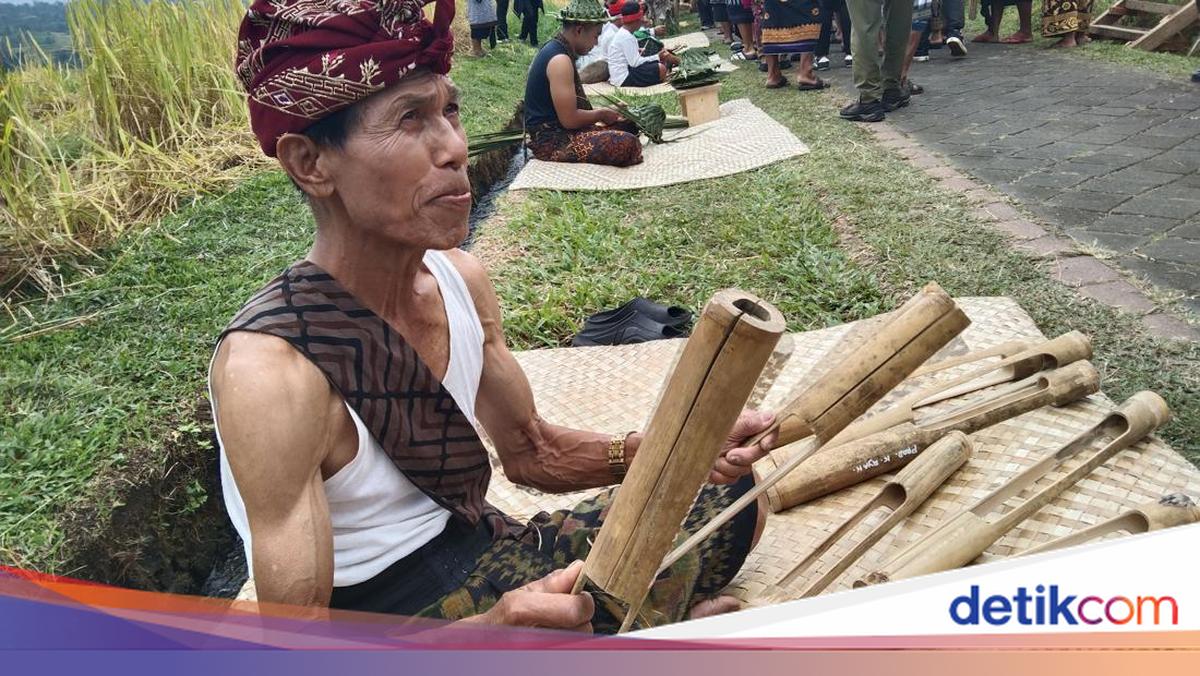
Amid the advancement of modern agricultural technology, traditional tools inherited from ancestors still survive in the rice fields of Jatiluwih Village, Penebel District, Tabanan Regency. One of them is the kapuakan, a simple bamboo device long used by farmers to drive away birds that disturb rice crops.
I Made Swastika, a kapuakan artisan and farmer in Jatiluwih, explained that the kapuakan is made from a single segment of ‘tali’ bamboo. This type of bamboo is chosen because it is more flexible and less prone to breaking compared to thicker bamboo varieties like ‘petung’ bamboo.
“Besides being more flexible, tali bamboo also produces a clearer sound when used, making it effective for scaring off birds that attack the rice,” Swastika said when met on the sidelines of the Jatiluwih Festival 2026 on Saturday (20/6/2026).
According to Swastika, the use of the kapuakan has been passed down through generations by elders since ancient times. The tool was particularly popular among farmers in the 1980s to 1990s, when most agricultural activities still relied on traditional equipment.
“Since long ago, our elders have used the kapuakan to chase birds away from the fields,” he said.
Birds typically arrive when rice plants are still in the early growth phase. During this period, the grains become an easy target for birds. To drive them away, farmers walk around the fields carrying and sounding the kapuakan. The tool produces a loud enough noise to make the birds flee the area.
However, as times have changed, the use of the kapuakan has become increasingly rare. Swastika noted that many farmers now opt for more practical methods, such as installing strings or plastic bags that are pulled to scare the birds.
Even so, the kapuakan has not been completely abandoned. In the Jatiluwih area, a number of farmers still maintain the use of this traditional tool as part of a long-standing agricultural cultural heritage.
For the farmers, the kapuakan is not merely a working tool. It also serves as a symbol of local wisdom born from the utilisation of natural materials found in the surrounding environment.
Regarding the Jatiluwih Festival, I Made Swastika expressed hope that such activities could help revive the presence of traditional farming tools. Additionally, the festival can serve as a means to introduce the kapuakan to the younger generation.
“I hope the government also plays a role in efforts to preserve various ancestral farming traditions so they are not lost to the passage of time,” he stressed.
By continuing to maintain and introduce traditional tools like the kapuakan, the agricultural cultural values of Bali that have been passed down for decades are expected to endure and remain part of the identity of rural communities.