
Kalimantan Surrounded by 9,853 Hotspots Ahead of El Niño
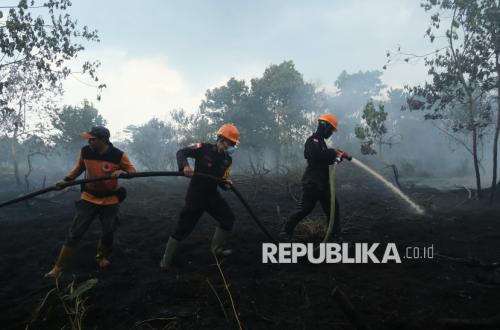
KALIMANTAN BARAT, Kalimantan Tengah, Kalimantan Selatan – A coalition of civil society groups, Pantau Gambut and WALHI, has criticised the government’s steps to mitigate and tackle forest and land fires (karhutla) in Kalimantan, especially ahead of the El Niño threat forecast for 2026. According to the coalition, the government’s move to activate karhutla response posts amounts to nothing more than an administrative ‘firefighting’ approach that fails to touch the root problems, allowing karhutla to remain a threat.
The coalition states that the majority of the national hotspot points are concentrated in the Gambut Ecosystem Protection Function Area (FLEG). Pantau Gambut records that of 26,484 hotspot points detected within the Kesatuan Hidrologis Gambut (KHG) from January to April 2026, 17,299 hotspot points are in protected areas, with the remainder in cultivation areas.
According to civil society, these conditions show peatland protection remains far from effective. The national failure is clearly reflected on the ground, such as in the One Million Hectare Peatland Project (Proyek Lahan Gambut Sejuta Hektare) in Central Kalimantan.
“About 31,000 hectares of peatland were converted for the development of the PSN food estate, which has now proven to fail. This condition exacerbates peatland degradation in Central Kalimantan, previously opened for the One Million Hectare Peatland Project during the Soeharto era,” said Janang Palanungkai, Director of WALHI Central Kalimantan, in a statement on Tuesday (19 May 2026).
The degradation impact is reflected in Pantau Gambut data, which shows 9,853 hotspot points surrounding Kalimantan from January to April 2026. West Kalimantan is the hardest-hit region with 9,270 hotspot points, followed by Central Kalimantan with 438 points and South Kalimantan with 25 points.
Concession areas have become the epicentre of hotspot points in Kalimantan, reaching 91 percent or 8,983 points. The figures are spread across the Hak Guna Usaha (HGU) area with 6,571 points and Perizinan Berusaha Pemanfaatan Hutan (PBPH/IUPHHK) with 2,412 points.
The coalition says these numbers indicate that canal-building practices for monoculture plantation expansion and the development of PSN are major contributors to peat degradation in the region.
Concession activity also threatens peatland ecosystems across Kalimantan. Indra Syahnanda, Head of Advocacy and Campaign Division of WALHI Kalimantan Barat, explained that activities by several companies clearing a total of 6,758.3 hectares have displaced orangutan habitats and threatened peatland ecosystems.