
Kalimantan Forest Fires: Government Deploys 12,000 Personnel and Constructs Boreholes
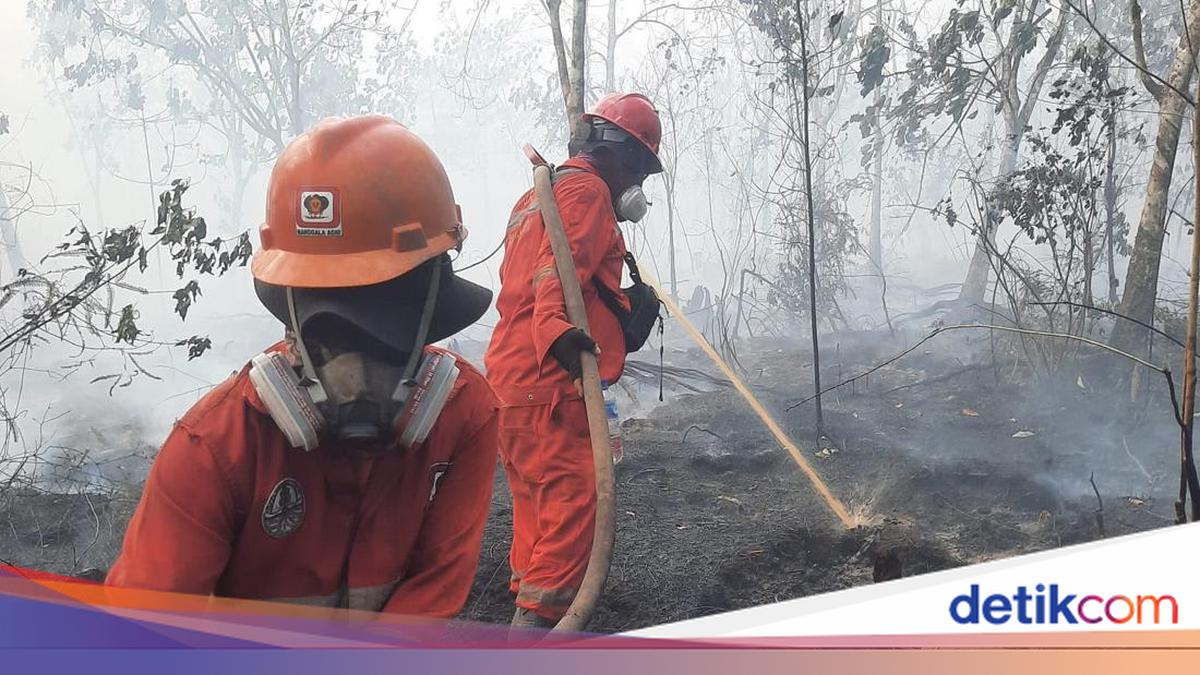
The government has undertaken a series of measures to tackle forest and land fires (karhutla) in the Kalimantan region. To date, the government has deployed more than twelve thousand personnel and constructed boreholes.
“The integrated operation to control forest and land fires in Kalimantan continues to be strengthened through cross-sector collaboration, with handling adjusted based on developments in field conditions,” wrote the Head of the Public Relations and Foreign Cooperation Bureau of the Ministry of Forestry, Ristianto Pribadi, as quoted by the Government Communication Agency on Friday (21/8/2026).
The forest and land fire control operation involves various elements of government and society. These include the Ministry of Forestry, the National Disaster Management Agency (BNPB), the Meteorology, Climatology and Geophysics Agency (BMKG), regional governments, Regional Disaster Management Agencies (BPBD), the Indonesian National Armed Forces (TNI), the Indonesian National Police (Polri), Manggala Agni, Fire Care Communities, business actors, volunteers, and the public.
Operational data shows that at least 12,880 combined personnel have been deployed in three priority provinces. A total of 1,410 personnel are serving in West Kalimantan, 10,700 personnel in Central Kalimantan, and 770 personnel in South Kalimantan.
The officers are monitoring hotspots and public reports, conducting integrated patrols, field inspections, and ground firefighting. Efforts also include wetting and cooling areas, sealing off burned locations, and guarding vulnerable areas to prevent fires from re-emerging.
Coordination between parties is carried out through integrated command posts. These posts serve as centres for determining locations that require priority handling while directing personnel and equipment based on developments in the field situation.
Handling is also supported by various operational facilities, ranging from vehicles, pumps and portable pumps, fire hoses, flexible tanks, communication equipment, and personal protective equipment.
Air support includes patrol helicopters, fixed-wing patrol aircraft, and water bombing helicopters. In addition to strengthening personnel, the government is also enhancing the capability of task forces in the field by adding firefighting facilities and infrastructure. One of the steps taken is the construction and activation of boreholes in several priority areas.
The Ministry of Forestry explained that this step is important because surface water sources for firefighting are increasingly limited as dry conditions continue.
“Boreholes are needed to shorten the distance for water collection, accelerate the filling of firefighting equipment, and maintain the continuity of wetting and cooling,” said Ristianto.
Water availability is a particular concern in handling forest and land fires on peatlands. Peatland conditions allow embers to survive below the surface so that fires can re-emerge if the wetting process is not carried out thoroughly.
“Therefore, the government places firefighting as well as cooling as an important part of the operation,” he said.