
KAI's Retail Freight Volume Reaches 123,810 Tonnes in First Half of 2026, Boosting Rail-Based Logistics
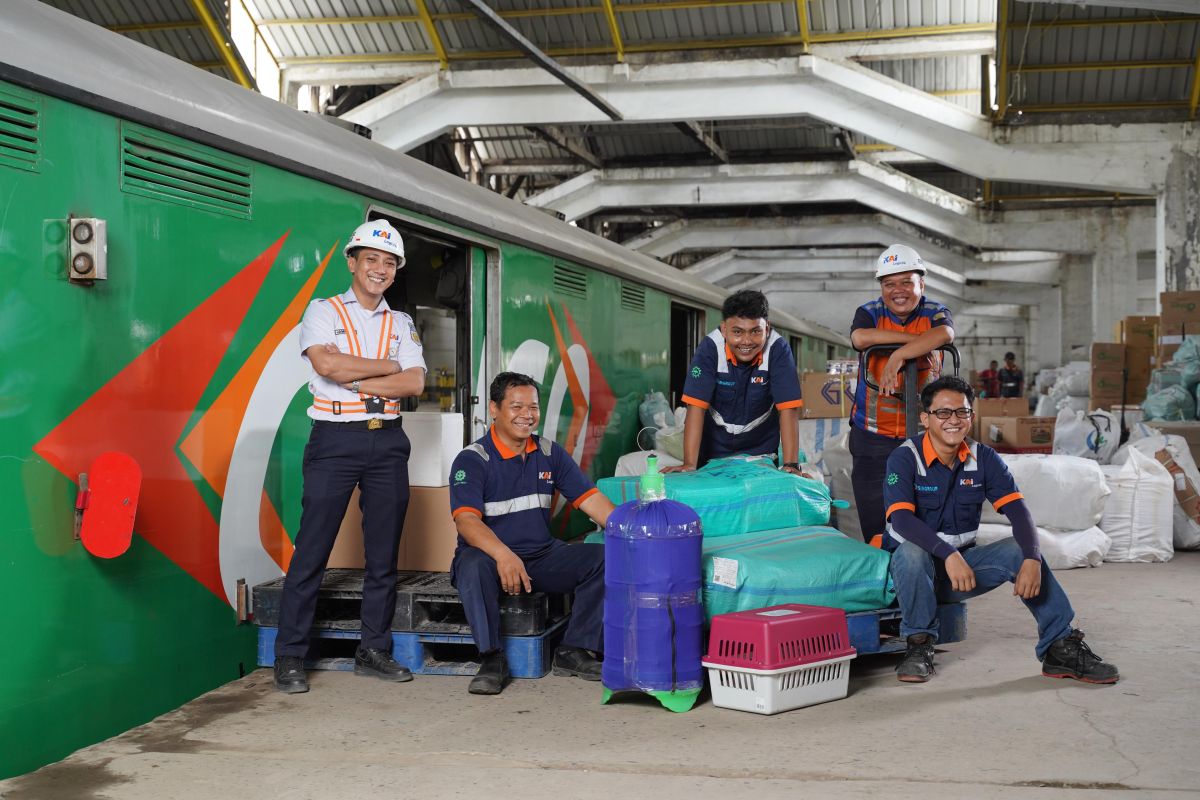
PT Kereta Api Indonesia (Persero) recorded retail freight volume of 123,810 tonnes during the first half of 2026. This achievement represents a 5.06% increase compared to the 117,851 tonnes recorded in the same period of 2025, and a 21.84% rise from the 101,617 tonnes in the first half of 2024. The growth indicates that demand for goods distribution via rail continues to strengthen. The average monthly retail freight volume for KAI from January to June 2026 reached approximately 20,635 tonnes, higher than the average of 19,642 tonnes per month in the first half of 2025 and 16,936 tonnes per month in 2024. Vice President of Corporate Communication at KAI, Anne Purba, stated that retail freight has become an important growth area within the national logistics ecosystem. She noted that the service offers businesses a scheduled, high-capacity intercity distribution option connected to partner logistics networks. “KAI’s retail freight is growing because the market requires more efficient, well-planned distribution that can reach across cities. This signals that railways can play a larger role in the national logistics system, including supporting businesses and MSMEs,” Anne said. KAI’s retail freight service operates on a Business-to-Business (B2B) model through strategic partnerships with logistics companies. Under this scheme, businesses, MSMEs, and the public can utilise rail-based delivery services via partner networks, service points, and available onward distribution services. In the logistics chain, railways play a strong role in the middle-mile or main intercity journey. Goods are consolidated by partners, transported by train on main routes, and then forwarded through onward distribution services to the final destination. This pattern allows railways to become the backbone of medium- and long-distance distribution, while road transport remains vital for first-mile and last-mile connections. “Railways have advantages in capacity, schedule regularity, and efficiency for intercity travel. When this role is combined with partners’ first-mile and last-mile networks, businesses can access a more competitive distribution chain,” Anne said. Strengthening rail-based retail freight is increasingly strategic as Indonesia’s logistics costs remain a challenge to national competitiveness. The Coordinating Ministry for Economic Affairs recorded that Indonesia’s logistics costs stand at around 14.29% of GDP. High logistics costs can impact goods prices, export competitiveness, investment, regional price disparities, and supply stability. As a global comparison, the World Bank notes that the average logistics cost is around 13% of GDP, while the most efficient countries achieve around 8%. This comparison shows that Indonesia still has significant room to strengthen national supply chain efficiency, including by increasing the share of rail-based logistics. With Indonesia’s GDP at current prices in 2025 recorded at Rp23,821.1 trillion by the Central Statistics Agency (BPS), national logistics costs at a ratio of 14.29% equate to approximately Rp3,404 trillion per year. As a macro simulation, if a 30% efficiency gain could be achieved across the national logistics system, the potential theoretical savings could reach around Rp1,021 trillion per year. This figure illustrates the enormous economic impact of strengthening a more efficient logistics system. The government is also continuing to encourage the development of the railway network as part of efforts to reduce logistics costs and strengthen interregional economic connectivity. The Coordinating Ministry for Infrastructure and Regional Development reaffirmed in 2026 that the development of an integrated railway network can significantly reduce logistics costs and enhance interregional economic competitiveness. Anne added that the growth of KAI’s retail freight could serve as momentum to strengthen rail-based national logistics policy. She said that railways have significant potential to become the backbone of intercity distribution, especially on routes with stable goods volume, medium to long distances, and scheduled delivery needs. “The strengthening of rail-based retail freight must be seen as part of the larger agenda for national logistics efficiency. When retail goods can be better consolidated, connected to the rail network, and then forwarded through partner distribution, delivery costs have the potential to become increasingly competitive. The impact will return to businesses, MSMEs, and the public through a healthier supply chain,” Anne said. KAI will continue to open space for collaboration with the government, logistics partners, businesses, industrial estates, and MSMEs to enlarge the role of railways in retail goods distribution. Support for logistics nodes, intermodal integration, first-mile and last-mile access, and retail shipment consolidation is key for railways to contribute more significantly to reducing national logistics costs. With a consistent growth trend, KAI’s retail freight signals that rail-based logistics deserves to be placed as one of the government’s strategic agendas. “The greater the share of goods that shift to rail for main intercity journeys, the greater the opportunity for Indonesia to build a more efficient and competitive distribution system that directly benefits the people’s economy,” Anne concluded.