
KAI’s Intermodal Integration Connects Journeys Across Java and Sumatra
Jakarta (ANTARA) – A journey from Bandung to an office district in Jakarta can now involve several train services. Passengers can travel on the Whoosh high-speed train, alight at Halim Station and transfer to the Jabodebek LRT to continue to Kuningan or Dukuh Atas. Similar journeys in other cities combine trains with Commuter Line services, airport trains or urban transport.
These options demonstrate how Indonesia’s transport networks are becoming increasingly connected. PT Kereta Api Indonesia (Persero), or KAI, recorded 394,443,300 passengers across the KAI Group from January to September 2026, a 7.06 per cent rise from 368,429,917 in the same period in 2025. The journeys span services with different roles, from intercity travel to urban transport and airport access.
KAI Vice President of Corporate Communications Anne Purba said people need transport that can take them from their point of departure to their final destination. Connections between services therefore play an important role in helping passengers choose journeys that suit their needs.
“For passengers, the most important thing is being able to reach their destination on a journey that is easy to plan. Some travel by intercity train and then continue by LRT, some transfer to an airport train, while others use buses to reach residential areas or workplaces. These options are already available in several cities and help people with their daily activities,” Anne said.
In Jakarta, Whoosh and the Jabodebek LRT are connected by a pedestrian bridge at Halim Station. Passengers arriving from Bandung on Whoosh can reach the Jabodebek LRT’s Halim Station without first transferring to a road vehicle. From there, they can continue to Cawang, Kuningan, Rasuna Said, Setiabudi and Dukuh Atas. The Whoosh Halim station area also offers access to Transjakarta, buses to Soekarno-Hatta Airport, transport to Halim Perdanakusuma Airport, taxis and ride-hailing services.
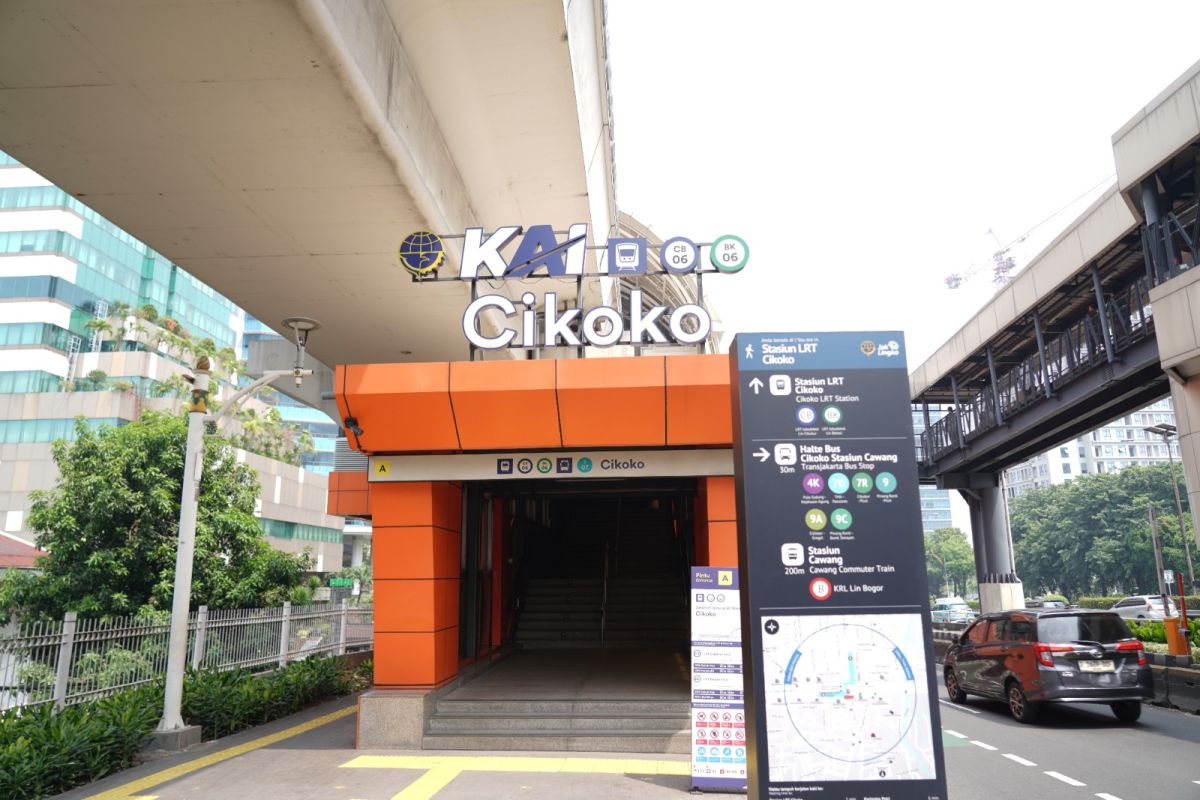
Another connection is available between Cawang Commuter Line Station and Cikoko Jabodebek LRT Station. Commuter Line passengers travelling from Bogor, Depok or elsewhere in Jakarta can continue on the LRT using the transfer access between the two stations. KAI Commuter’s Multi Trip Card (KMT) can be used to pay for journeys on both the Commuter Line and Jabodebek LRT. At Dukuh Atas, passengers can transfer between the Sudirman Commuter Line, Jabodebek LRT, Jakarta MRT and other transport services in the surrounding area.
In the Bandung area, Whoosh’s Padalarang Station is connected by feeder train to Cimahi and Bandung stations, with schedules arranged to support transfers. Padalarang is also served by the Bandung Raya Commuter Line, Trans Metro Pasundan buses and feeder services to Kota Baru Parahyangan. These options enable Whoosh passengers to continue to central Bandung and surrounding areas.
KAI Group data highlight demand for urban and high-speed rail. From January to September 2026, the Jabodebek LRT served 24,702,905 passengers, up 18.94 per cent on the same period a year earlier. Whoosh carried 4,576,841 passengers, a rise of 1.16 per cent, while KAI Commuter served 312,302,440 passengers, up 6.38 per cent.
In Yogyakarta, four groups of rail services complement one another. Yogyakarta Station is a meeting point for long-distance and local trains, the Yogyakarta–Palur Commuter Line, the Yogyakarta–Kutoarjo Prameks service, and trains to Yogyakarta International Airport (YIA) via Wates. Passengers arriving from Jakarta or Surabaya, for example, can continue to Solo on the Commuter Line, to Kutoarjo on Prameks, or to YIA by airport train. Trans Jogja services can also be accessed from the station area.
KAI data through September 2026 record 11,996,034 passenger journeys on long-distance and local trains in the Yogyakarta Division, up 11.00 per cent. The Yogyakarta–Palur Commuter Line served about 7.16 million passengers, Prameks around 870,000 and the YIA airport train around 2.01 million. Based on passenger boarding, or gate-in, figures across services, Yogyakarta Station recorded 5,488,259 passenger movements, followed by Lempuyangan with 2,114,387, Solo Balapan with 1,958,718, Purwosari with 883,399 and YIA Station with 838,793.
“Yogyakarta is an interesting example because intercity, commuter, regional and airport journeys come together in the same area. Passengers can arrive from another city and continue to Solo, Kutoarjo or the airport. This connectivity gives people more options, including for education, trade and tourism,” Anne said.
In Semarang, trains connect with urban transport through the Trans Semarang bus rapid transit (BRT) network. Corridor IV links Semarang Tawang and Semarang Poncol stations with several points in the city, including Jalan Pemuda, City Hall, Tugu Muda and Karangayu, and extends towards Ngaliyan and Cangkiran Terminal. Passengers arriving at Tawang or Poncol can use the BRT network to travel to public services, residential areas and other centres of activity. From January to September 2026, long-distance and local rail services in the Semarang Division recorded 10,949,458 passenger journeys, a 9.12 per cent increase.
In Surabaya, a specific example of integration with urban transport is the FD07 WiraWiri Suroboyo feeder service. The route connects Bratang Terminal with Surabaya Pasar Turi Station, passing the Surabaya Gubeng Baru station area and supporting journeys between two major station districts and other urban destinations. In the Wonokromo area, buses and urban transport also offer onward travel, depending on the available stopping points. Long-distance and local rail services in the Surabaya Division recorded 9,738,167 passenger journeys from January to September 2026, up 7.69 per cent on the same period in 2025.
Similar connections are available in Sumatra, with a particular focus on links between city centres and airports. In North Sumatra, the Srilelawangsa train connects Medan Station with Kualanamu Airport Station, which is directly integrated with the airport terminal. Passengers can transfer from the train to the airport terminal within the airport complex. In West Sumatra, the Minangkabau Ekspres connects Padang with Minangkabau International Airport. A 136-metre skybridge helps passengers travel from the station to the terminal; it resumed operations in June 2025.
In Palembang, the South Sumatra LRT links Sultan Mahmud Badaruddin II Airport with various parts of the city, including Asrama Haji, Bumi Sriwijaya, Ampera and DJKA. Its connections are extended by the Musi Emas LRT feeder network. Documentation of the feeder network lists eight corridors, including Asrama Haji–Sematang Borang, Asrama Haji–Talang Betutu, Polrestabes–Kompleks OPI, DJKA–Pasar Plaju and RSUD–Sukawinatan. These services extend travel from LRT stations to areas not served by rail.
From January to September 2026, the South Sumatra LRT served 3,303,595 passengers. Over the same period, long-distance and local train services recorded 4,123,614 passenger journeys in North Sumatra Division I, 3,467,280 in West Sumatra Division II and 1,793,105 in Palembang Division III. The figures reflect the varied travel needs across Sumatra and the different forms of integration developed for each region.
Anne said the links between services underline the importance of cooperation among rail operators, regional governments, airport managers and urban transport operators. Travel patterns vary by region, making easy transfers, pedestrian access, service information and onward transport important to the public.
“From Halim, which connects Whoosh and the LRT, and Yogyakarta, with its four groups of rail services, to Surabaya and its feeder transport, as well as Medan, Padang and Palembang with their airport links, people already have a range of travel options. We hope these intermodal connections will continue to support economic activity, education, tourism and everyday mobility in regions across the country,” Anne concluded.