
KAI Water Usage Drops 22.16 Percent, LRT Jabodebek ATWP Strengthens Water Recycling
PT Kereta Api Indonesia (Persero) recorded water usage of 716.30 megalitres throughout 2025. This figure represents a decline of 203.93 megalitres, or 22.16 percent, compared with usage in 2024, which reached 920.23 megalitres. The reduction is equivalent to 203.93 million litres of water.
Water efficiency is becoming increasingly important as the availability of this resource faces climate pressures and rising demand. Data from the Food and Agriculture Organization in AQUASTAT 2025, published by UN-Water in January 2026, shows that renewable freshwater availability per capita globally has fallen by 7 percent over the past decade.
Similar pressures need to be anticipated in Indonesia. The Directorate General of Water Resources at the Ministry of Public Works, citing analysis from the Meteorology, Climatology, and Geophysics Agency for the second ten-day period of July 2026, reported that 89.97 percent of Indonesia’s territory experienced below-normal rainfall. The peak of the dry season is expected to last from July to September 2026, while the El Niño phenomenon could potentially continue until early 2027.
Vice President Corporate Communication of KAI, Anne Purba, said these conditions make water efficiency an important part of maintaining the resilience of public services.
“Water is used every day to meet the needs of customers, workers, facility cleanliness, and operational facilities. Therefore, every reduction in water usage must be achieved through measurement, control, and technology that still maintains hygiene standards and service comfort,” said Anne.
The reduction in usage occurred across all of KAI’s water sources. Surface water utilisation decreased from 114.41 megalitres in 2024 to 47.90 megalitres in 2025. Over the same period, groundwater usage fell from 626.25 megalitres to 570.80 megalitres, while the use of water from regional drinking water companies (PDAM) decreased from 179.57 megalitres to 97.60 megalitres.
This water is used for sanitation facilities, toilets, ablution areas, the needs of workers and customers, and the washing of railway rolling stock. Controlling usage is important so that the cleanliness of facilities and rolling stock is maintained with increasingly efficient new water requirements.
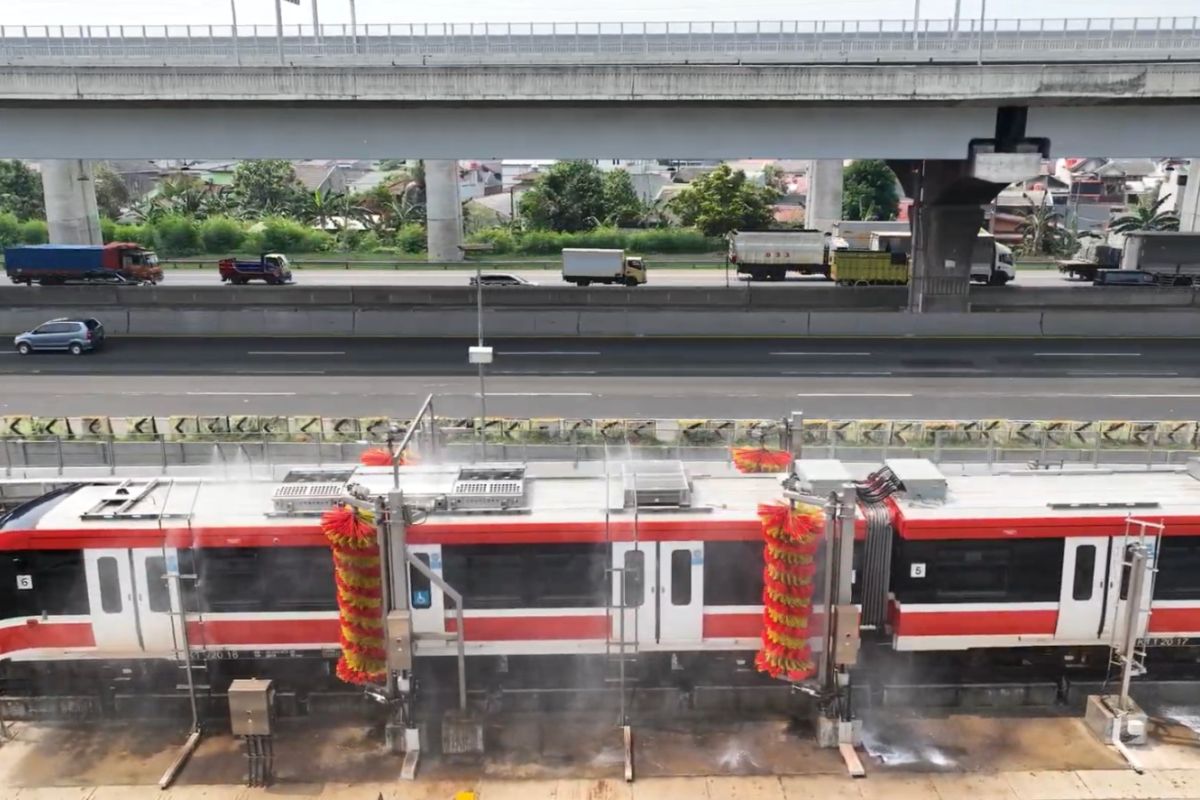
One of the technologies supporting this management is the Automatic Train Wash Plant, or ATWP, on the LRT Jabodebek. This technology washes rolling stock automatically with more efficient water usage compared to conventional methods.
The ATWP is equipped with a water treatment system that processes used washing water through a filtration process. The system separates soil, sand, oil, and grease before the water is reused in the next washing cycle. In the final stage, rinsing uses demineralised water to maintain the cleanliness quality of the rolling stock while reducing the impact on the environment.
The reuse of washing water helps reduce the need for new water in operational activities. KAI also conducts regular water consumption measurements at its head office, all units in operational areas, and subsidiary entities so that changes in usage patterns can be identified and followed up.
This efficiency provides both environmental and operational benefits. The reduced use of water from PDAM helps lower water usage costs, while the decrease in groundwater utilisation also reduces electricity consumption for operating pumps. This management is carried out while maintaining service quality.
“The reduction of 203.93 million litres demonstrates the significant benefits that can be achieved through control across various units. KAI will continue to strengthen measurement, usage discipline, and the application of water treatment technology so that every litre is used responsibly,” said Anne.
Going forward, KAI will continue to evaluate water usage at service and operational facilities, especially in areas facing drought risk or water availability pressures. This step is part of efforts to maintain resource sustainability while ensuring that railway services remain clean, reliable, and efficient.