
KAI Upgrades Facilities as LRT Jabodebek Ridership Surges 23%
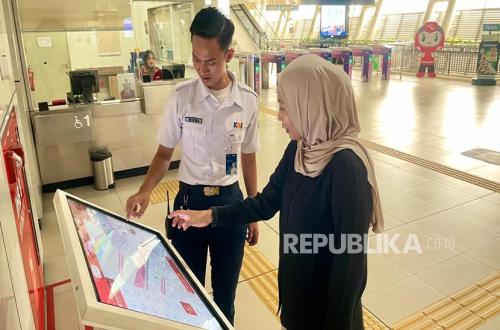
The number of LRT Jabodebek users continues to show an upward trend. During the period from January to May 2026, the urban transport service served 13.21 million users, representing an increase of approximately 23 per cent compared to the 10.72 million users recorded during the same period the previous year.
In response to the rising passenger numbers, KAI is undertaking various facility upgrades at several LRT Jabodebek stations to maintain the safety, comfort, and reliability of services for the public.
Radhitya Mardika, Manager of Public Relations for LRT Jabodebek, stated that upgrading facilities is a vital part of supporting the quality of safe and integrated public transport services. He noted that safety is the primary foundation of public transport services; therefore, every maintenance and facility upgrade programme prioritises the safety of both passengers and staff.
“Safety is the main foundation of public transport services. Therefore, every maintenance and facility upgrade programme we undertake always prioritises the safety aspects for both users and officers, so that users can carry out their activities safely and comfortably from the moment they enter the station area until they reach their destination,” Radhitya said in a written statement on Tuesday (24/6/2026).
Throughout 2026, KAI has carried out several facility upgrade works at various LRT Jabodebek stations. These efforts include the optimisation of lighting systems at the Pancoran Station pedestrian bridge (JPO), the entrance areas and pedestrian bridge at Kuningan Station, the pedestrian bridge and lift areas at Rasuna Said Station, as well as the addition of air conditioning in the concourse area of Dukuh Atas Station.
Additionally, KAI is conducting a rejuvenation programme for lifts and escalators at several stations, including Jatimulya, Bekasi Barat, Jatibening Baru, and Cikunir 1. These works involve replacing various key components to maintain the reliability of facilities used by the public daily.
Corrective maintenance for roof waterproofing is also being performed across all LRT Jabodebek stations to ensure facilities remain fully functional under various weather conditions.
Radhitya noted that the availability of reliable facilities is a crucial factor in supporting the passenger travel experience, especially amidst the growing public demand for comfortable and integrated public transport.
He explained that the average number of daily users on weekdays also increased from approximately 98,000 users during the January-May 2025 period to around 120,000 users during the same period this year. According to him, this increase demonstrates the growing role of LRT Jabodebek in supporting community mobility within the Jabodetabek area.
“LRT Jabodebek is part of an urban transport ecosystem connected to various other modes of transport. Therefore, facility upgrades are continuously carried out so that users can transfer between modes more safely, comfortably, and smoothly. Ultimately, all these efforts are aimed at providing an even better travel experience for the public,” said Radhitya.