
KAI Transports 50.76 Million Tonnes of Goods, Supporting the National Supply Chain
Jakarta (ANTARA) – A factory needs a supply of raw materials before it can begin production. Once goods have been made, they continue on to warehouses, distribution centres and markets. This process takes place every day across Indonesia and involves many businesses. Smooth distribution is one of the factors determining whether industrial and commercial activity can operate as required.
Supply chains are attracting greater attention as global trade continues to change. In its October 2026 forecast, the World Trade Organization (WTO) estimated that global merchandise trade would grow by 3.9% over the course of 2026. Shifts in international trade patterns, geopolitical uncertainty and changing industrial requirements have made logistics connectivity a concern for many countries, including Indonesia.
Domestically, Statistics Indonesia (BPS) recorded annual economic growth of 5.29% in the second quarter of 2026, with gross domestic product (GDP) at current prices reaching Rp6,552.1 trillion. The transport and warehousing sector also grew by 5.65% during the period. This provides important context for strengthening distribution networks connecting production areas, commercial centres and consumer regions.
In the national logistics sector, state railway operator PT Kereta Api Indonesia (Persero), or KAI, recorded the transport of 50,756,132 tonnes of goods from January to September 2026. This comprised 41,607,561 tonnes of coal and 9,148,571 tonnes of non-coal commodities. Non-coal freight rose by 2.65% compared with the same period in 2025, when it totalled 8,912,566 tonnes, an increase of 236,005 tonnes.
KAI Vice President of Corporate Communications Anne Purba said freight demand was linked to economic activity in different regions, from the delivery of industrial raw materials and finished products to commodities used in trade and to meet public needs.
“Each commodity has a different journey. Some goods are needed to keep factories operating, some finished products must be sent to distribution centres, and people’s needs depend on reliable supplies. KAI serves part of that journey through a rail network connected to a range of economic activities,” Anne said.
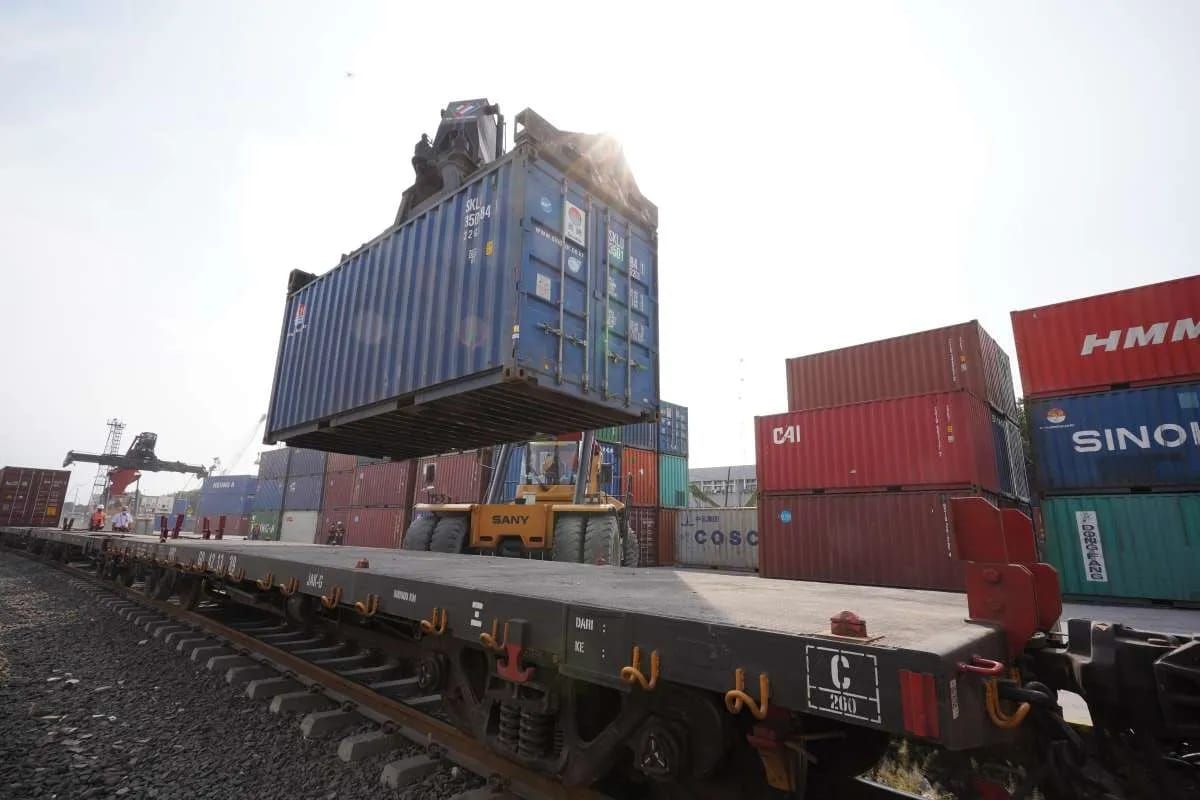
The composition of KAI’s freight shows the scale of demand for shipments across sectors. Non-coal commodities accounted for 18.02% of total freight volume. Within this group, containerised freight reached 4,438,999 tonnes, equivalent to 48.52% of all non-coal freight, and was up 19.57% on January–September 2025.
In addition to containers, KAI transports a range of goods, including fuel, cement and clinker, plantation products, fertiliser and retail goods. Each type of cargo has different transport requirements in terms of volume, destination and handling facilities. This diversity is part of the development of logistics services in response to the needs of industrial and commercial customers.
Anne said one of the challenges in goods distribution was connecting the different stages of a shipment. Goods carried by rail still require support from terminals, warehousing areas and onward transport to reach their recipients. For this reason, the development of rail-based logistics services needs to go hand in hand with co-operation among businesses and infrastructure operators.
“For businesses, reliable distribution is important for planning production and shipments. Rail can carry large loads in a single train, while onward transport helps reach locations beyond the rail network. This connectivity gives industries more options for managing their supply chains,” Anne explained.
In the long term, logistics infrastructure development is also linked to distribution cost efficiency and energy use. Rail transport for large shipments can be one option when designing a more efficient freight network, depending on distance, commodity type, load capacity and distribution conditions along each corridor. Its potential benefits become increasingly relevant as businesses consider both productivity and environmental impact.
“The economy moves through many interconnected activities, from production to the point when goods are used by the public. KAI continues to develop logistics partnerships so that rail-based services can better meet the needs of industry and trade. We hope stronger connectivity will give businesses more distribution options and support sustainable economic growth in Indonesia,” Anne concluded.
Source: jawawa.id (https://jawawa.id/newsitem/kai-transports-50-76-million-tonnes-of-goods-supporting-the-national-supply-chain-1792594534)
Originally published by Antara (Indonesian) (https://www.antaranews.com/berita/5802941/kai-angkut-5076-juta-ton-barang-dukung-rantai-pasok-ekonomi-nasional), translated from Indonesian