
KAI to Evaluate Operational Systems Following KNKT Findings on Train Collision
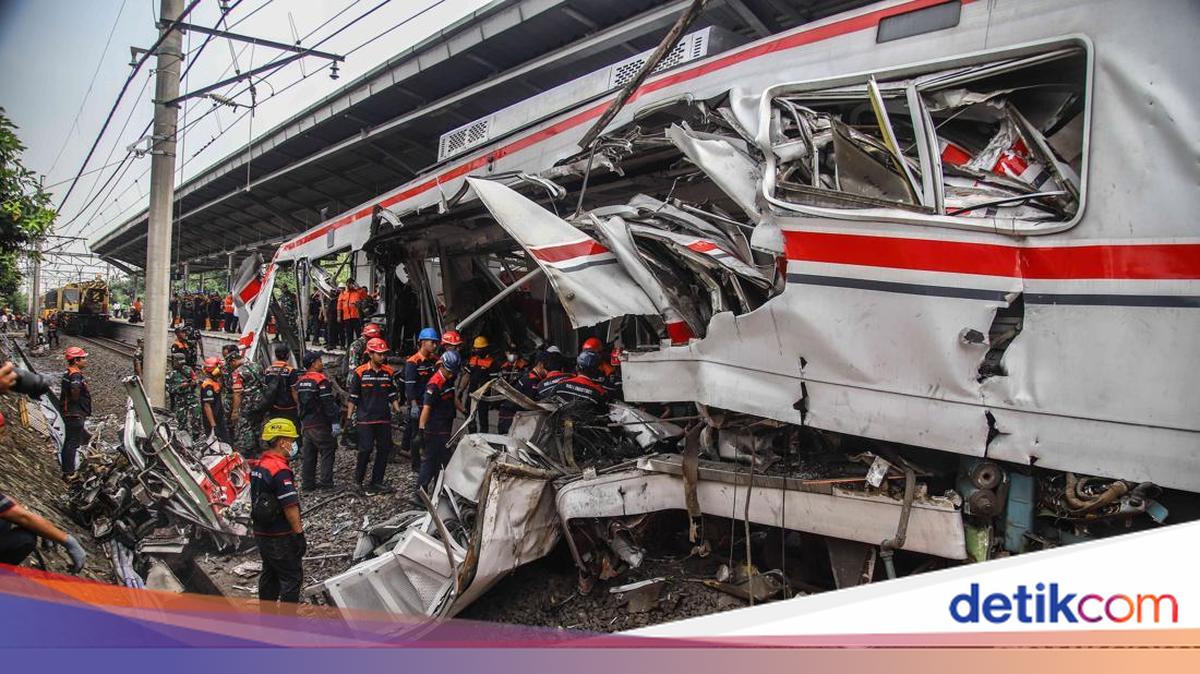
PT Kereta Api Indonesia (Persero) has confirmed it will follow up on the safety recommendations issued by the National Transportation Safety Committee (KNKT) regarding the accident involving the Argo Bromo Anggrek train and a commuter train (KRL) in Bekasi Timur. KAI will conduct an evaluation and refinement of its operational systems within the company’s authority.
KAI Vice President of Corporate Communication, Anne Purba, stated that the company respects the safety investigation process conducted by the KNKT. KAI also ensured it would remain cooperative in implementing the submitted recommendations.
“KAI is very cooperative in every safety investigation process conducted by the KNKT. We accept the recommendations provided as material for evaluation that must be followed up seriously. Passenger safety and train journeys are non-negotiable responsibilities,” Anne said in a statement on Wednesday (30/9/2026).
Anne noted that safety investigations should not stop at merely identifying the cause of an incident. According to her, the investigation results serve as a basis to ensure that corrective measures are implemented precisely so that similar incidents do not recur.
She added that during the investigation process, the company has already taken several safety precautionary measures. These include accelerating the handling of level crossings through coordination with relevant parties, implementing operational restrictions (BLB) in the Bekasi area, and maintaining continuous coordination with the Directorate General of Railways (DJKA) of the Ministry of Transport regarding infrastructure aspects.
Anne stated that the KNKT has provided safety recommendations based on its investigation and analysis. KAI will follow up through evaluations and improvements in areas within the company’s jurisdiction.
“We do not want the evaluation to remain merely a document. KNKT recommendations must be translated into field improvements, regarding procedures, human resource readiness, and inter-party coordination, including educating the public to increase awareness of safety at level crossings. We will ensure the follow-up proceeds and continue to coordinate with regulators and relevant stakeholders,” said Anne.
Anne also mentioned that KAI continues to strengthen supervision over the implementation of safety procedures. Furthermore, the company is ensuring staff readiness and periodically evaluating operational systems and processes.
“We understand that behind every train journey, there is public trust that we must maintain. Therefore, every evaluation must lead to improvement. KAI is committed to continuous learning, improving, and ensuring that train journeys become increasingly safe and reliable,” Anne remarked.
“KAI will continue to implement safety recommendations within the company’s authority, coordinate with regulators and all stakeholders, and ensure that safety aspects are a primary part of every development and refinement of railway operations,” she added.
Previously, the National Transportation Safety Committee (KNKT) released the investigation results of the fatal accident between the Anggrek train (formerly Argo Bromo Anglam) and a KRL at Bekasi Timur Station, which resulted in 16 deaths. The KNKT outlined several findings and contributing factors, including microphone issues and scratches on the locomotive windshield, towards the accident.
In this report, the KNKT also outlined conclusions divided into two main points: findings and contributing factors. There were 60 points of findings by the KNKT regarding this accident.
These findings include discrepancies between the actual train schedule and the GAPEKA (Train Travel Graph). The KNKT found that KRL KA 5568A departed from Bekasi Station 8 minutes and 32 seconds late. Meanwhile, the Anggrek train (KA 4B) departed 3 minutes and 17 seconds earlier than stipulated in the GAPEKA.
Additionally, there were differences in the time references used by various types of communication radios at the Jakarta Daop 1 Train Control Centre, locomotive loggers, signalling system loggers, train CCTV, and the Jakarta Daop 1 Train Control Centre CCTV.
Furthermore, the KNKT noted issues with communication channels. The KNKT stated that information regarding KRL KA 5568A being held at Bekasi Timur Station—due to a crowd of residents following a collision between a KRL and an electric taxi—was not conveyed to the South PPKP officers. This occurred because the South PPKP officers were busy handling the aftermath of the collision between the KRL and the electric taxi.
The KNKT stated that the driver of KA 5568A contacted the South PPKP via individual calls rather than through an emergency call. The KNKT also noted that the presence of several operating systems and communication equipment at the South PPKP caused noise pollution.
Additionally, the KNKT stated that the Anggrek locomotive (KA 4B) used a polycarbonate windshield which, in its current condition, was found to have many wiper scratches and swirl marks on the surface. The KNKT stated that this condition caused light sources from the lamps to appear more diffused, with significant light scattering into the locomotive cabin.
The KNKT also found that the driver of the Anggrek train had never received training for emergency braking scenarios. The KNKT also noted the absence of procedures for emergency braking at high speeds on curved tracks.