
KAI Supports National Energy Resilience, Transports 1.09 Million Tonnes of Fuel in January–May 2026
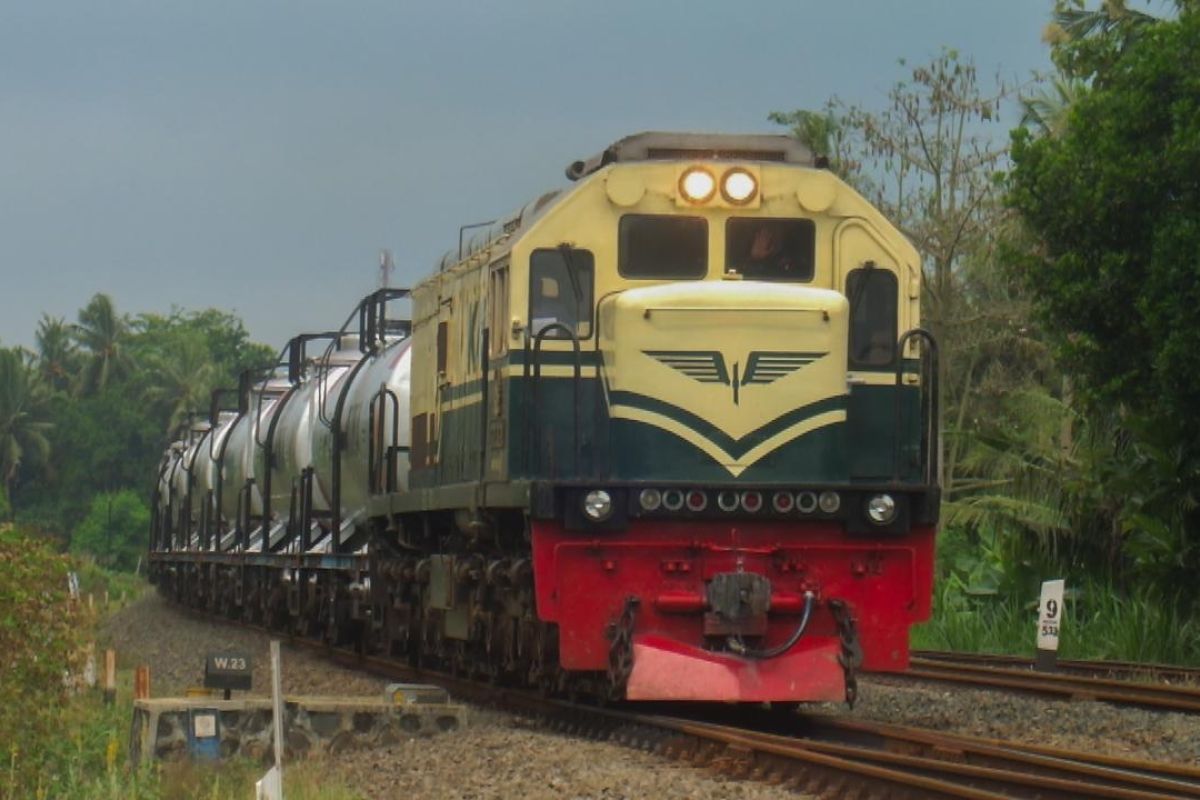
Energy serves as a primary driver of societal activities and the economy. A well-distributed fuel supply supports the smooth operation of transport, industry, trade, and public services across various regions. Behind this efficiency lies a distribution system that operates daily to ensure energy reaches the necessary locations.
As part of the national energy supply chain, PT Kereta Api Indonesia (Persero) continues to support the distribution of fuel (BBM) through rail-based transport services. The railway mode offers advantages in transporting large volumes of cargo on a scheduled and consistent basis, making it a preferred choice for supporting energy distribution to various regions.
From January to May 2026, KAI facilitated the transport of 1,096,988 tonnes of fuel. For comparison, throughout 2025, KAI handled 2,655,780 tonnes of fuel. This volume demonstrates the railway’s role in supporting the smooth distribution of energy, which is essential for both the public and the business sector.
KAI Vice President of Corporate Communication, Anne Purba, stated that reliable energy distribution has a direct impact on economic activity and public mobility. Consequently, KAI continues to strengthen collaborations with various stakeholders to maintain the smooth distribution of fuel through the national railway network.
“Railways are one of the modes that support large-scale, scheduled energy distribution. Through the collaborations established with various parties, KAI continues to strive to maintain the smooth supply of fuel so that the activities of the community and the business world can proceed effectively,” said Anne.
To support national energy distribution, KAI has established a strategic partnership with the Pertamina Group for fuel transport services. This collaboration plays a vital role in supporting energy delivery to various regions while strengthening connectivity between supply centres and distribution destinations.
Furthermore, for the operational needs of trains using subsidised fuel, KAI coordinates with BPH Migates and SKK Migas, with supplies supported by PT Pertamina Patra Niaga. This synergy is a crucial component in maintaining the continuity of railway transport services, which serve the public and the national logistics sector daily.
Based on monitoring data as of 5 June 2026, KAI has been allocated a 2026 subsidised fuel quota of 214,342,000 litres. Up to that period, the realised usage reached 95,394,629 litres, or 44.51 per cent of the total available quota, leaving a remaining quota of 118,947,371 litres.
Of the total usage, the largest consumption came from passenger train operations at 85,220,668 litres, followed by container transport at 7,254,124 litres, parcel transport at 1,541,672 litres, cement transport at 1,148,414 litres, and clinker transport at 229,751 litres. This data shows that energy support contributes to both public mobility services and the distribution of logistics that sustain various economic sectors.
Utilising railways for energy distribution also provides added value in terms of transport efficiency. With a large carrying capacity per trip, distribution via rail helps maintain supply chain stability while supporting a more effective and sustainable logistics system.
“KAI will continue to strengthen collaborations with the Pertamina Group, BPH Migas, SKK Migas, and other stakeholders to support national energy security. Through reliable transport services, KAI is committed to ensuring the smooth distribution of energy, public mobility, and economic activities across various regions,” Anne concluded.
Source: jawawa.id (https://jawawa.id/newsitem/kai-supports-national-energy-resilience-transports-1-09-million-tonnes-of-fuel-in-january-may-2026-1781089374)
Originally published by Antara (Indonesian) (https://www.antaranews.com/berita/5602479/kai-dukung-ketahanan-energi-nasional-layani-109-juta-ton-bbm-pada-januari-mei-2026), translated from Indonesian