
KAI Strengthens South Sumatra Rail Role from Historic Lines to Modern Services
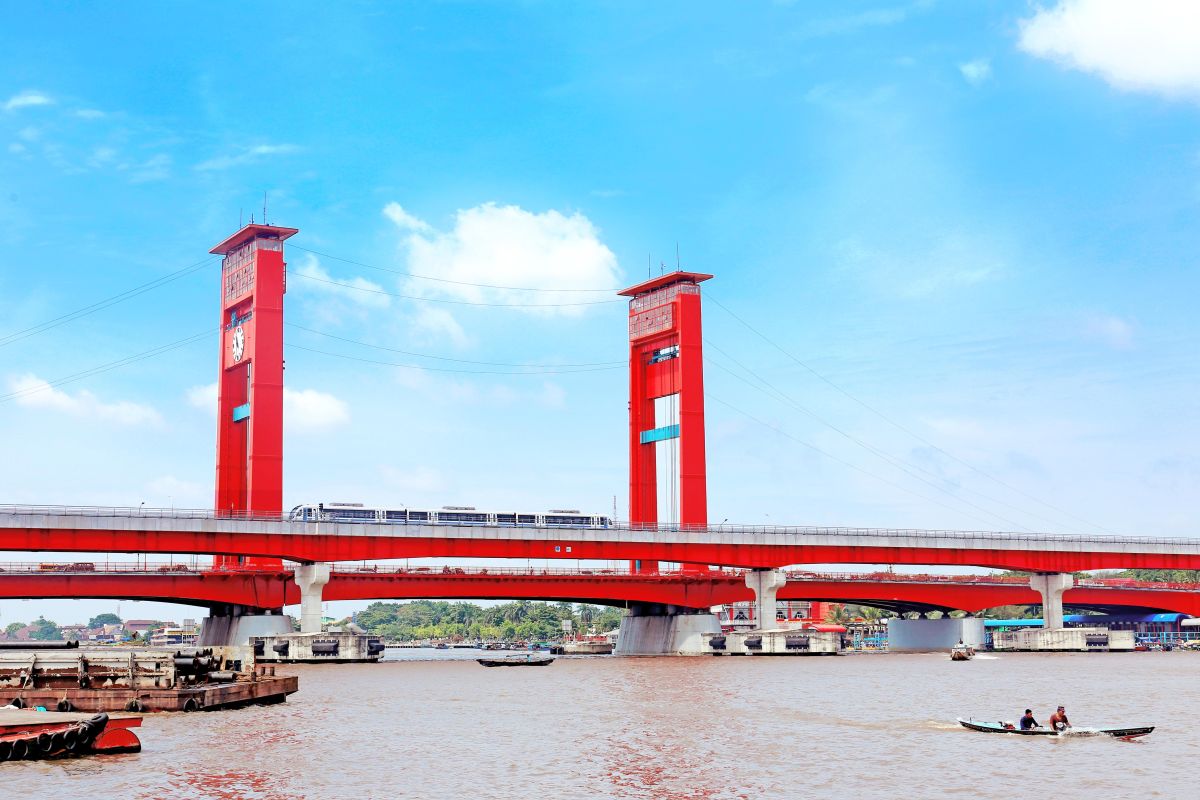
President Prabowo Subianto’s directive to strengthen national connectivity underscores the vital role of rail transport in expanding public access, smoothing goods distribution, and linking regional growth centres. In South Sumatra, that role has been growing for more than a century through a rail network connecting Palembang, Prabumulih, Muara Enim, Lahat, Lubuklinggau, and Lampung.
KAI Vice President of Corporate Communication Anne Purba said the history of South Sumatra’s railways shows that from the outset rails served as a link between city centres, inland areas, production zones, and ports. That role continues today through KAI Group’s passenger trains, freight services, and the South Sumatra LRT, which provides access to Sultan Mahmud Badaruddin II Airport.
The history of railways in South Sumatra began in 1914 during the Dutch colonial period. The network was built by Zuid-Sumatra Staatsspoorwegen (ZSS) with the aim of connecting Panjang Port in Lampung to the interior of South Sumatra to support the movement of agricultural produce, forest products, and natural resources, including coal.
The next important milestone came on 1 November 1915, when the 78 km Kertapati–Prabumulih line opened. Kertapati Station later developed into one of Palembang’s main railway hubs, while Prabumulih became a key junction connecting lines to Lampung, Muara Enim, Lahat, and Lubuklinggau.
Line construction continued to expand, reaching mining areas and economic centres in South Sumatra. The Prabumulih–Gunung Megang line began operating in 1916 and was later extended to Muara Enim and Tanjung Enim. Development then progressed to Lahat, Tebing Tinggi, Muara Saling, and finally Lubuklinggau in 1933.
After independence, the rail network previously managed by the colonial government was taken over by Indonesia’s Djawatan Kereta Api. Over the decades, the line has remained an integral part of public mobility, commodity distribution, and interregional connectivity in southern Sumatra.
In the modern era, the role of rail in South Sumatra has become increasingly diverse. KAI serves passengers through the Sindang Marga train on the Kertapati–Lubuklinggau round trip, the Bukit Serelo train on the same route, and the Rajabasa train on the Kertapati–Tanjungkarang round trip. From January to May 2026, passenger train services operated by KAI’s Regional Division III Palembang carried 500,563 customers.
Urban services also form an important part of rail connectivity in South Sumatra. Through the South Sumatra LRT, KAI Group connects the public to various activity hubs in Palembang, including the Sultan Mahmud Badaruddin II Airport area. During January–May 2026, the LRT served 1,815,017 customers, bringing total rail-based passenger services by KAI Group in South Sumatra to 2,315,580 customers.
On the freight side, rail plays a strategic role in maintaining the smooth distribution of key commodities. From January to May 2026, Regional Division III Palembang’s freight services handled 11.66 million tonnes of commodities, including coal, fuel, pulp, and other goods supporting industrial and economic activity in the region.
The large volume of freight services demonstrates the importance of railways in the logistics ecosystem of southern Sumatra. With high capacity, scheduled operations, and connections to production centres and ports, rail helps reduce per-tonne distribution costs. This efficiency gives businesses room to maintain supply continuity, strengthen industrial competitiveness, and promote more manageable prices for the public.
Anne explained that the strength of South Sumatra’s railways lies in the combination of a long history, strategic location, a network connected to economic activity hubs, and the public’s continually growing mobility needs. With lines linked to city centres, energy hubs, ports, and airport services, rail has significant potential to enhance public mobility while supporting goods distribution in southern Sumatra.
“Rail in South Sumatra has a long history as a connector of communities and the regional economy. With large capacity and a network linked to production nodes, trains help make logistics more efficient, maintain supply, and support more manageable prices,” Anne said.
KAI Group will continue strengthening the role of South Sumatra’s railways in line with the direction of national connectivity development. “With a strong history and ever-growing mobility needs, rail in South Sumatra is an important part of connecting communities, economic zones, service centres, and key transport hubs,” Anne concluded.