
KAI strengthens mobility in various agglomeration areas
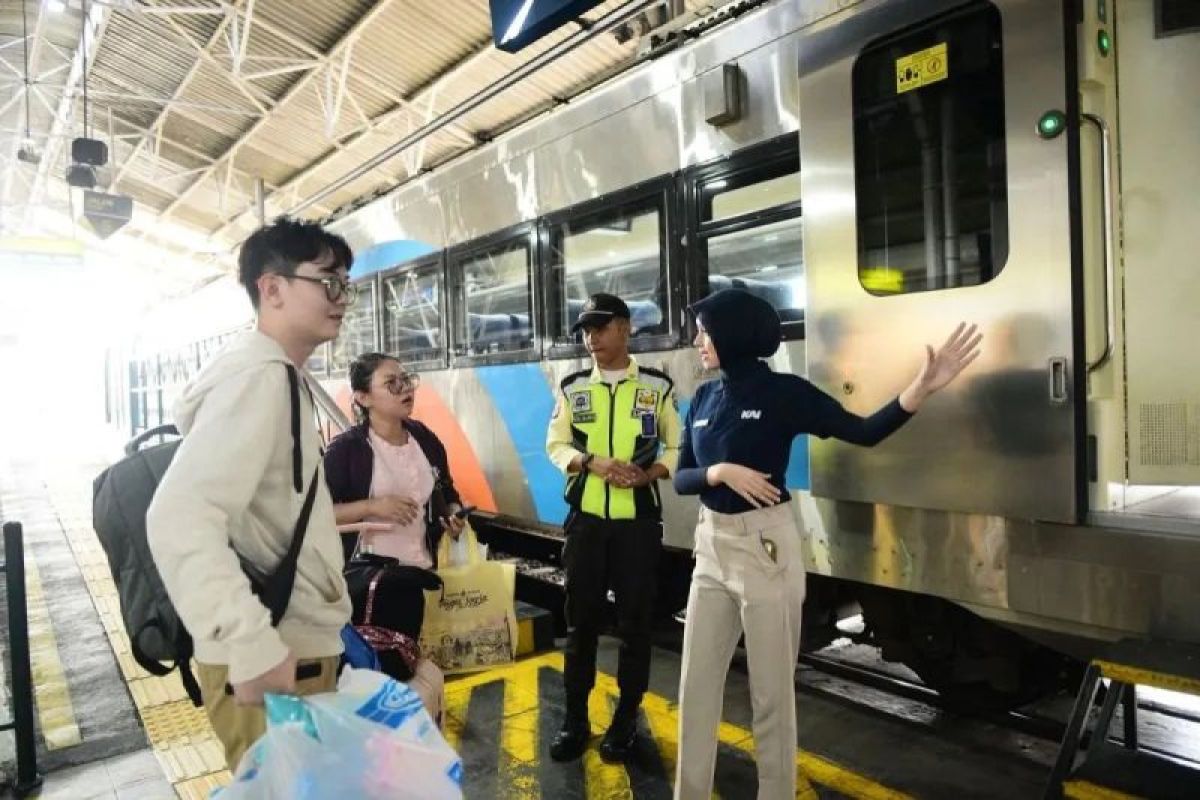
PT Kereta Api Indonesia (Persero) continues to strengthen its railway services to support public mobility across various agglomeration areas through an integrated network of commuter, local, regional, and airport trains.
“The presence of railways helps connect major cities with buffer zones, residential areas, educational centres, trade hubs, industrial zones, tourist destinations, and even airports,” said KAI Vice President of Corporate Communication, Anne Purba, in a statement confirmed in Jakarta on Saturday.
Anne noted that railway services are designed to match the evolving mobility patterns of a population increasingly connected across cities and regencies for work, education, trade, and tourism.
In West Java, the Bandung Raya Commuter Line served 10,106,912 passengers in the first half of 2026, representing a 9.17 per cent increase compared to the 9,258,327 passengers recorded during the same period the previous year. Passenger growth in the Bandung region has been continuous, rising from 14,720,252 in 2023 to 16,159,458 in 2024, and reaching 18,727,224 throughout 2025. The Bandung Raya Commuter Line connects Bandung with Cimahi, Padalarang, Cicalengka, Rancaekek, Purwakarta, Garut, and various buffer areas that support local economic and educational activities.
In the Yogyakarta-Solo region, the Yogyakarta-Palur Commuter Line served 4,719,593 passengers in the first half of 2026, an increase of 6.93 per cent from 4,413,690 in the same period last year. The Prameks Commuter Line (Yogyakarta-Kutoarjo route) served 582,541 passengers, bringing the total for both lines to 5,302,134 passengers, a growth of 6.87 per cent in the first half of 2026. Connectivity in the Solo Raya area was further bolstered by the Adi Soemarmo International Airport Train, which served 461,482 passengers in the first half of 2026, up 24.73 per cent from the previous year. KAI also operates the Joglosemarkerto train, connecting Semarang, Solo, Yogyakarta, Purwokerto, Tegal, Pekalongan, and other cities, with passenger numbers reaching 730,576 in the first half of 2026.
In East Java, the KAI Commuter network served 8,528,571 passengers in the first half of 2026, an 8.23 per cent increase from 7,879,862 in the same period last year. The Commuter Line network in East Java connects Surabaya with Sidoarjo, Gresik, Lamongan, Mojokerto, Jombang, Malang, Blitar, and various regions serving as industrial, commercial, and tourism hubs.
In the Jabodetabek area, the Commuter Line served 176,575,981 passengers throughout the first half of 2026, while the Basoetta Commuter Line to Soekarno-Hatta Airport served 1,197,413 passengers, a 12.71 per cent increase. In West Sumatra, the Minangkabau Ekspres and Lembah Anai trains have strengthened connectivity to Minangkabau International Airport, with the Lembah Anai service serving 162,428 passengers, a more than threefold increase.
KAI also provides local and regional services through the Pangrango, Siliwangi, Cut Meutia, Srilelawangsa, Datuk Belambangan, Kuala Stabas, and Rajabasa trains to expand inter-regional access across various provinces. Anne emphasised that KAI will continue to strengthen its services through operational evaluations, capacity increases, intermodal integration, and facility development to ensure that connectivity in agglomeration areas further supports public mobility across various regions.