
KAI Retail Freight Grows 20.45% in Two Years, Strengthening Goods Distribution
The price of goods paid by the public is influenced by various factors, ranging from production processes to distribution. Behind every product available in markets, shops, or distribution centres, logistics costs represent a vital component of price formation. The more efficient the distribution, the greater the opportunity to reduce costs, maintain supply, and keep prices competitive.
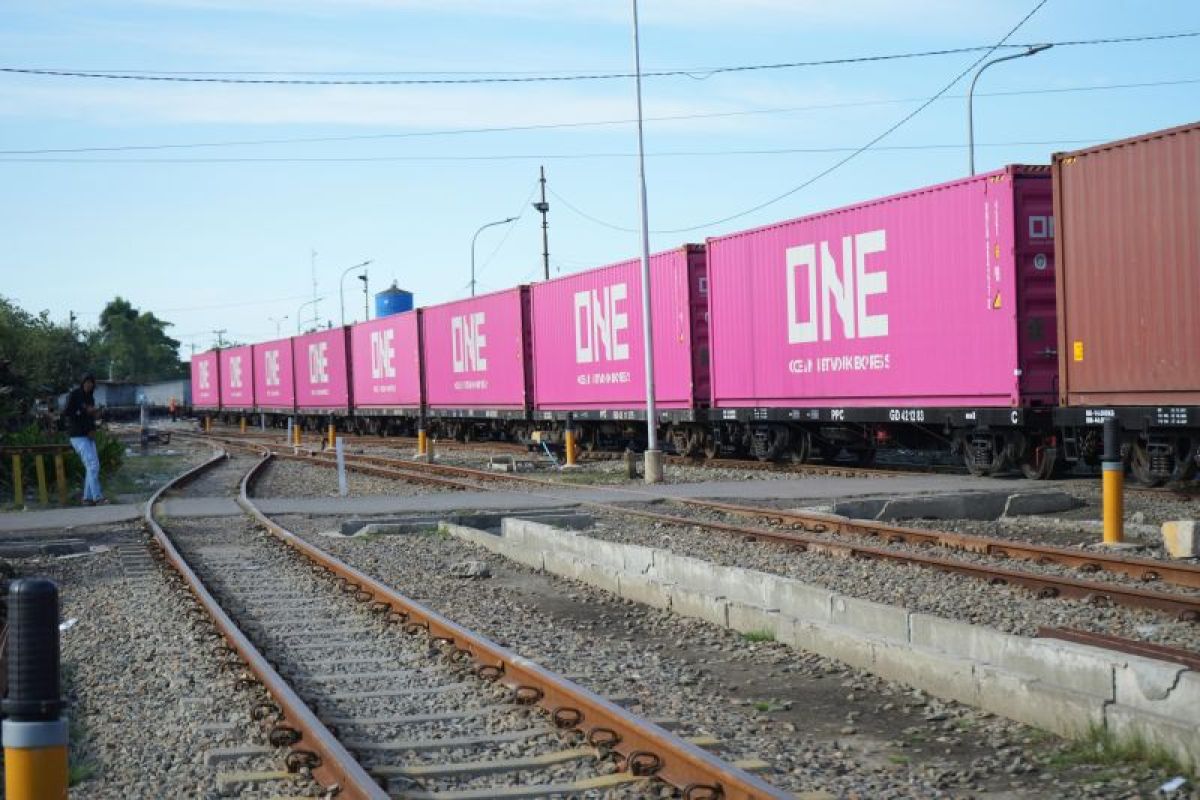
In this context, rail-based freight transport continues to play an increasingly strategic role. PT Kereta Api Indonesia (Persero) recorded a retail freight volume of 101,652 tonnes from January to May 2026. This achievement represents a 3.25 per cent increase compared to the same period in 2025, which stood at 98,453 tonnes. Compared to January–May 2024, which reached 84,391 tonnes, KAI’s retail freight volume has grown by 20.45 per cent over the last two years.
This growth indicates an increasing demand from the business world for distribution modes capable of providing large transport capacities, certain travel times, and operational efficiency. Various commodities move through KAI’s retail freight services daily, ranging from consumer necessities and manufactured products to trade goods and industrial raw materials.
KAI Vice President of Corporate Communication, Anne Purba, stated that every increase in freight volume reflects ongoing economic activity. Every shipment connects production centres with markets, businesses with customers, and various economic activities across many regions.
“When distribution runs smoothly, industries can maintain productivity, businesses can manage inventory more efficiently, and the public can access more guaranteed goods. Therefore, logistics efficiency has a very broad impact on the economy,” said Anne.
According to Anne, logistics efficiency is a crucial factor in enhancing national economic competitiveness. Based on calculations used by the government through Bappenas, BPS, and the Coordinating Ministry for Economic Affairs, national logistics costs currently remain around 14.29 per cent of Gross Domestic Product (GDP). The government aims to reduce this figure to 12 per cent by 2029 as part of efforts to improve national economic competitiveness.
This figure shows that logistics costs remain a key component affecting Indonesia’s economic cost structure. Various studies also indicate that logistics components contribute approximately 14 per cent to the price of goods circulating in the domestic market. This means that for every Rp100 of goods value paid by the public, about Rp14 is related to the distribution and logistics process.
“The more efficient the distribution process used, the greater the opportunity for businesses to control their operational costs. The impact will be seen in the smoothness of supply, more competitive business costs, and the ability of industries to provide products at more affordable prices,” Anne continued.
This situation is increasingly relevant given that Indonesia is an archipelagic nation with economic activities spread across various regions. High logistics costs can affect the competitiveness of national products, widen price disparities between regions, and impact supply chain efficiency. Conversely, more efficient distribution will strengthen economic connectivity and accelerate the movement of goods from production centres to consumption centres.
Anne explained that railways have an advantage in supporting this efficiency because they are capable of transporting large quantities of goods on a scheduled and sustainable basis. This characteristic provides certainty for businesses in managing distribution while helping to reduce the burden of road transport.
In Java, which serves as the centre of national industrial and commercial activity, the need for an efficient logistics system continues to rise. Various studies estimate that approximately 60 per cent of national logistics activity is located on the island of Java. With a logistics economic value estimated to reach Rp2,400 to Rp2,500 trillion per year, increasing distribution efficiency will have a significant impact on business costs, trade smoothness, and national industrial competitiveness.
“Logistics is a vital part of economic growth. When raw materials arrive on time, production processes can run smoothly. When goods move faster and more efficiently, businesses have more room to increase their competitiveness. Ultimately, these benefits will manifest in more stable supplies, more competitive prices, and a more productive economy,” said Anne.
Moving forward, KAI continues to strengthen its logistics services through increased transport capacity, development of distribution networks, and integration with various strategic logistics hubs. These steps are taken to support the creation of an increasingly efficient supply chain capable of meeting evolving economic needs.
“We want to ensure that the growth of retail freight goes hand-in-hand with the improvement of national logistics efficiency, so that distribution becomes smoother, business costs become more competitive, and Indonesia’s economic competitiveness continues to rise,” Anne concluded.