
KAI Reports 18% Rise in Plantation Freight, Supporting B50 Supply Chain
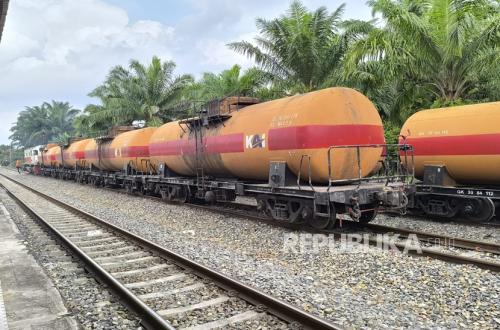
PT Kereta Api Indonesia (Persero) recorded a volume of 374,098 tonnes of plantation commodity transport from January to July 2026. This realisation represents an 18 per cent increase compared to the same period last year, which stood at 317,026 tonnes, driven by rising demand for crude palm oil (CPO) distribution to support the implementation of the B50 biodiesel programme. The increase was also reflected in the monthly performance, with July 2026 volume reaching 51,741 tonnes, a 24.52 per cent rise from 41,551 tonnes in July 2025. Vice President Corporate Communication of KAI, Anne Purba, stated that the majority of the plantation commodities transported by KAI is CPO. She noted that rail-based logistics services help maintain the smooth distribution of these commodities to processing facilities in a safe, scheduled, and efficient manner. “The 18 per cent increase shows that demand for rail-based plantation logistics services is strengthening. KAI ensures the smooth distribution of CPO as a raw material for various industries, including the bioenergy industry, which now plays a strategic role in the national energy security policy,” Anne said in a statement on Tuesday (5/8/2026). CPO is the main raw material for producing Fatty Acid Methyl Ester (FAME), which is then blended with diesel to produce B50 biodiesel. Under this scheme, the fuel composition consists of 50 per cent palm oil-based biodiesel and 50 per cent diesel. The need for CPO distribution is expected to increase after the government implemented the Mandatory B50 Biodiesel Programme starting 1 July 2026, which was subsequently launched by President Prabowo Subianto on 9 July 2026 as part of a strategy to strengthen national energy self-sufficiency. Anne said the rising demand for CPO for biodiesel also expands the domestic market for the national palm oil commodity. “The increased need for CPO for biodiesel expands the domestic market for the plantation sector. In this supply chain, the railway plays a role in ensuring the safe, efficient, and sustainable distribution of raw materials from production areas to processing industries,” she said. In line with the government policy, KAI has also begun the gradual use of B50 biodiesel in its diesel-powered facilities starting 1 July 2026. The implementation covers locomotives and power-generating train cars after undergoing a series of tests, including engine performance, fuel consumption, combustion stability, emissions, and fuel system conditions. Anne explained that KAI now plays a dual role in the B50 ecosystem, supporting the distribution of palm oil raw materials while utilising biodiesel in its railway operations. “KAI plays a role in two important parts of the B50 ecosystem. Through plantation transport services, KAI helps ensure the smooth distribution of palm oil commodities. In its operational activities, KAI is gradually using B50 in locomotives and power-generating train cars while prioritising safety and facility reliability,” she said. Going forward, KAI will continue to strengthen its plantation transport service capacity by improving the readiness of facilities, loading and unloading infrastructure, and coordination with customers and stakeholders. These efforts are aimed at supporting the industrial supply chain, strengthening palm oil downstreaming, and increasing domestic energy utilisation. “The railway connects production activities, processing, and national energy needs. The growth in plantation transport volume presents an opportunity to strengthen the role of railway logistics in supporting palm oil downstreaming and Indonesia’s energy self-sufficiency,” Anne concluded.