
KAI records total passengers reaching 351 million up to August 2026
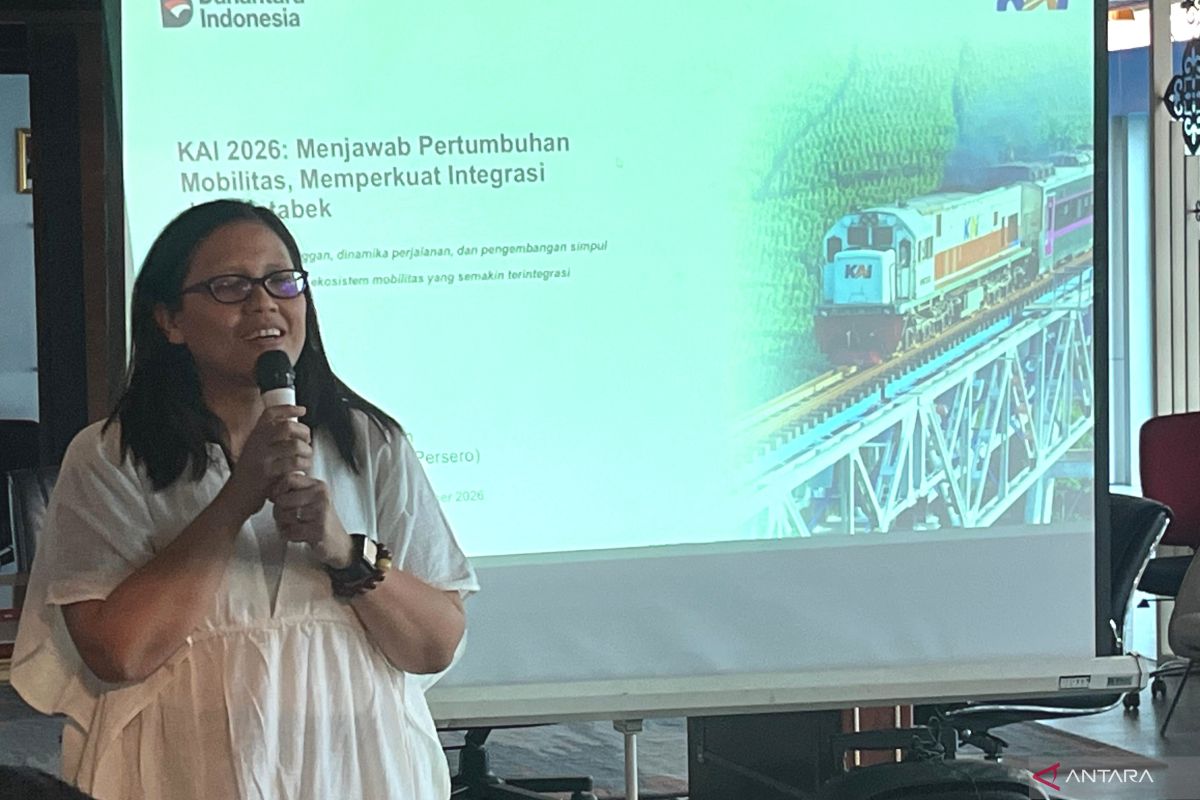
Jakarta (ANTARA) - PT Kereta Api Indonesia (Persero), also known as KAI Group, recorded a total of 351,602,397 passengers from January to August 2026, reflecting a high public demand for rail-based transportation services across various regions.
Speaking in Jakarta on Friday, KAI Vice President of Corporate Communication, Anne Purba, stated that the increase in customers serves as an indicator that trains continue to be a preferred choice for the public in supporting both daily mobility and long-distance travel.
According to the company’s records, the total number of passengers served by KAI Group during the January-August 2026 period increased compared to the same period the previous year. In January-August 2025, the number of passengers was recorded at 328,311,868, representing a growth of 7.09 per cent.
The increase in users occurred across various KAI Group services, ranging from KAI long-distance and local trains, KAI Commuter, LRT Jabodebek, KAI Wisata, the Makassar-Parepare train, LRT Sumsel, KAI Bandara, to the Whoosh high-speed rail service.
Anne noted that this passenger growth aligns with KAI’s efforts to strengthen service quality and provide an increasingly integrated mobility ecosystem.
In addition to the increase in customers, the satisfaction level of KAI service users also showed positive achievements. KAI’s Customer Satisfaction Index (CSI) in the first semester of 2026 reached a score of 4.53 on a 5-point scale, the highest since 2020.
KAI also noted that the majority of customers utilise public services. Approximately 90.29 per cent, or about 317.7 million KAI Group customers during January-August 2026, used Public Service Obligation (PSO) services, demonstrating the vital role of railways in supporting public mobility.
“Of the total we served, which is more than 350 million over these 8 months, 90 per cent are subsidised. 90 per cent of the total we serve via KAI Group is for urban transport, which is indeed subsidised by the government. Therefore, the commercial portion remains below 10 per cent,” she said.
Looking ahead, she stated that the company will continue to strengthen infrastructure and intermodal integration, particularly in urban areas such as Jabodetabek, to meet the increasing travel needs of the public.