
KAI records LRT Jabodebek reaching 2.9 million users in April
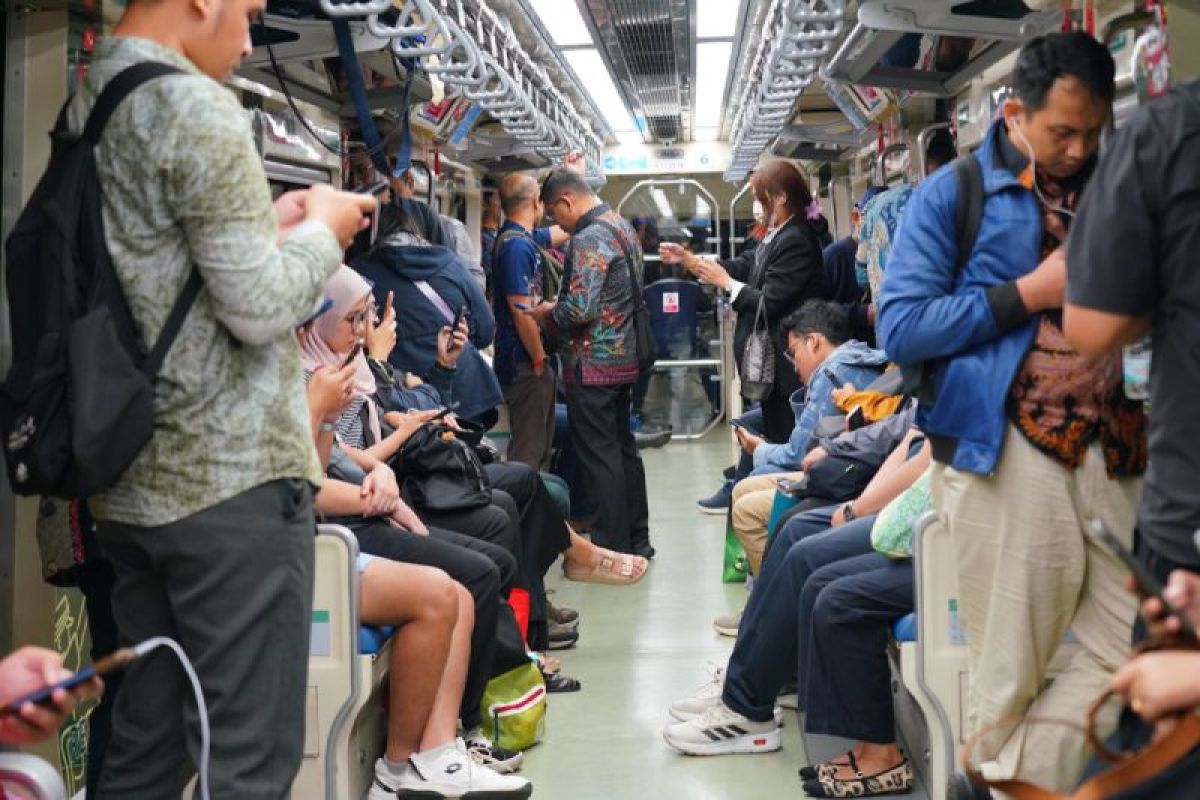
Public interest in modern public transportation continues to show a positive trend. Jakarta (ANTARA) - PT Kereta Api Indonesia (Persero) recorded 2,912,092 users for the LRT Jabodebek in April 2026, the highest since operations began, in line with increasing public interest in modern public transport. “Public interest in modern public transportation continues to show a positive trend. In April 2026, the LRT Jabodebek recorded the highest number of users since starting operations, serving 2,912,092 passengers,” said LRT Jabodebek Public Relations Manager Radhitya Mardika in a statement in Jakarta on Wednesday. He noted that this figure represents an increase of about 16 per cent or an additional 402,060 users compared to March 2026, which recorded 2,510,032 users. Meanwhile, compared to April 2025, it increased by about 40 per cent, with 2,083,391 users recorded. He stated that the rise in user numbers indicates growing public interest in using integrated, comfortable public transport with reliable schedules to support daily mobility in the Jabodebek area. According to him, this mode of transport is increasingly becoming the public’s choice for daily mobility because it provides travel time certainty amid urban traffic density, while also connecting to various modes and activity centres. In addition, several factors influence the public to use the LRT Jabodebek, particularly users who routinely travel from residential areas to business centres, offices, or other destinations. He mentioned the most popular stations for tap-ins during April 2026: Dukuh Atas with 435,009 users; Harjamukti with 333,025 users; Kuningan with 273,011 users; Cikoko with 237,669 users; and Rasuna Said with 174,905 users. For tap-outs: Dukuh Atas with 374,050 users; Harjamukti with 335,923 users; Kuningan with 267,258 users; Pancoran with 256,230 users; and Cikoko with 237,348 users. “The high mobility at these stations demonstrates the important role of proximity to public activity centres in driving the growth of LRT Jabodebek users,” he explained. In addition to supporting urban mobility, intermodal integration at several strategic stations such as Dukuh Atas, Cikoko, Cawang, Bekasi Barat, TMII, and Halim continues to strengthen connectivity for public travel to business areas, offices, activity centres, and onward transport services. KAI is committed to continuously improving the quality of LRT Jabodebek services as modern public transport that connects the public to various activity centres more efficiently, comfortably, integrally, and supports sustainable urban mobility.