
KAI Proposes Import of 23 Second-hand Trains from Japan, DPR Grants Approval
PT Kereta Api Indonesia (Persero), known as KAI, has been given the green light to import 23 second-hand electric multiple unit (KRL) train sets from Japan. This step is being taken to increase the capacity of the Jabodetabek commuter rail service, which faces a continuous rise in passenger numbers, and to serve as a temporary solution while domestic train production capacity remains unable to meet demand.
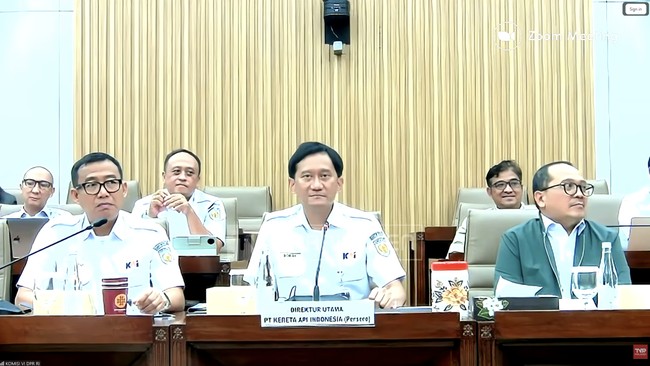
Approval for the import was granted by Commission VI of the Indonesian House of Representatives (DPR RI) during a Hearing (RDP) with KAI on Wednesday (23/09/2026). This import of non-new rolling stock is positioned as a transitional solution, while the domestic railway industry continues to be encouraged to enhance its production capabilities.
“Meeting the needs of railway transport capacity, particularly for the Jabodetabek KRL, by strengthening the local industry and conducting the integrated and sustainable import of non-new train sets,” said the Vice Chairman of Commission VI of the DPR RI, Andre Rosiade, during the meeting.
KAI President Director Bobby Rasyidin stated that the need for additional fleet is urgent. This is because the number of Jabodetabek KRL users continues to rise, while several operating train sets are over 40 years old.
“This is our transition,” said Bobby in Jakarta on Wednesday (23/09/2026).
Bobby explained that KAI has proposed the procurement of 23 second-hand train sets from Japan, consisting of seven train sets with a 12-car formation (SF12) and 16 train sets with an 8-car formation (SF8). The variation in the number of cars per set is adjusted to the infrastructure conditions at various stations.
“The number we are proposing for this bridging measure, using these non-new trains, includes 7 train sets with SF12, plus 16 train sets with SF8,” said Bobby.
According to Bobby, not all stations can accommodate 12-car formations. For example, the Tanjung Priok-Kota line has several relatively short platforms, meaning the use of SF12 sets would not be optimal.
“For instance, on the loop line from Tanjung Priok to Kota, the platforms are short. Therefore, using SF12 would not be optimal. That is why we are proposing 7 SF12 and 16 SF8 sets,” he explained.
This need has become more pressing alongside the growth of Jabodetabek KRL passengers. In the first half of 2026, the number of users recorded an 11.3% growth compared to the same period the previous year. Average daily passengers have now reached approximately 1.1 million, and under certain conditions, can reach 1.3 million passengers.
On the other hand, KAI faces the issue of fleet age. Several KRL units currently in use are over four decades old, meaning the need for train set replacement cannot be fully delayed while waiting for domestic production capacity to increase.
Bobby stated that the import of second-hand KRL was chosen because the procurement time is relatively faster compared to new trains. Once approval is obtained, the second-hand sets are expected to be brought in and operational within approximately one to two months, whereas the procurement of new trains requires much longer.
“If we import new ones, it will eventually disrupt domestic train production. These second-hand units are only for the transition,” he said.
KAI also plans to use these second-hand KRL sets for a limited period. The imported fleet is targeted to serve as a bridge while the domestic industry improves its production capacity and meets the steadily increasing KRL travel demands.
“We plan to use them for 10 years, and we will implement this immediately because there have been many complaints (from service users),” said Bobby.