
KAI Promises Cheaper and More Reliable Trains, with Safety as a Key Focus
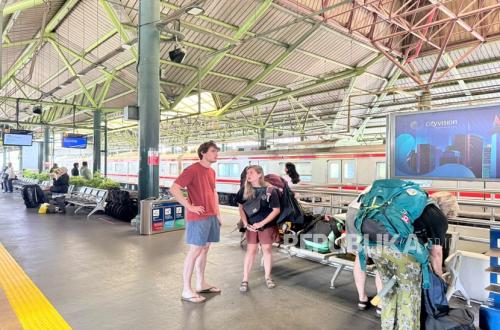
PT Kereta Api Indonesia (Persero) is committed to providing mass transport services that are increasingly reliable, affordable, and offer broader connectivity. This commitment was stated by KAI President Director Bobby Rasy/idin ahead of KAI’s 81st anniversary in Semarang, Central Java, on Friday (25/09/2026).
“We are striving to provide mass transport that is more reliable, more affordable, and certainly with greater connectivity,” said Bobby.
According to him, there are still many aspects that need to be improved and rectified as KAI enters its 81st year. Service transformation is directed not only towards improving journey quality but also towards renewing rolling stock and strengthening the safety of passengers and the public.
Several train sets, ranging from the KRL commuter rail to intercity trains, are now utilising new rolling stock. This renewal is expected to enhance comfort while addressing the growing public demand for mass transit.
Challenges are increasing alongside the rise in passenger numbers. Between January and July 2026, the KAI Group served 307.86 million customers, representing an 8.32 per cent growth. KAI Commuter contributed 242.93 million passengers, while long-distance and local trains managed by KAI served 35.26 million passengers.
This growth means that service reliability can no longer be measured solely by in-train comfort. Journey safety, human resource readiness, infrastructure conditions, the use of technology, and risk management are becoming increasingly vital as the number of trips and passengers continues to rise.
One area that remains a concern is level crossings. KAI has mapped 1,214 crossing points based on risk levels, consisting of 43 high-risk locations, 630 medium-risk, 538 low-risk, and three very low-risk locations.
KAI has designated 190 points as priorities for safety improvements in 2026. Management measures include the provision of guard posts, signage, safety and communication equipment, certified crossing officers, and the phased installation of crossing gates.
Bobby stated that the installation of gates at unmanned level crossings is an ongoing step. However, the development of physical facilities must go hand-in-hand with improving public discipline.
KAI, therefore, continues to remind motorists not to force their way through when crossing gates are closed. “Forcing through a closed crossing gate certainly endangers the safety of train journeys,” said Bobby.
Recent data highlights the scale of this challenge. As of 31 July 2026, KAI recorded 151 accidents at level crossings, an 11 per cent decrease compared to 170 incidents during the same period in 2025. A total of 131 people were victims, including 59 fatalities.
The greatest issue stems from road user behaviour. Of the 151 accidents, 132 incidents, or approximately 87 per cent, were caused by drivers ignoring crossing gates. Twelve incidents were related to stalled vehicles, while seven others were related to delayed or unclosed crossing gates.
Source: jawawa.id (https://jawawa.id/newsitem/kai-promises-cheaper-and-more-reliable-trains-with-safety-as-a-key-focus-1790337351)
Originally published by Republika (https://news.republika.co.id/berita/tlx37z451/kai-janjikan-kereta-makin-murah-dan-andal-keselamatan-jadi-sorotan), translated from Indonesian