
KAI Prepares Platforms 6, 7, and 8 at Bogor Station to Ease Congestion for 431,000 Daily Passengers
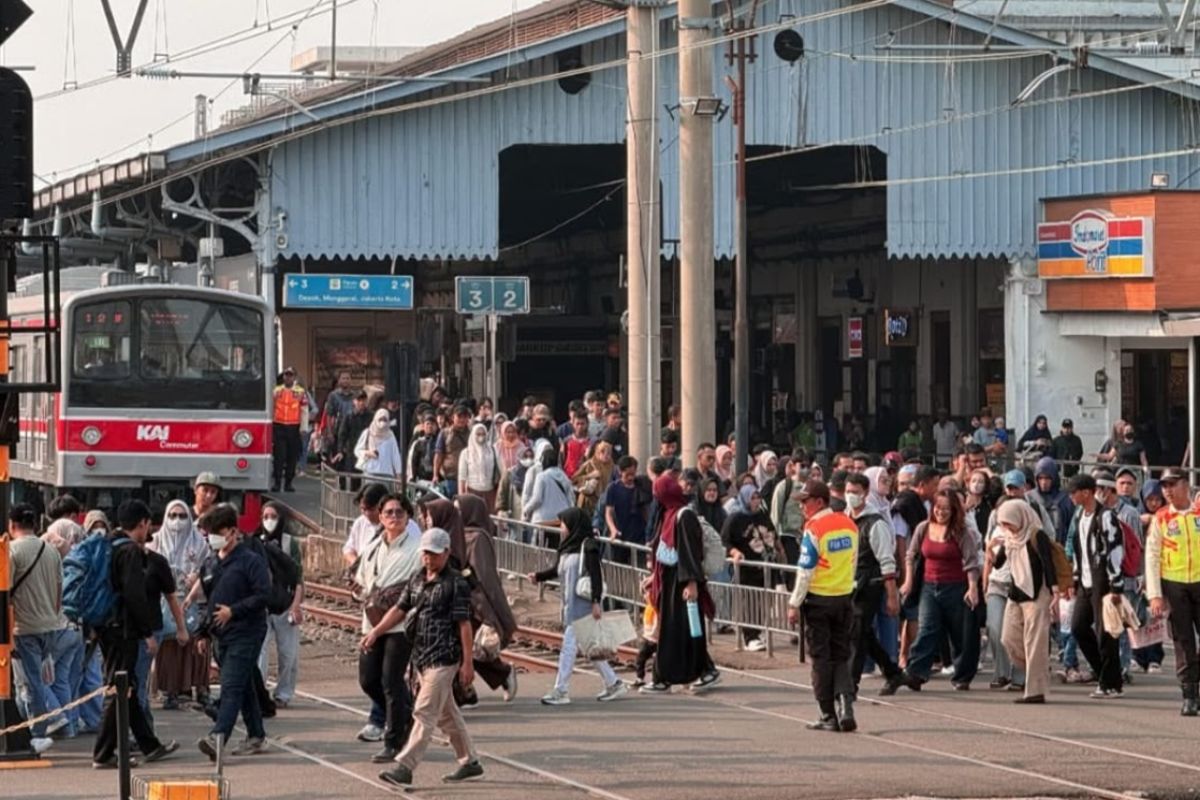
PT Kereta Api Indonesia (Persero) is continuing to strengthen capacity on the Bogor Line with a customer-oriented approach. The development of platforms 6, 7 and 8 at Bogor Station is being prepared alongside the renewal of Jabodetabek KRL Commuter Line rolling stock to help reduce crowding, smooth boarding and alighting flows, and improve travel comfort, particularly during peak hours.
During the first half of 2026, the Bogor Line served 78,077,679 passengers. Over a 181-day service period, the route served an average of around 431,368 passengers per day.
KAI Vice President of Corporate Communication Anne Purba said the high passenger volume makes capacity enhancement an important priority. Service improvements are being directed so that passengers receive more adequate travel space, better organised platform flows, and increasingly reliable service in their daily activities.
“Hundreds of thousands of passengers rely on the Bogor Line every day to work, study and carry out various activities. For that reason, service development is being prepared by looking at passenger needs from the moment they enter the station, wait on the platform, board the train, and arrive at their destination,” said Anne.
This need is also evident in the high activity at Bogor Station. From January to June 2026, the station recorded 18,451,462 passenger movements, comprising 9,371,057 gate-in entries and 9,080,405 gate-out exits. Average activity reached around 101,942 passenger movements per day.
To respond to this high activity, KAI is preparing platforms 6, 7 and 8 to support the operation of KRL trains in a twelve-car formation, or SF12. Previously, these tracks served a maximum of SF10 formations. This development will provide greater flexibility in managing the arrival and departure of SF12 trains at Bogor Station.
Platforms 6, 7 and 8 have undergone joint testing involving infrastructure, rolling stock and operations teams. These stages were carried out to ensure the readiness of the tracks, platforms, overhead line equipment, SF12 rolling stock and operational patterns before the facilities are used for passenger service.
The joint testing followed load testing using a locomotive on 29 June 2026 and operational trials of the KRL on 1 July 2026. All test results will serve as material for evaluation and refinement in the final stage of the works.
“Joint testing ensures that rolling stock, infrastructure and operational patterns are aligned in their readiness. Inspections are carried out meticulously because passenger safety and travel reliability are the primary benchmarks before the facilities are used,” said Anne.
The development includes track and platform extensions, structural and architectural works, overhead line electrification, mechanical and electrical works, and supporting facilities. Platform canopies, or overcapping, are also being prepared to improve passenger comfort while waiting for trains in hot or rainy conditions.
Once platforms 6, 7 and 8 are ready for SF12 use, the arrival and departure of train sets can be managed more flexibly. This is expected to help distribute passengers across more platforms, reduce concentrations in particular areas, and make boarding and alighting more orderly.
The infrastructure strengthening at Bogor Station is proceeding in tandem with the renewal of Jabodetabek KRL Commuter Line rolling stock. The procurement programme covers 27 new train sets, or 324 carriages, comprising 11 sets manufactured by CRRC and 16 sets produced by PT INKA (Persero).
According to the latest internal update, 18 of the 27 new train sets, or 216 carriages, are already in operation, comprising 11 CRRC-built sets and 7 INKA-built sets. The remaining nine INKA-built sets are continuing through their respective progress stages before entering service.
The deployment of each train set is adjusted to operational needs across the various Jabodetabek KRL service routes. All 11 CRRC sets have been brought into service in stages to strengthen the Bogor Line and Cikarang Line.
A number of the new train sets have already reinforced the Bogor Line. In June 2025, two CRRC-built sets began serving the route. Subsequently, two INKA-built sets began operating regularly on the Bogor Line in December 2025 after obtaining safety and worthiness certification from the Directorate General of Railways at the Ministry of Transport.
Anne explained that SF12 train sets offer greater capacity per journey. The provision of higher-capacity rolling stock needs to be supported by the readiness of platforms, tracks, electrical systems, maintenance facilities, staff and service scheduling so that the benefits can be optimally felt by passengers.
“The focus of strengthening the Bogor Line is the daily passenger experience. More adequate capacity, better passenger distribution across platforms, smoother boarding and alighting flows, and reliable rolling stock are expected to help reduce crowding during periods of high travel demand,” said Anne.
While the final stage of works is under way, KAI, together with KAI Commuter, continues to prepare passenger flow arrangements, service information and staff deployment at Bogor Station. Passengers are urged to pay attention to travel information and follow staff instructions while in the station area.
“With an average of more than 431,000 passengers per day on the Bogor Line, every capacity improvement must deliver clear benefits for passengers. KAI and KAI Commuter continue to align the readiness of the SF12 platforms, new rolling stock and operations to make journeys more comfortable, safe and orderly,” Anne concluded.
Source: jawawa.id (https://jawawa.id/newsitem/kai-prepares-platforms-6-7-and-8-at-bogor-station-to-ease-congestion-for-431-000-daily-passengers-1783850006)
Originally published by Antara (Indonesian) (https://www.antaranews.com/berita/5646257/rata-rata-431-ribu-pelanggan-per-hari-kai-siapkan-peron-jalur-6-7-dan-8-stasiun-bogor-untuk-mengurangi-kepadatan), translated from Indonesian