
KAI Plants 25 Trees in Yogyakarta, Total Reaches 99,785 Since 2022
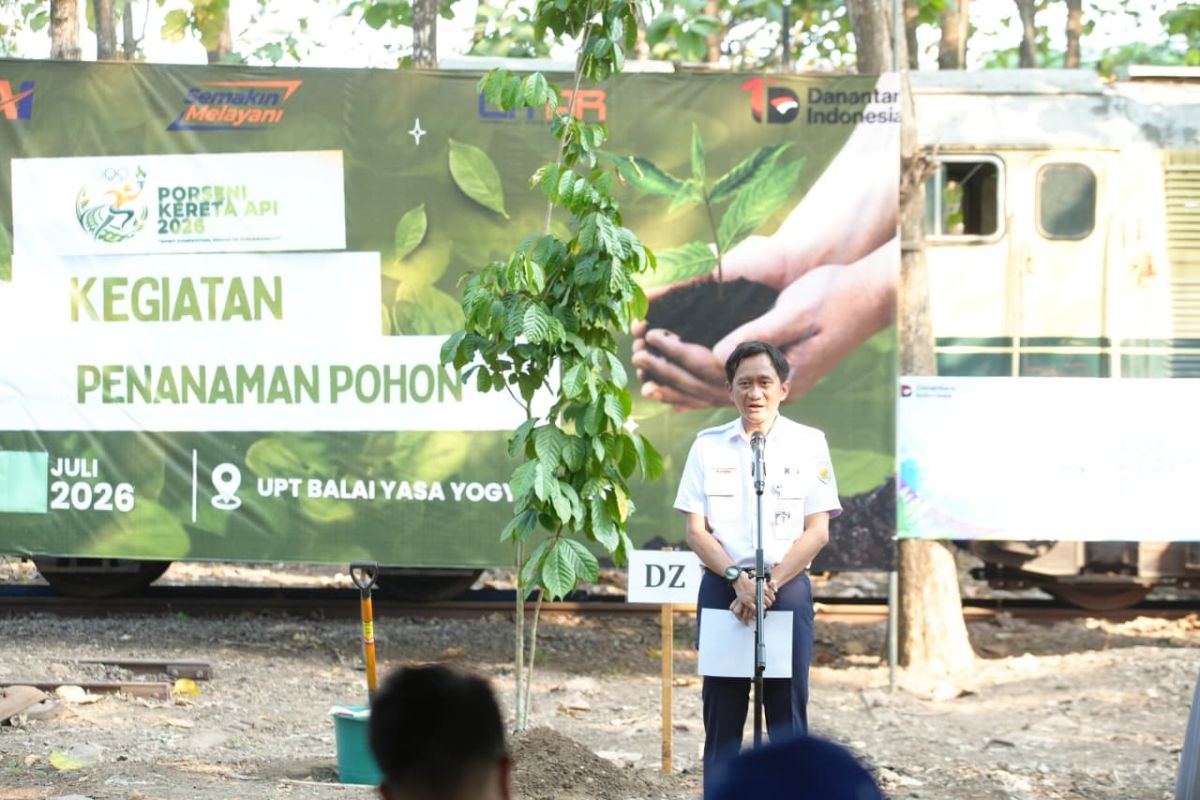
PT Kereta Api Indonesia (Persero) planted 25 productive trees at the Balai Yasa Yogyakarta maintenance depot on Monday (13/7) as part of its ongoing sustainability commitment. The activity, held during the 2026 Railway Sports and Arts Week (Porsenika), involved planting mango, mundu, duku, jackfruit, and sapodilla trees with an average height of 2.5 to 3 metres.
KAI President Director Bobby Rasyid stated that the tree planting reflects the company’s transformation direction, which emphasises a balance between profit, people, and the planet. “KAI’s transformation is directed towards the 3P balance: profit, people, and planet. The company must maintain performance, provide benefits to society, and play an active role in caring for the earth,” Bobby said.
Throughout 2026, KAI has planted 4,540 trees. Cumulatively, from 2022 to 13 July 2026, the total number of trees planted has reached 99,785, with planting carried out across KAI’s operational areas. The symbolic planting at Balai Yasa Yogyakarta, a major locomotive maintenance centre, was attended by regional heads, division chiefs, and Porsenika contingent leaders.
Bobby noted that the involvement of unit leaders and Porsenika participants demonstrates that environmental awareness must be built through collective participation across the KAI Group. The 2026 Porsenika event was attended by 1,632 participants from 17 KAI Group contingents.
On the energy front, KAI has installed 113 solar power plant units across 92 locations, with a total installed capacity of 4,430.65 kilowatt peak, potentially reducing carbon dioxide emissions by over 5,000 tonnes annually. Since 1 July 2026, KAI has also implemented B50 biodiesel, a 50 per cent plant-based fuel blend, as part of the government’s energy transition mandate.
In terms of digitalisation, the Face Recognition Boarding Gate system was used by 5,555,370 long-distance train customers in the first half of 2026, reducing paper usage by an estimated 13,888 rolls of boarding pass paper and saving approximately Rp203.80 million. KAI has also provided 124 free drinking water facilities at 58 stations to reduce single-use plastic bottle consumption, and is recycling used uniforms into new products as part of a circular economy approach.