
KAI Plantation Freight Grows 16.48%, with 480,000 Tonnes of Commodities Moved by Rail
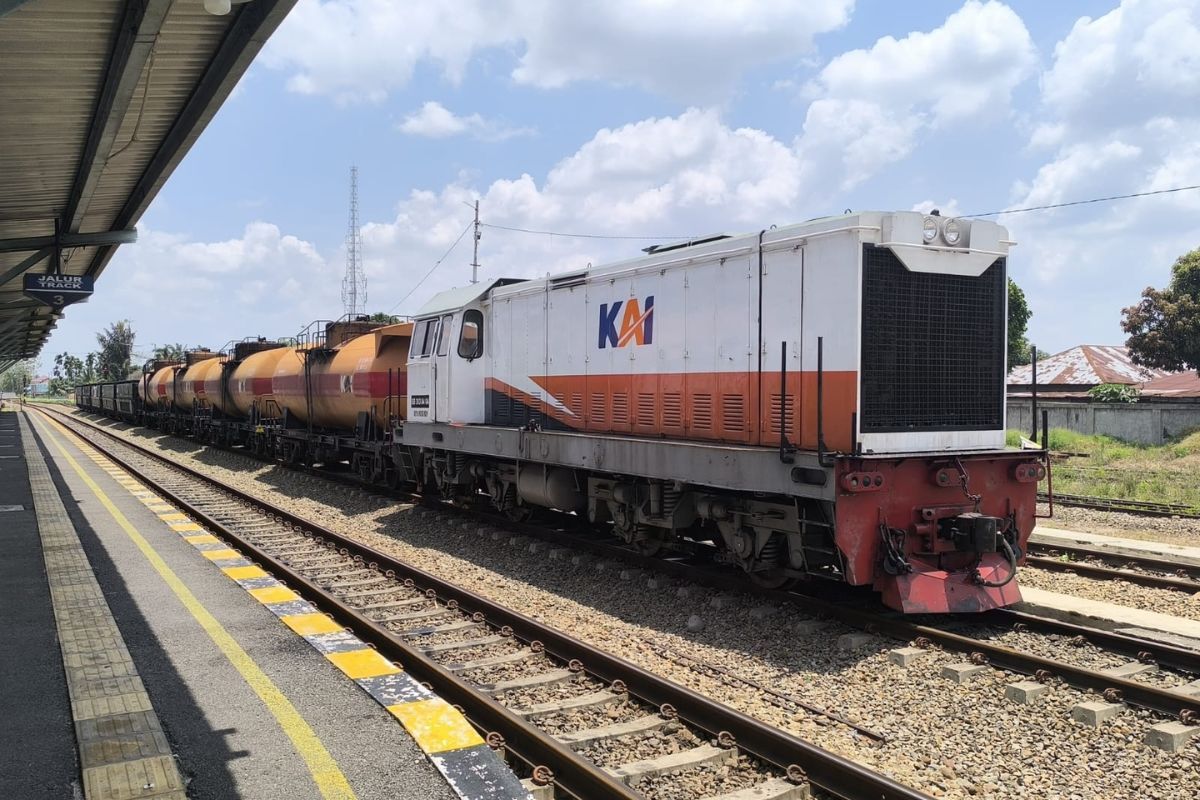
Jakarta (ANTARA) – The distribution of plantation commodities by rail recorded growth in the first nine months of 2026. State-owned railway operator PT Kereta Api Indonesia (Persero) transported 480,121 tonnes of plantation freight between January and September 2026, an increase of 16.48% from approximately 412,198 tonnes in the same period in 2025. This represented an additional 67,923 tonnes of commodities transported across the rail network.
The increase formed part of the growth in KAI’s non-coal freight. By September 2026, non-coal freight volume had reached 9,148,571 tonnes, up 2.6% from 8,912,566 tonnes in January–September 2025. Its portfolio includes containers, fertiliser, cement, fuel, pulp, plantation commodities and retail goods. Plantation freight is one of the commodity groups handled by KAI’s freight services, alongside bulk goods and general cargo.
KAI Vice President of Corporate Communications Anne Purba said the increase showed that rail freight was increasingly able to meet demand for distributing large volumes of commodities.
“Growth of 16.48% signals that rail has an increasingly significant role in the distribution chain for plantation commodities, particularly for freight flows with consistent volumes and shipping patterns,” Anne said.
The development comes as Indonesia’s agricultural sector is also performing positively. Statistics Indonesia (BPS) recorded 12.26% quarter-on-quarter growth in the Agriculture, Forestry and Fisheries sector in the second quarter of 2026, the highest of any sector during that period. Indonesia’s economy grew by 5.29% year on year in the same quarter.
On the trade front, Indonesia’s exports reached US$193.64 billion in January–August 2026, up 4.74% on the same period a year earlier. Non-oil and gas exports rose 5.48% to US$185.63 billion. The expansion in production and trade requires distribution networks capable of moving goods from production centres to processing areas, warehouses, ports and destination markets.
Rail is suited to the mass transport of commodities in large volumes and on regular journeys. On suitable corridors, rail can handle the main leg of a journey, while road transport covers the first and last stages of distribution. This gives cargo owners options for structuring supply chains according to volume, distance and delivery-time requirements.
KAI continues to map regional commodity potential, production patterns, freight origins and destinations, and terminal readiness so that rail network capacity can be used more effectively. Its focus is on commodity flows with sufficient continuity and shipment scale to suit the characteristics of freight rail.
“For KAI, growth in volume must lead to more distribution options for businesses and stronger connections between production centres and markets,” Anne concluded.
Source: jawawa.id (https://jawawa.id/newsitem/kai-plantation-freight-grows-16-48-with-480-000-tonnes-of-commodities-moved-by-rail-1791449730)
Originally published by Antara (Indonesian) (https://www.antaranews.com/berita/5776796/angkutan-perkebunan-kai-tumbuh-1648-persen-480-ribu-ton-komoditas-bergerak-lewat-rel), translated from Indonesian